The Craft
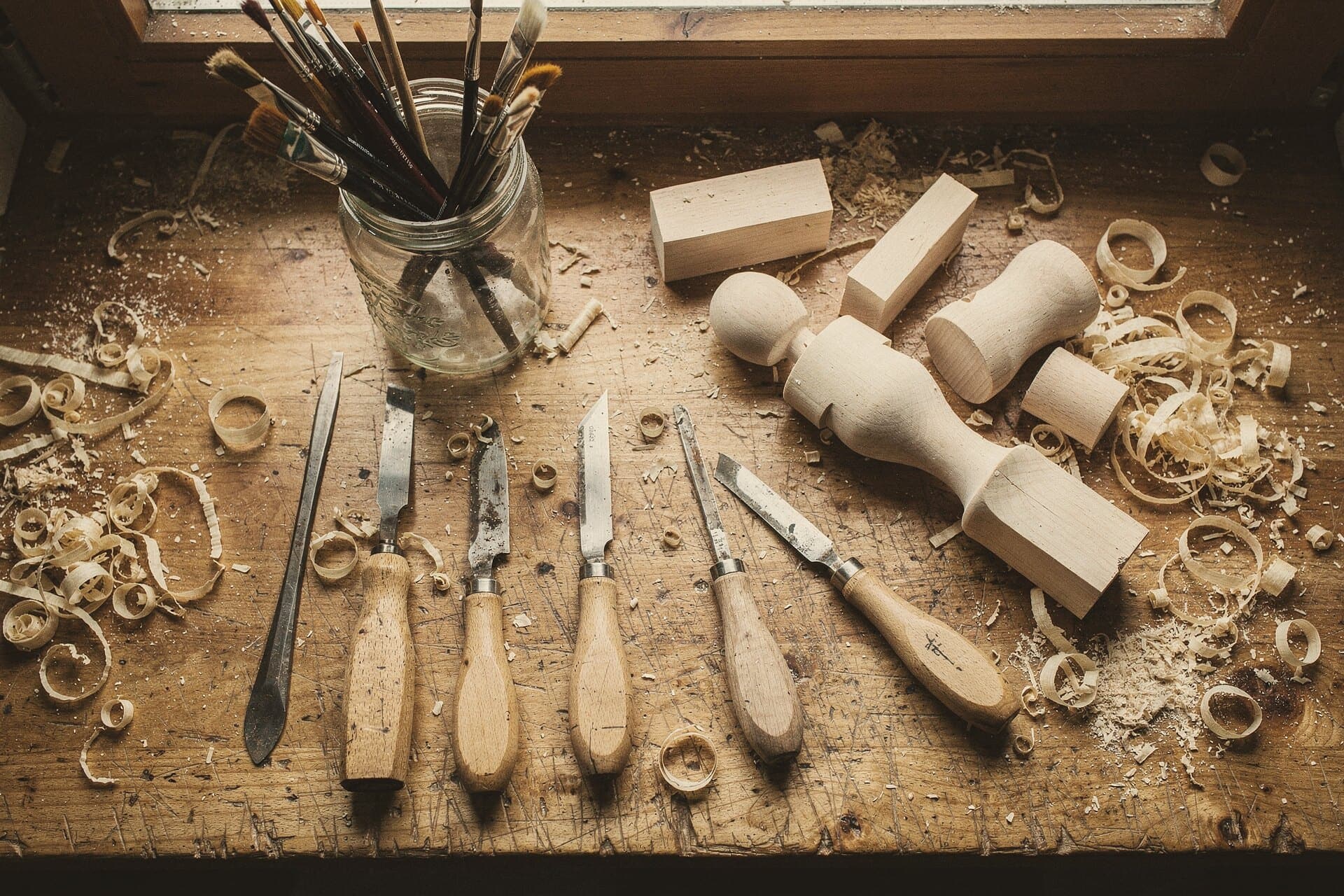
Three tools do most of the work: the lathe, the knife and the brush. Around Seiffen, turning ruled, a fast and exact craft suited to making many pieces alike; in the western Erzgebirge, carving did.
This chapter looks over the makers’ shoulders: at the woods they choose, the techniques they use, and how two of the best-loved pieces, the smoker and the pyramid, actually work.
The woods
The workshops use the woods of the surrounding forests: birch, beech, linden, alder and maple, and spruce. As a rough rule, carved figures are often linden, soft and even-grained under the knife, and turned parts often beech, hard and smooth on the lathe.
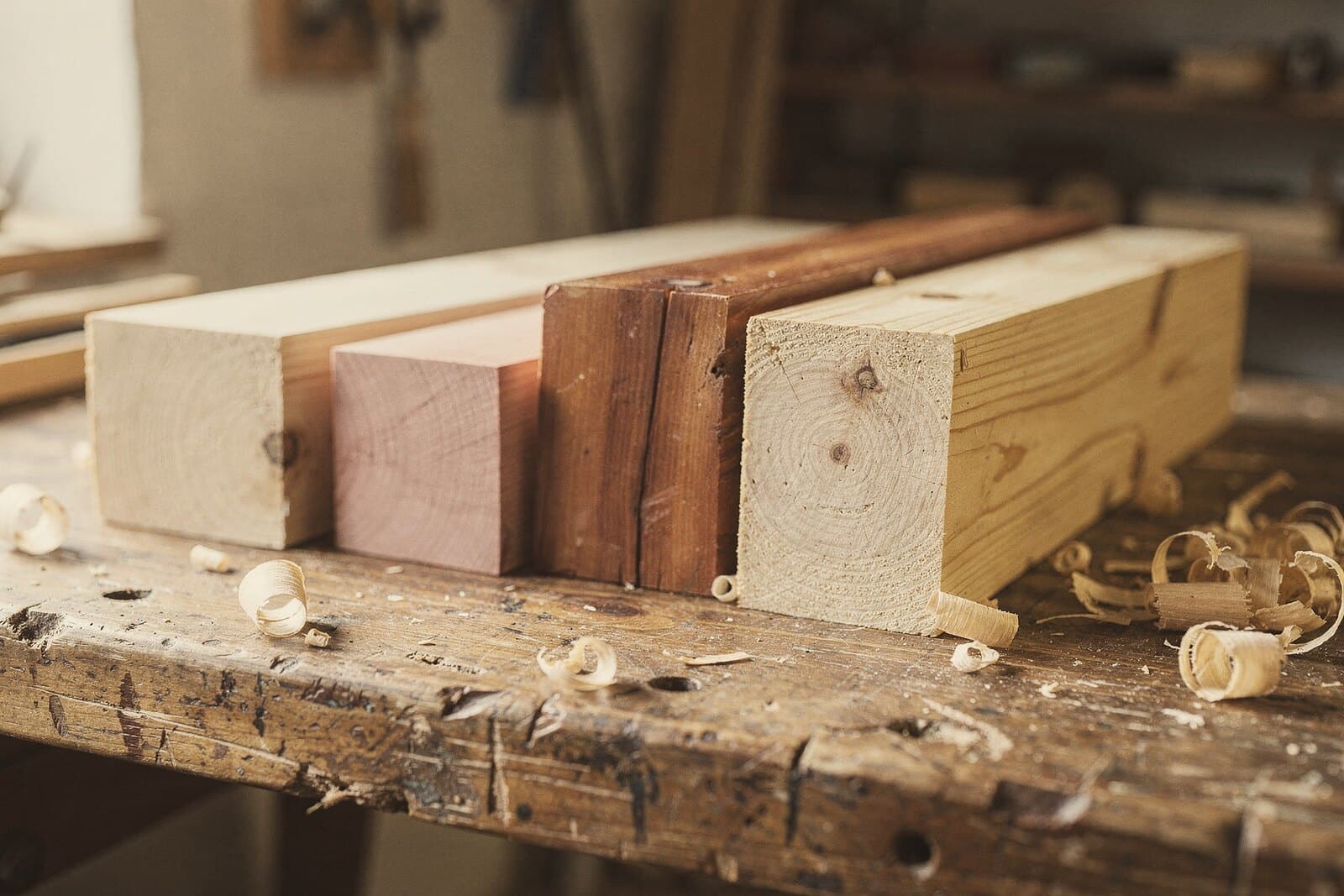
Each technique has its wood. Ring turning needs spruce, wet and free of knots; at the old Seiffen mill the wood was kept under water in the mill pond. The shaved tree is cut from straight-grained linden. And all of it must be properly dried first, or a piece will warp.
At the lathe
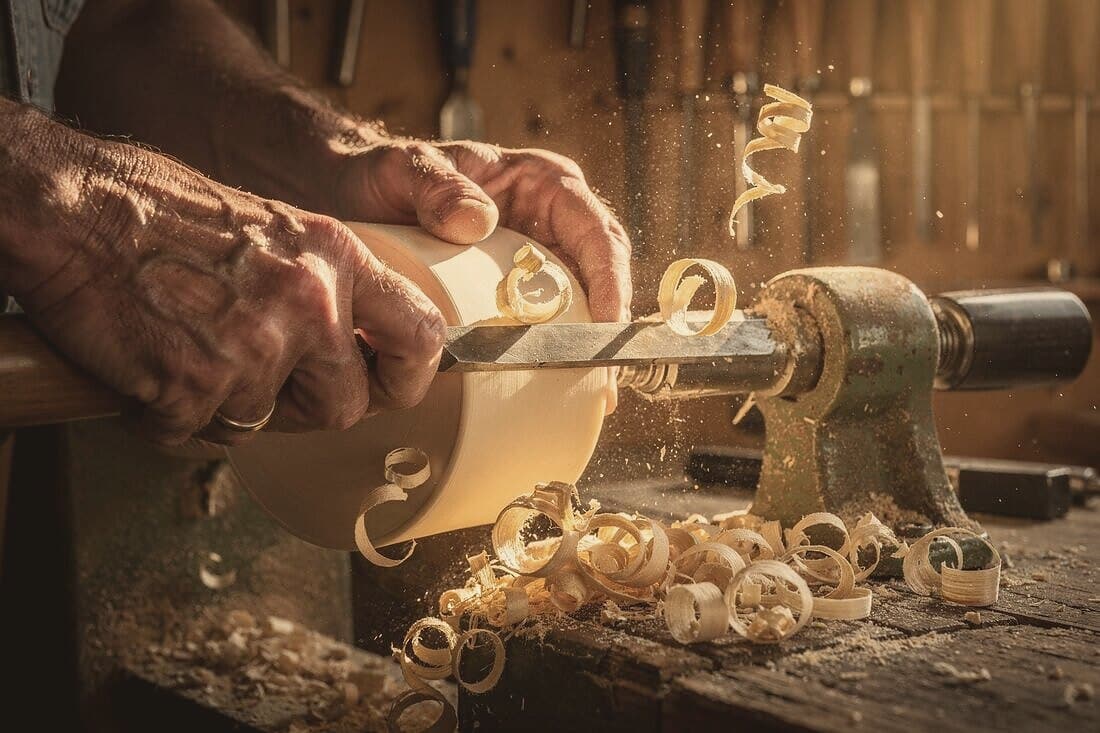
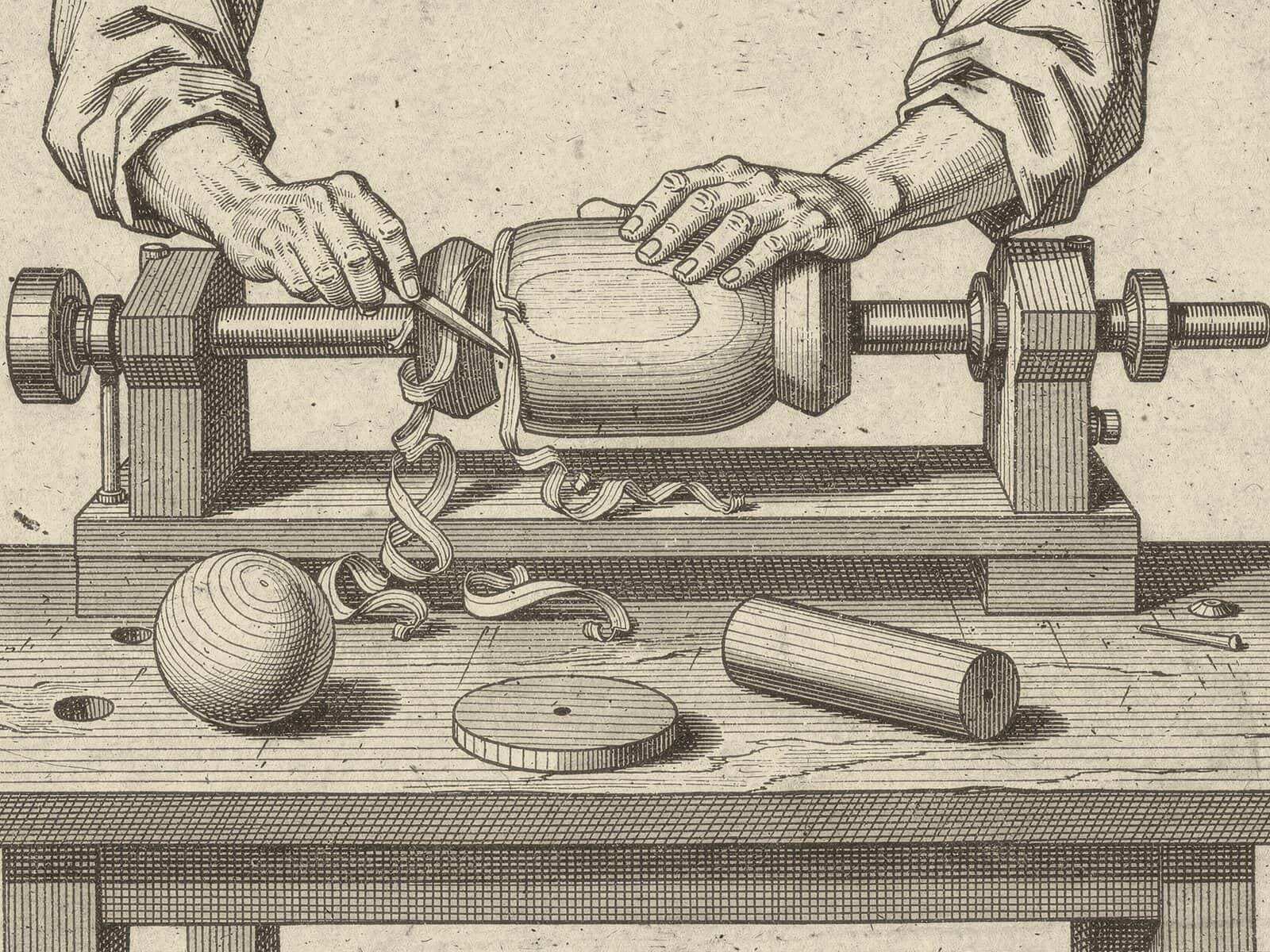
Drechseln, turning, was the central technique of the Seiffen area, and in the museum’s words a particularly productive and rational one. The turner shapes the spinning wood with chisels held against a rest, and can repeat the same profile again and again. The early Seiffen turners made peg dolls and small household goods, and a famous specialty: wooden apples and pears, turned hollow, that opened to reveal a tiny kitchen, a set of dishes, even a little town, at once packaging and toy.
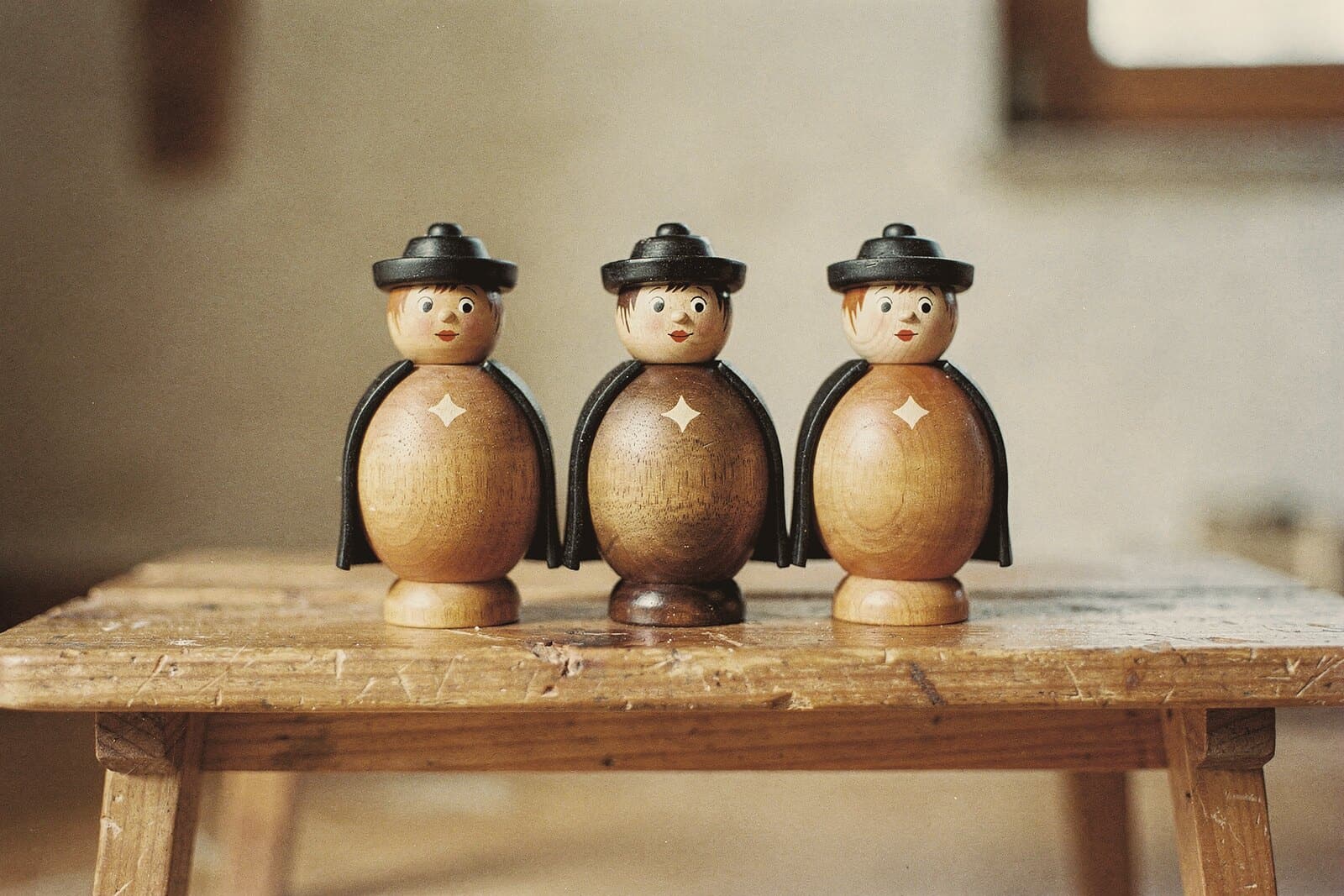
Smokers, nutcrackers, angels and miners are all, at heart, turned pieces: bodies, heads, hats and arms come off the lathe as separate parts and are then fitted, glued and painted.
Knife, saw, shaving blade and brush
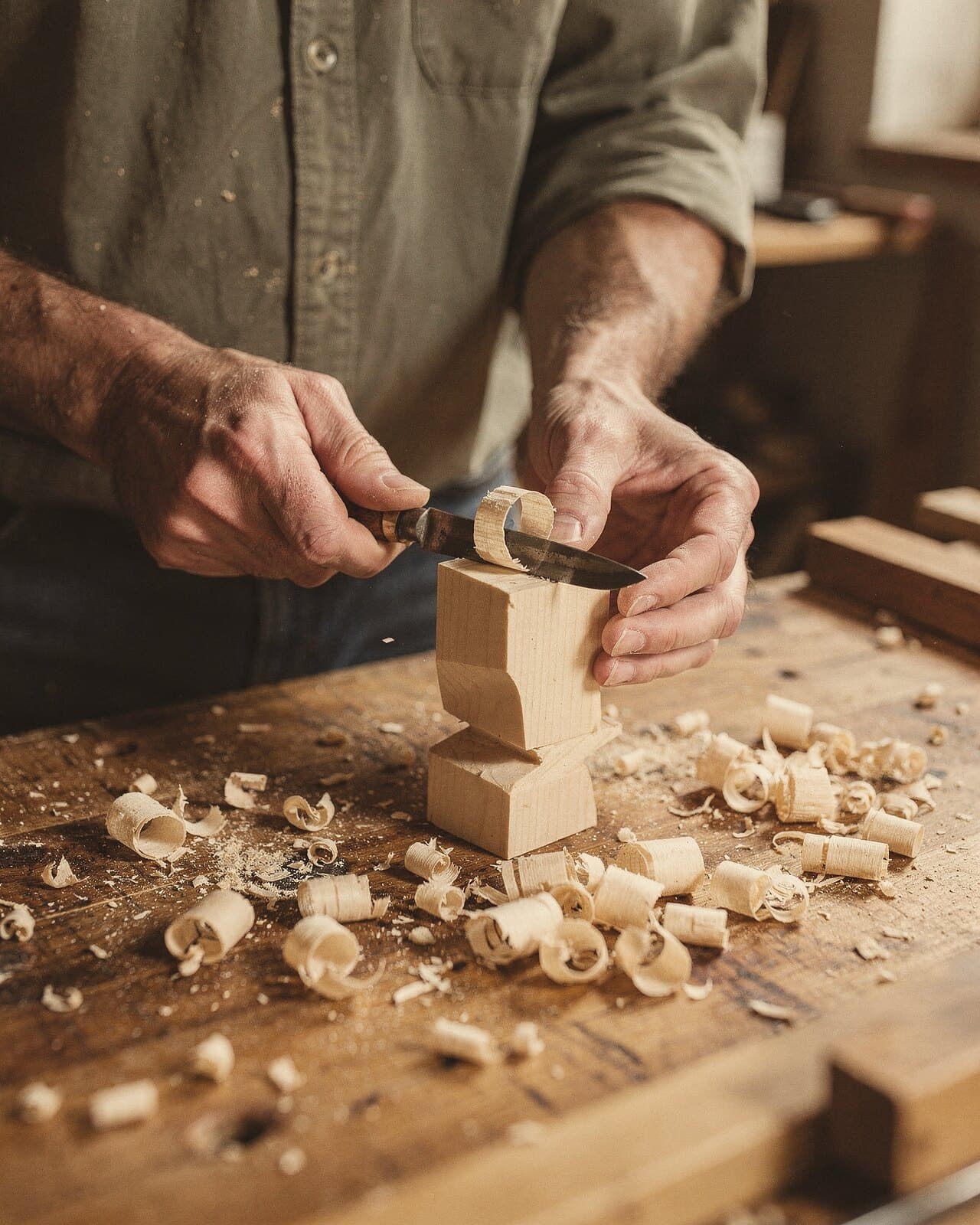
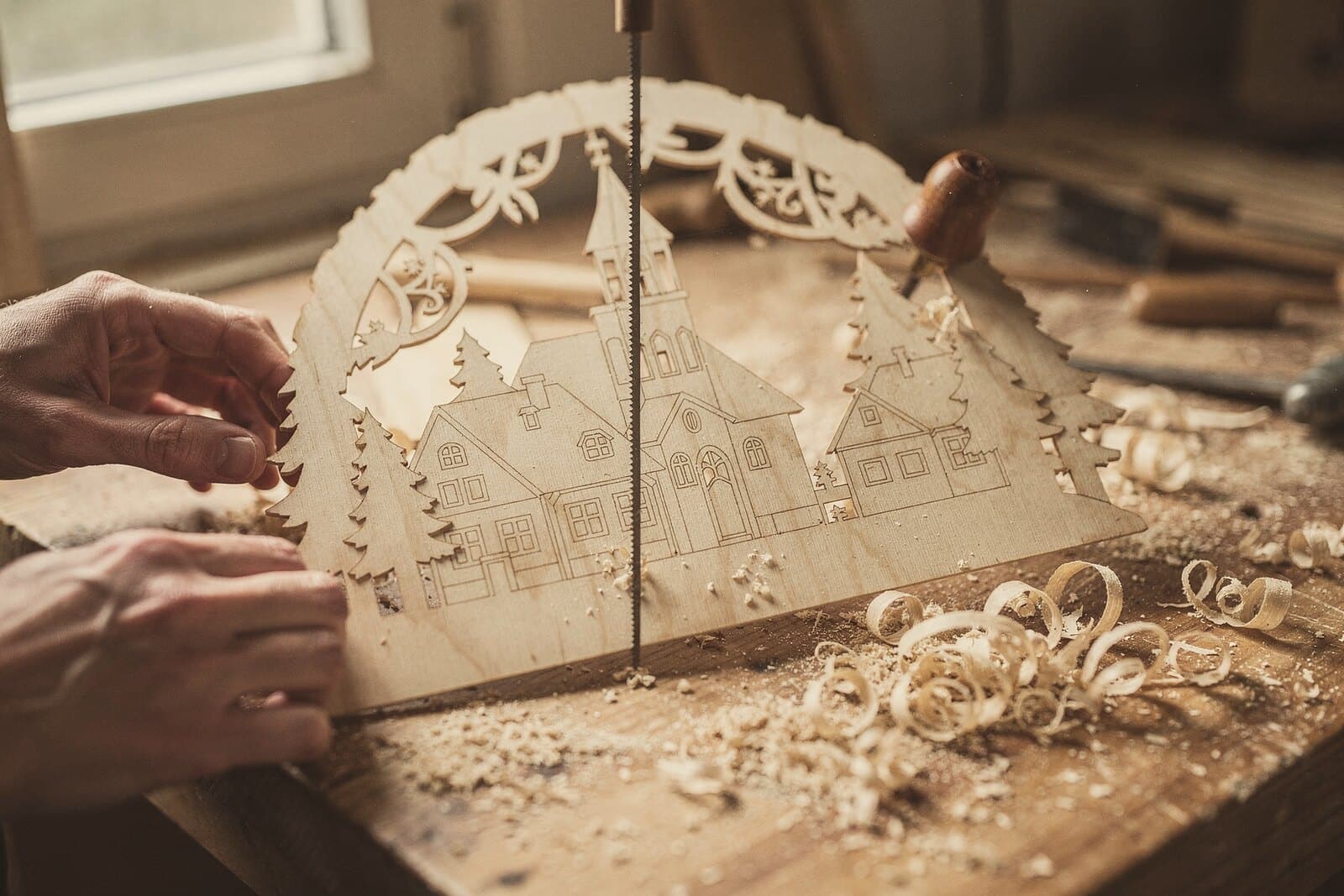
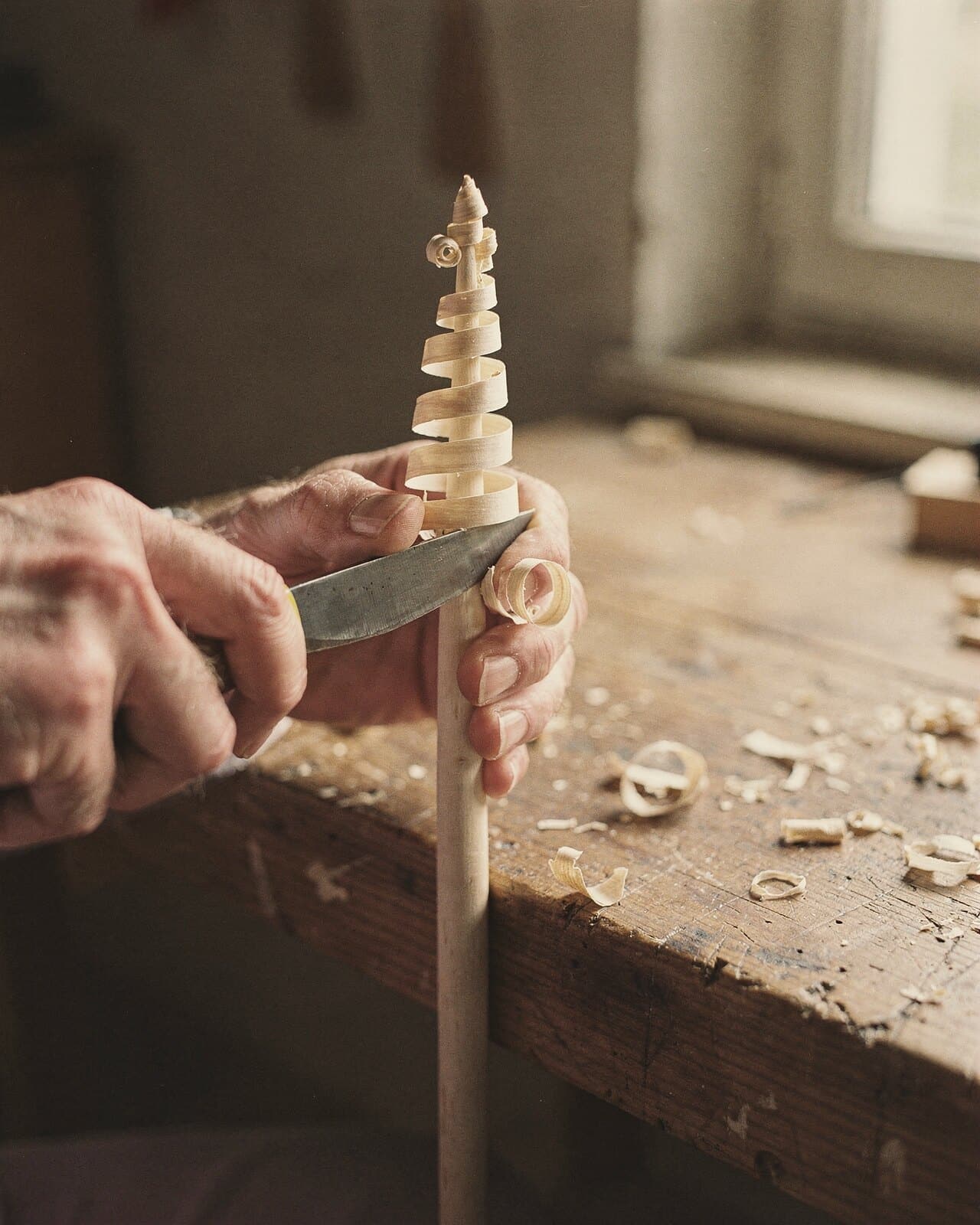
Beside turning, the house industry of the Erzgebirge used a whole family of techniques: Schnitzen, carving, strongest in the western mountains; Laubsägearbeit, fretwork, which cuts the silhouettes of candle arches; Spanbaumstechen, lifting curled shavings to make a shaved tree; and painting, often done at home. There were chip boxes for packing the toys, and figures pressed from a paper-and-glue compound, taught at the Seiffen school from 1874.
How a smoker is made
A Räuchermann is a small turned figure that comes apart at the middle. The lower half carries a little metal plate where the incense cone burns; the upper half, hollow inside, fits over it, and the smoke leaves through the mouth.
Turning the parts
The body, the base and the head are turned on the lathe, each to its own profile, usually from local hardwoods.
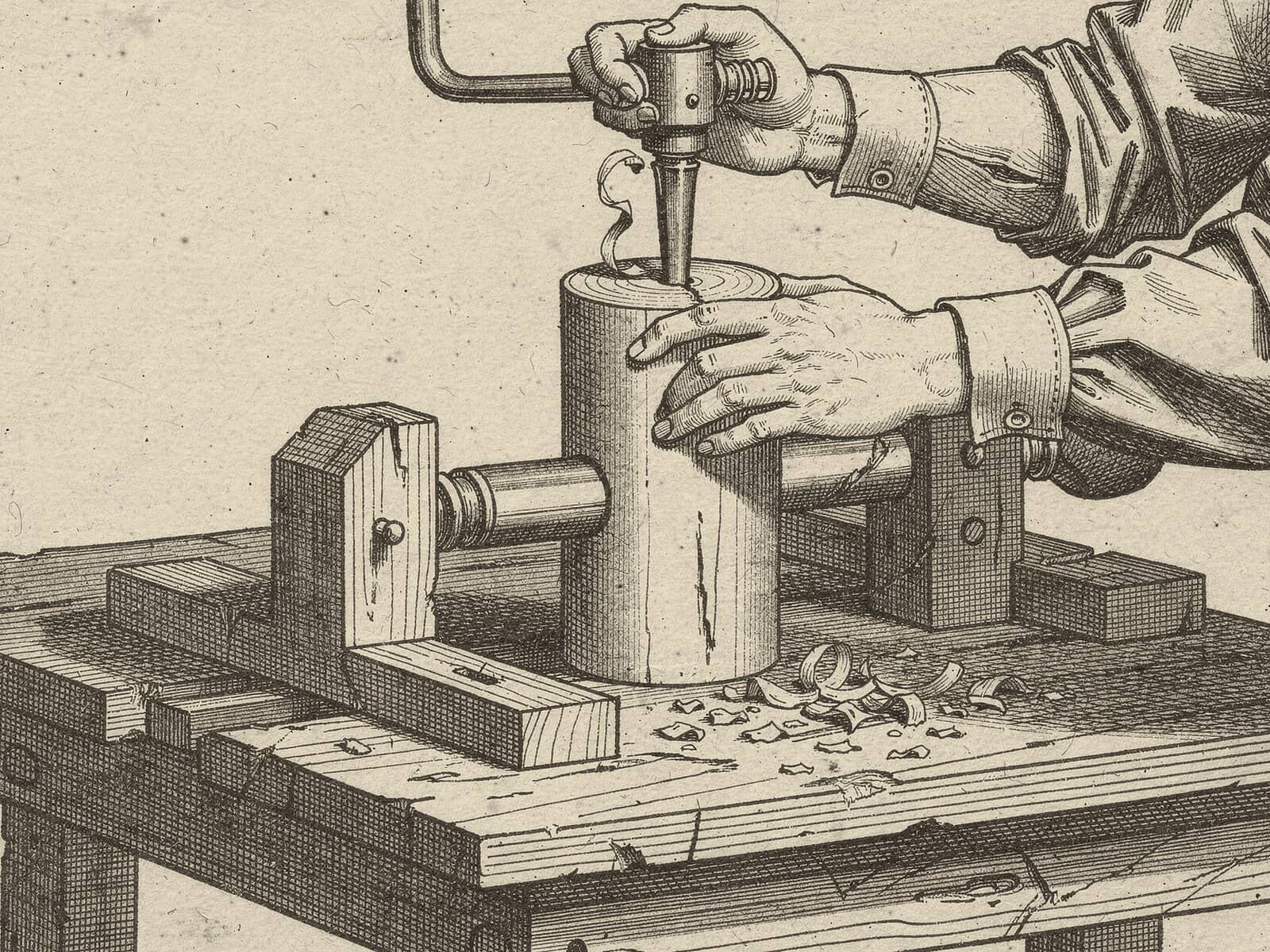
Hollowing the chamber
The upper body is turned hollow to make the smoke chamber, and the mouth is bored through so the smoke has a way out. An opening below lets fresh air in to keep the cone burning.
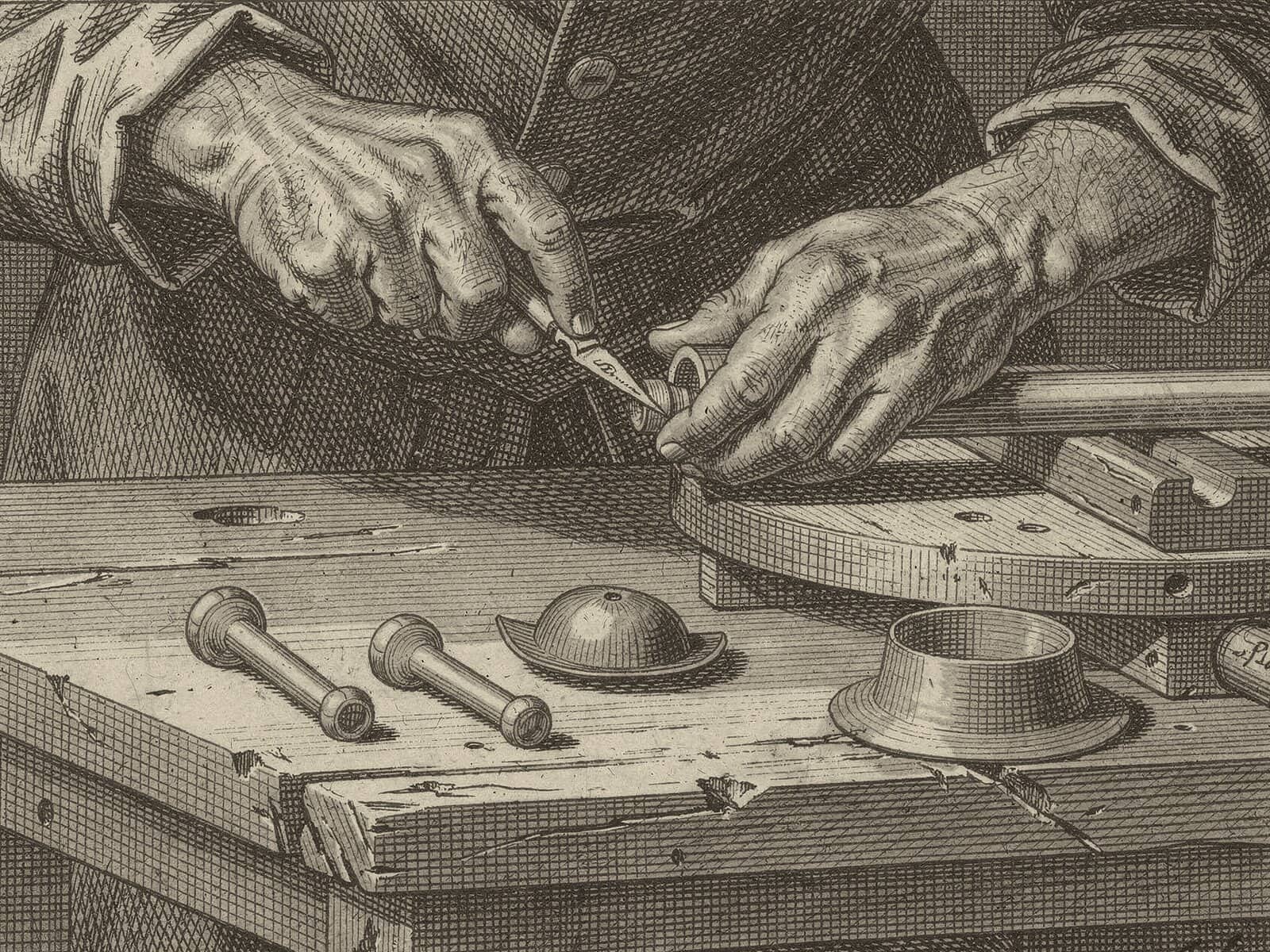
Hat, arms and pipe
Hat, arms and the tools of the figure’s trade are turned or carved separately. The pipe is often a thin wooden dowel with a turned bowl.
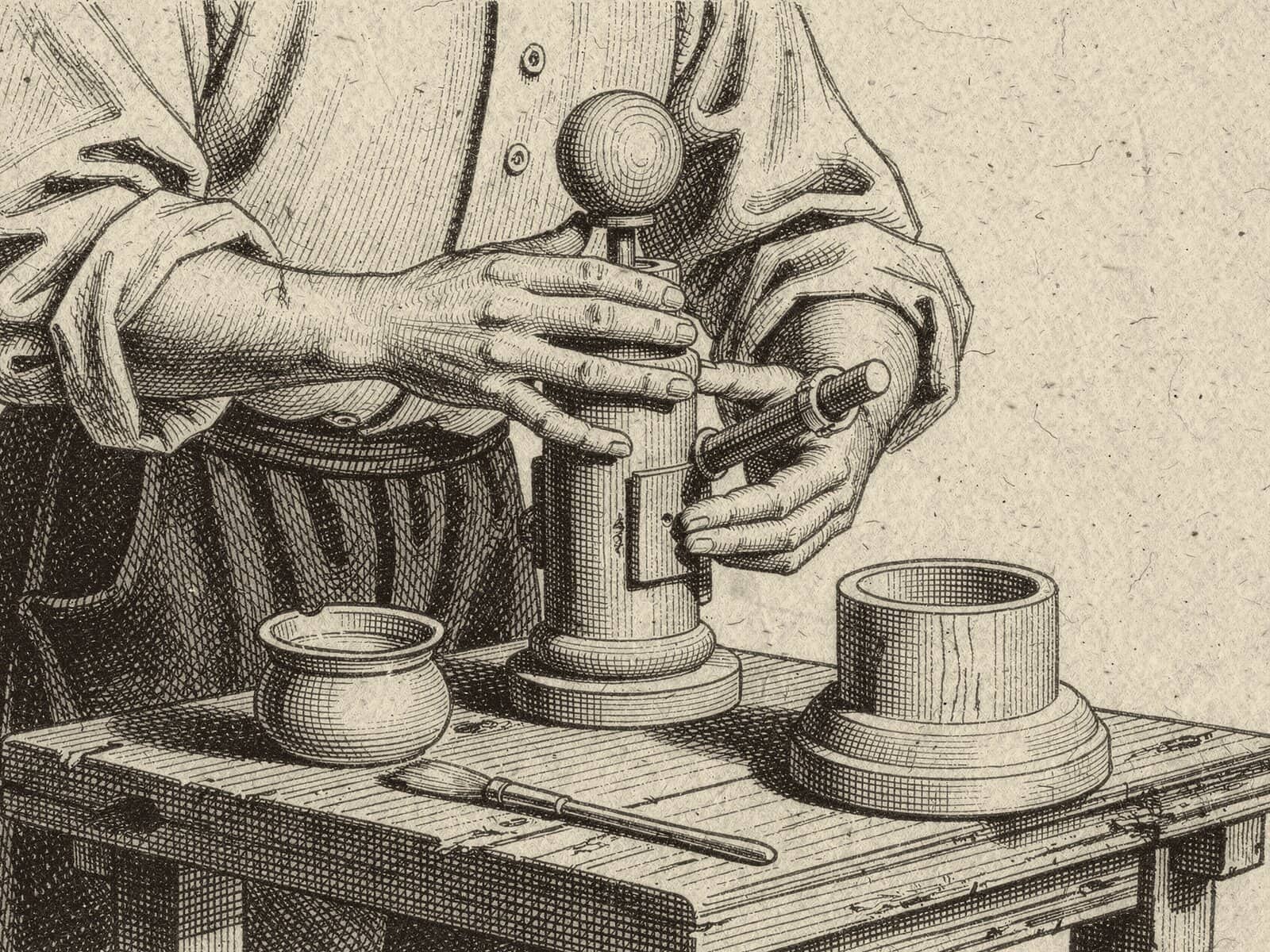
Fitting and gluing
The parts are fitted and glued, and the metal plate for the cone is set into the base.
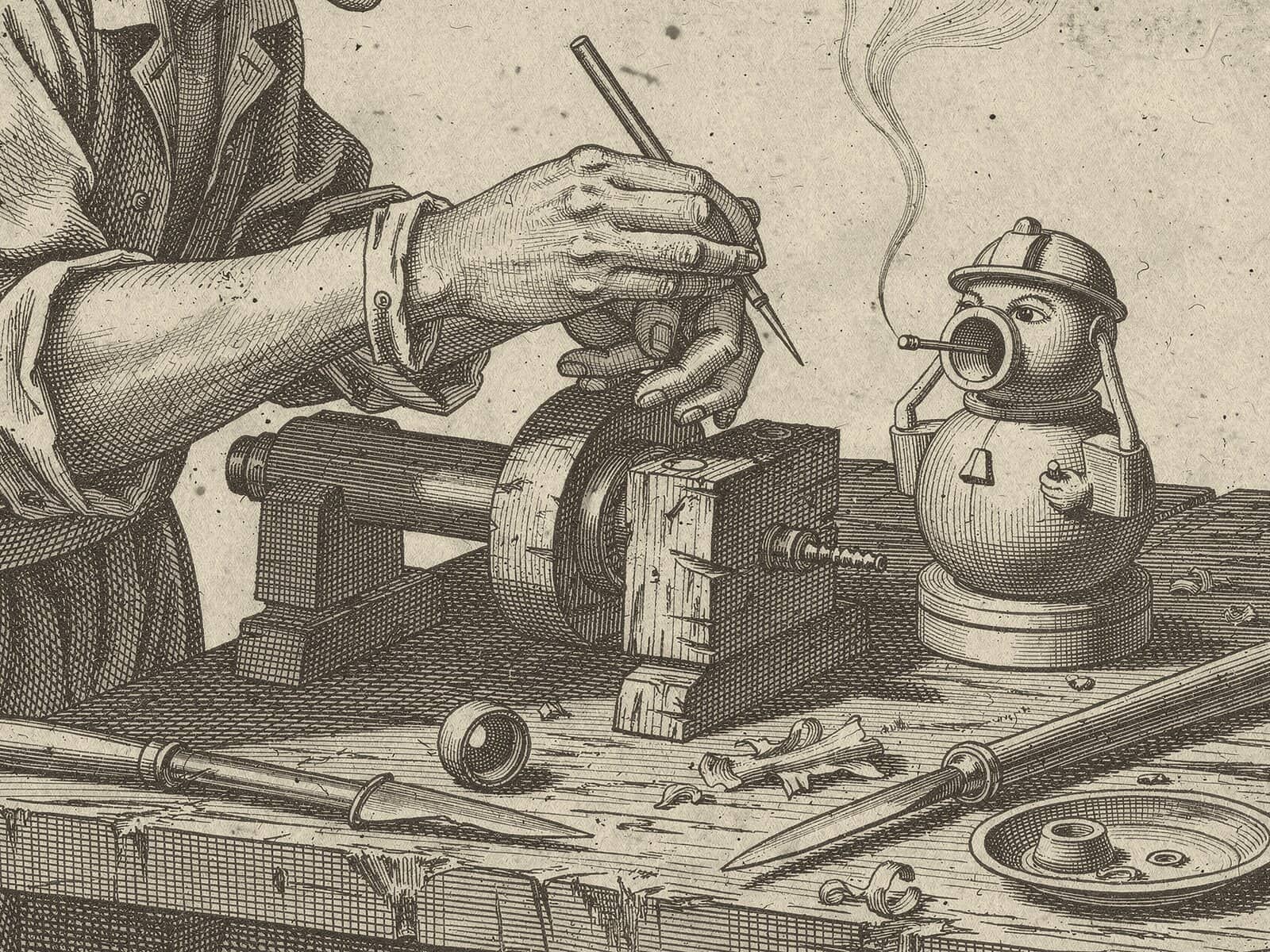
Painting
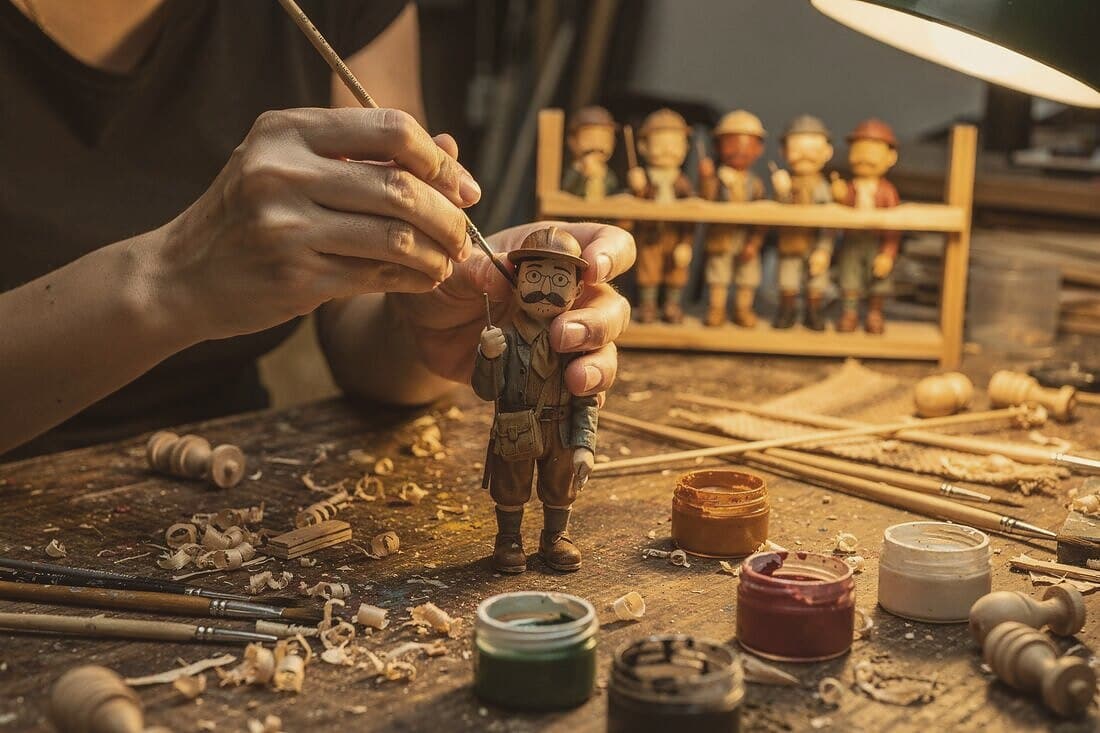
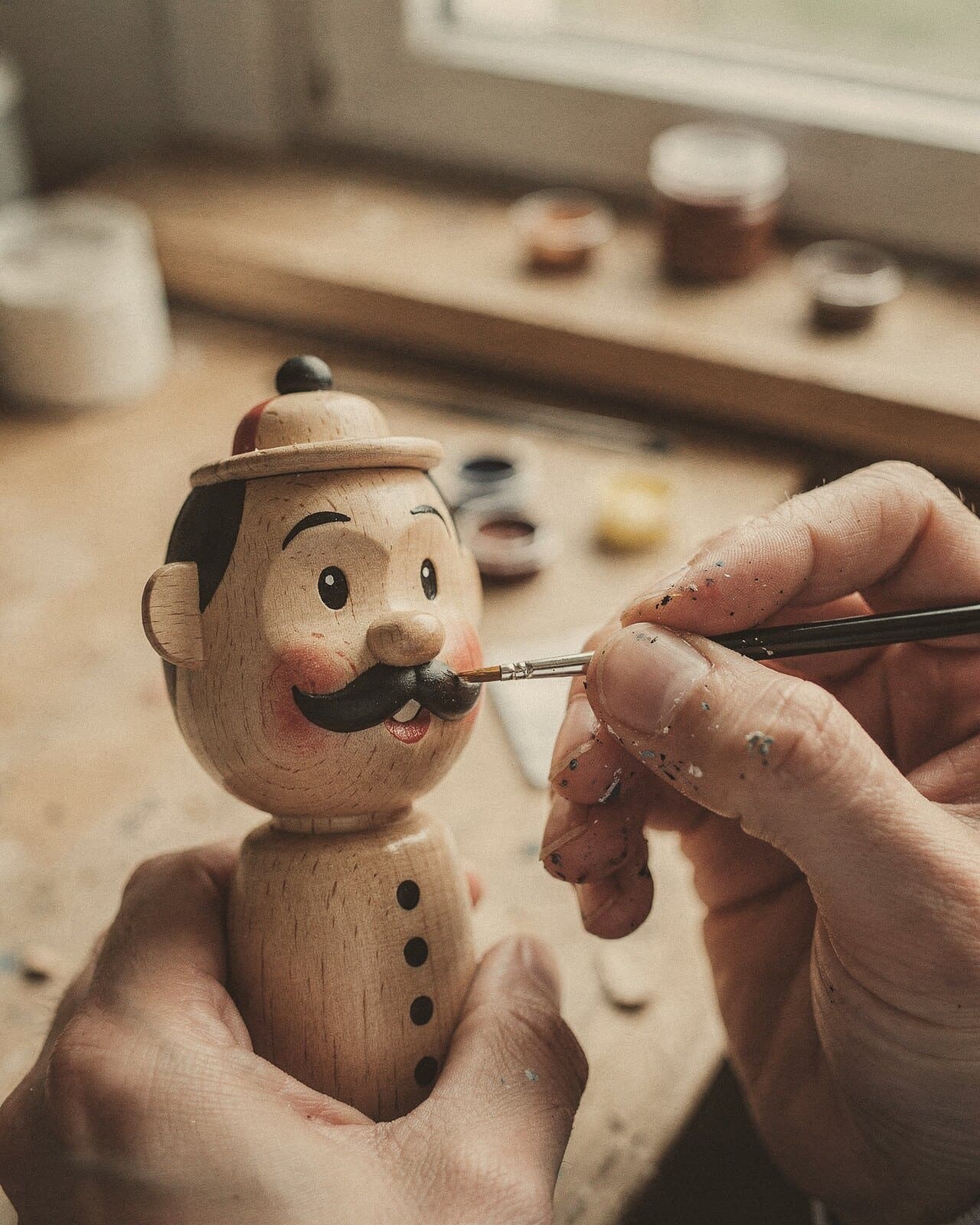
Finally the figure is painted, face and costume, by hand. A cone set on the base, the body put back on, and the little man begins to smoke.
Why a pyramid turns
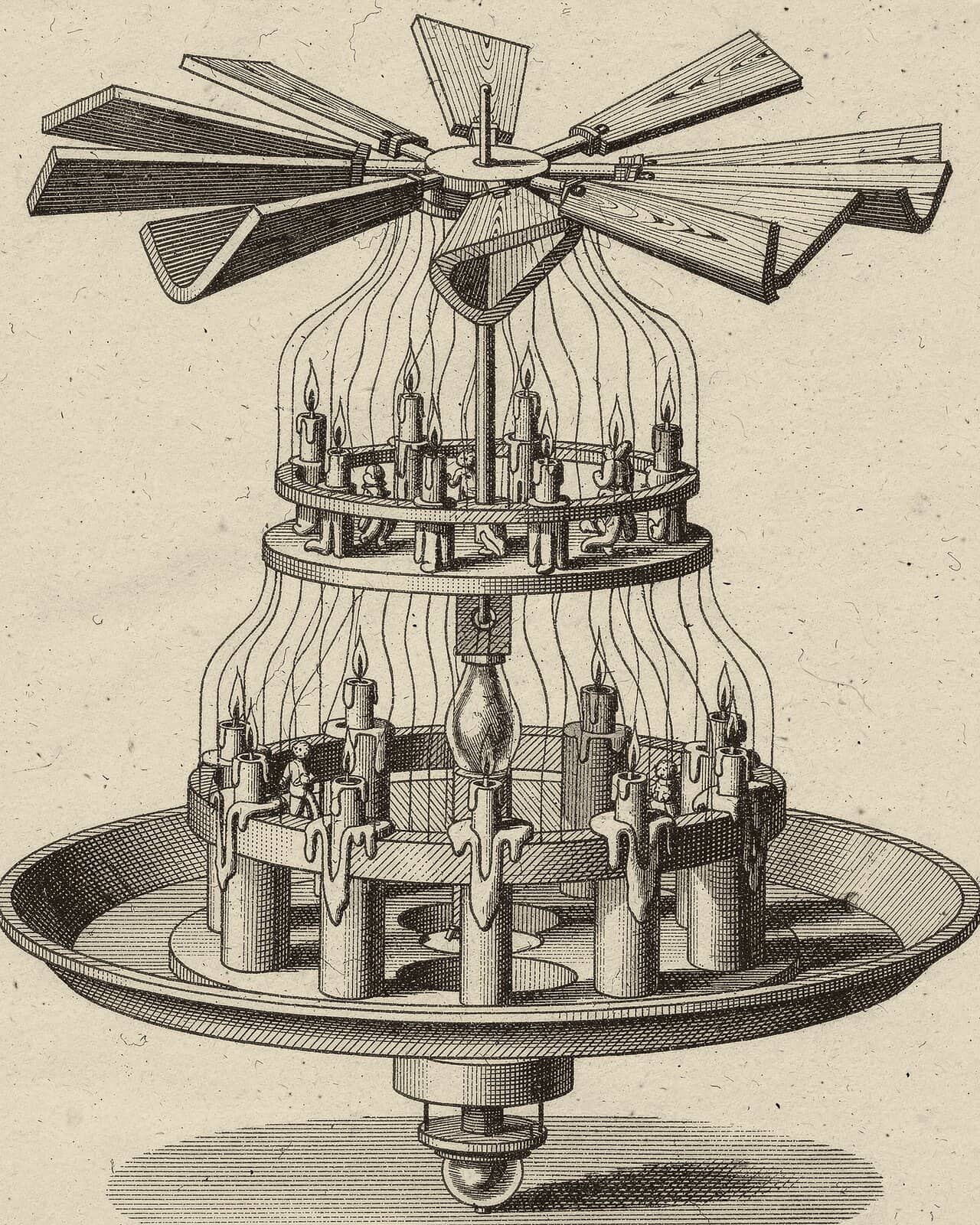
A Christmas pyramid is a small heat engine. The candles at its base warm the air above them; warm air expands and rises, and on its way up it presses against the tilted blades of the vane wheel, the Flügelrad, at the top. The wheel sits on a central shaft, and the shaft carries one or more tiers of figures, so the whole carousel turns.
The shaft stands on a fine metal tip in a small cup of glass or ceramic, a bearing with almost no friction, which is why a few candles are enough. The blades turn best at an angle of about 45 degrees, and the more candles, the faster the turning.
Ring turning: a herd from one ring
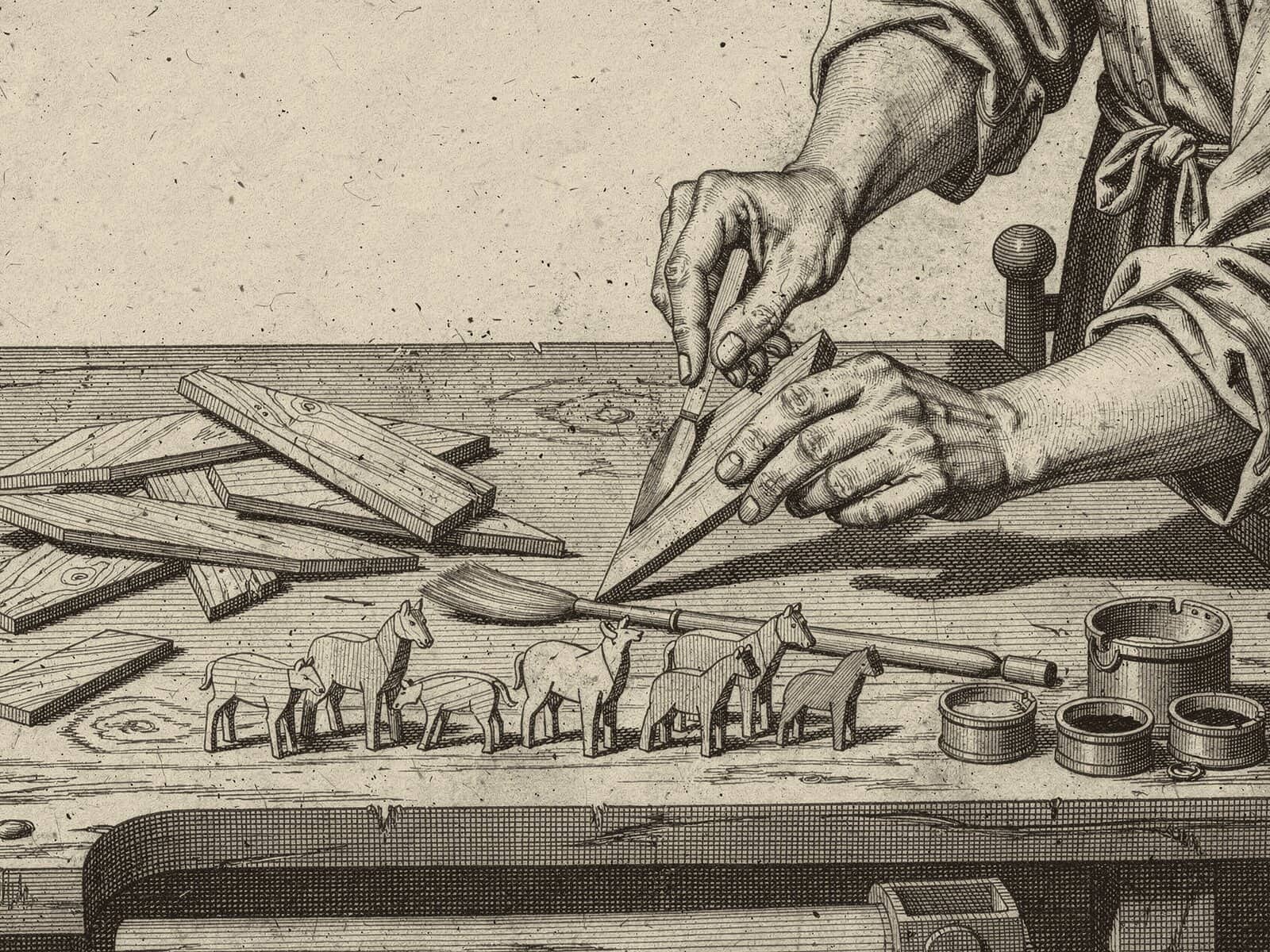
Reifendrehen is found only in Seiffen and its neighborhood, and today only a handful of people can still do it. The turner shapes a ring so that its cross-section is the outline of an animal, and cannot see that outline while working.
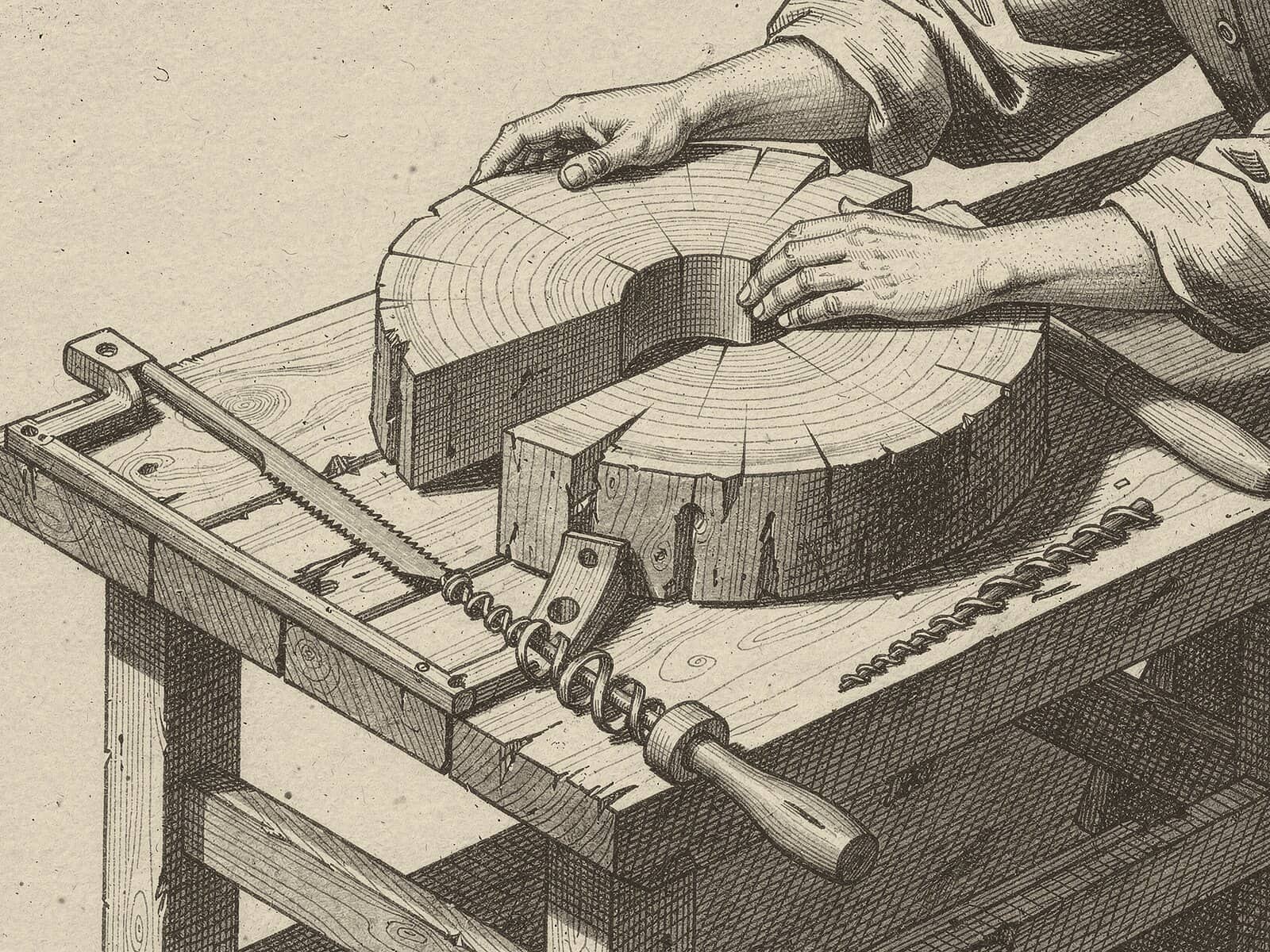
The ring
A ring is cut from a log of wet, knot-free spruce, some 30 to 50 centimeters (12 to 20 inches) across.
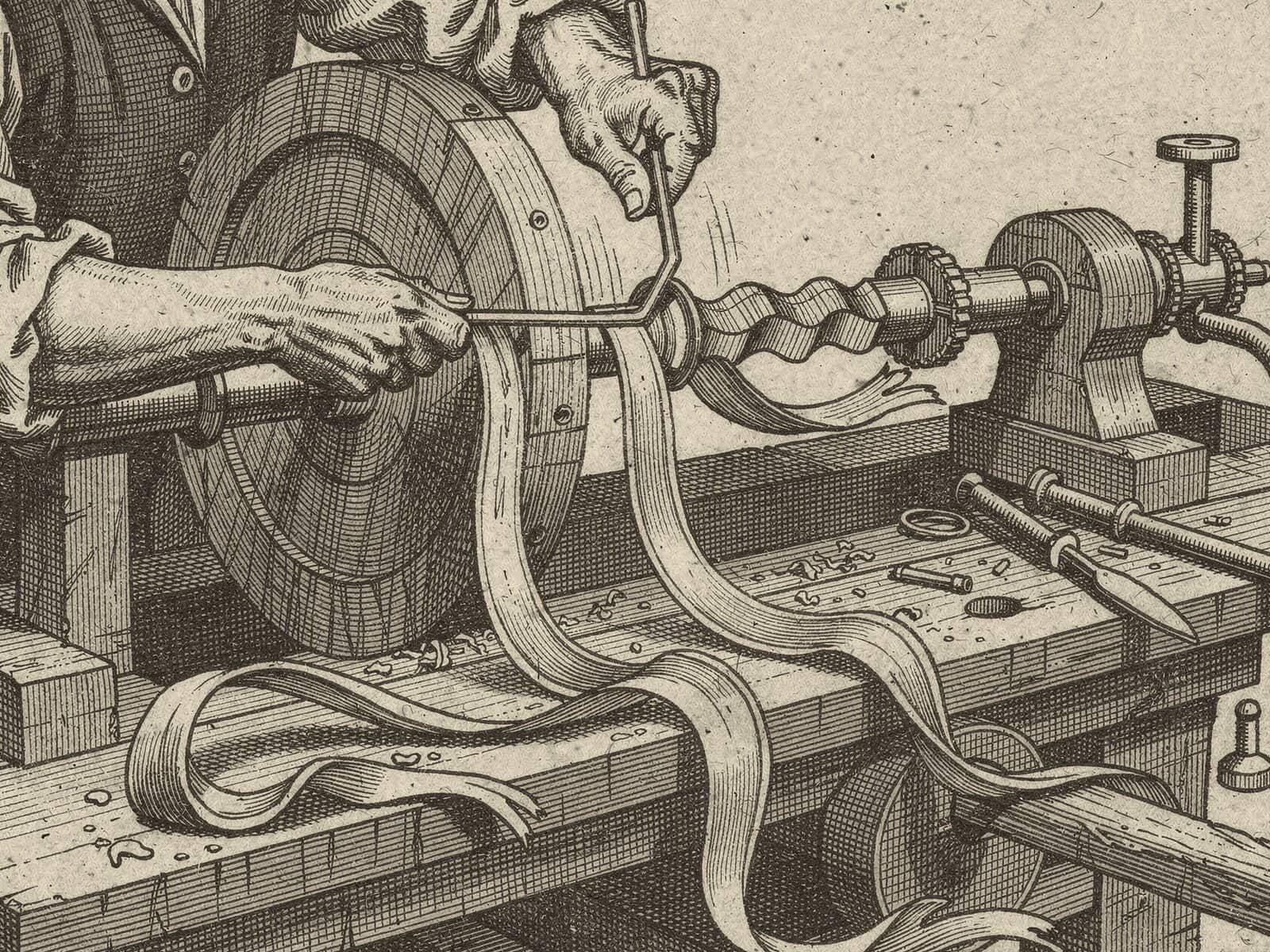
Turning the hidden profile
On the lathe the turner shapes the inside and outside of the ring so that, in section, it holds the side profile of a horse, a cow or a deer. Mistakes show only at the end, when they can hardly be corrected.
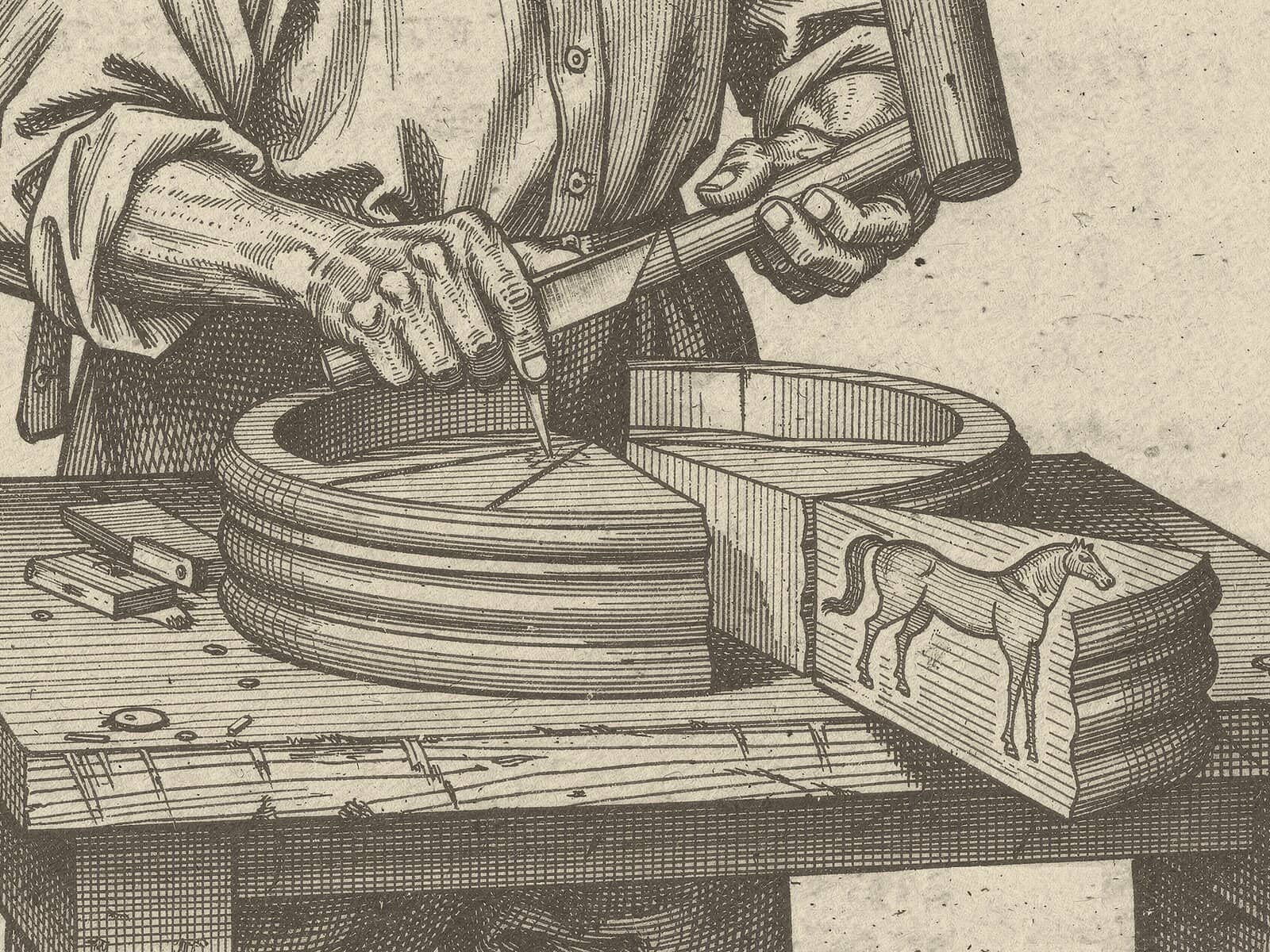
Splitting
The ring is split like a cake into 40 to 60 slices. Each slice is one animal, identical to its neighbors.
Carving and painting
Each blank is carved, given glued-on ears and tail, and painted. Around 1920 one skilled ring turner could supply blanks for four families of home workers in a day.
Signs of handwork
Handwork and machines have lived side by side here for a long time. Ring turning and the merchant system were themselves ways of making many pieces alike; the first semi-automatic machines came to the workshops in 1935; and today’s apprentices learn computer design and computer-controlled machines as well as the lathe and the knife. What the hand still decides is the finish: the turning of a face, the line of an eye, the way the colors meet.
Imitations from abroad copy the shape but rarely the finish. In 2025 the German Press Agency, quoting dealers and the makers’ association, listed some telltale signs: thin sheet metal where good pieces use heavier brass candle holders, wood that was not properly dried and warps, and labels promising something “in Erzgebirge style.”
Sources
- Erzgebirgisches Spielzeugmuseum Seiffen, “Entstehung der erzgebirgischen Spielzeugherstellung”
- Erzgebirgisches Spielzeugmuseum Seiffen, open-air museum press kit
- Erzgebirgisches Spielzeugmuseum Seiffen, Museumsbulletin 2010-1
- Erzgebirgisches Spielzeugmuseum Seiffen, “Weihnacht im Museum”
- Kurort Seiffen, “Einmalig auf der Welt: Reifentiere und Spanbäume”
- Deutsche Handwerks Zeitung, ring turning (December 23, 2022)
- TU Chemnitz, Advent calendar 2013: the Christmas pyramid
- Berliner Kurier with dpa, “Holz-Schätze aus dem Erzgebirge” (December 4, 2025)