Der Schwibbogen: Candle Arches
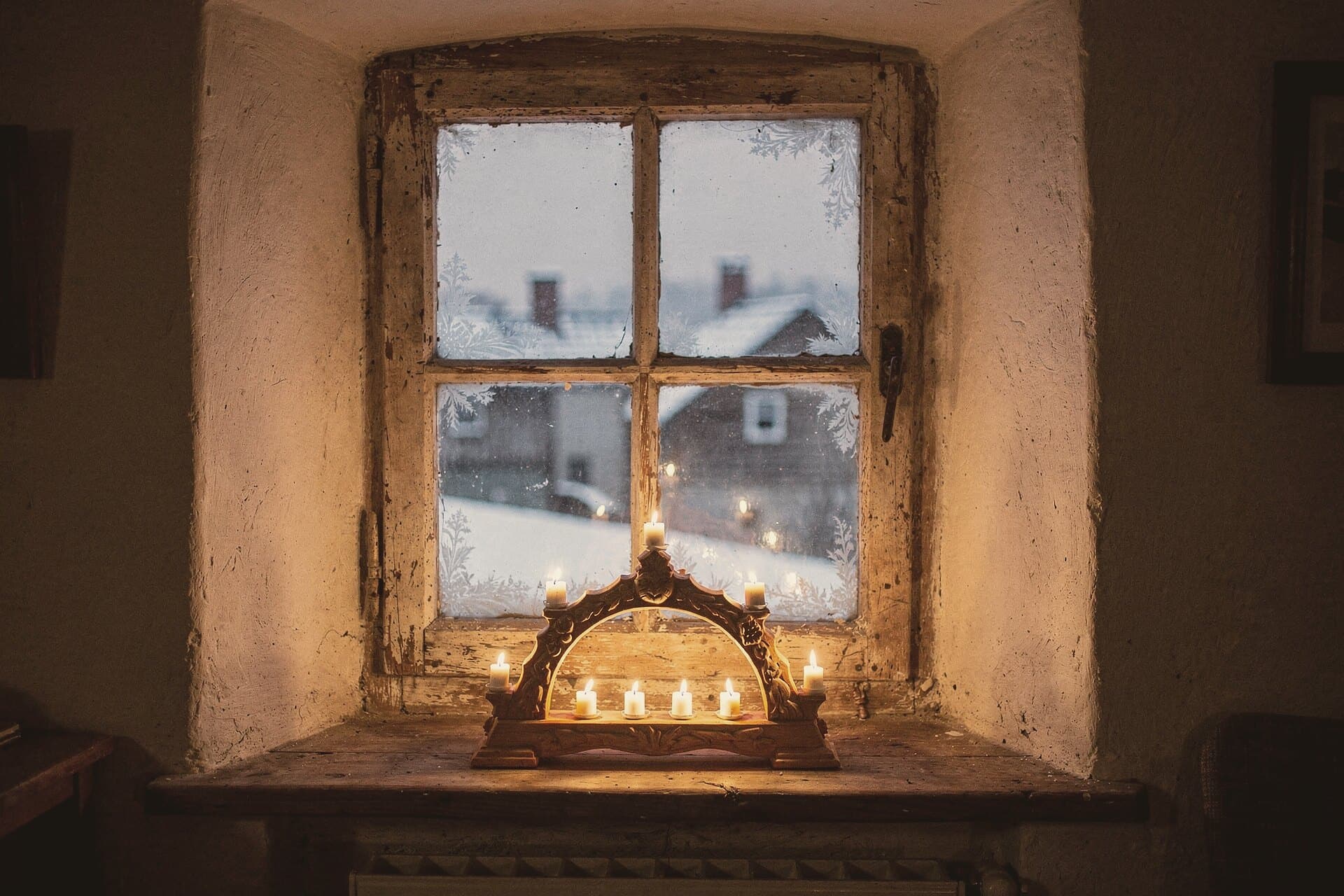
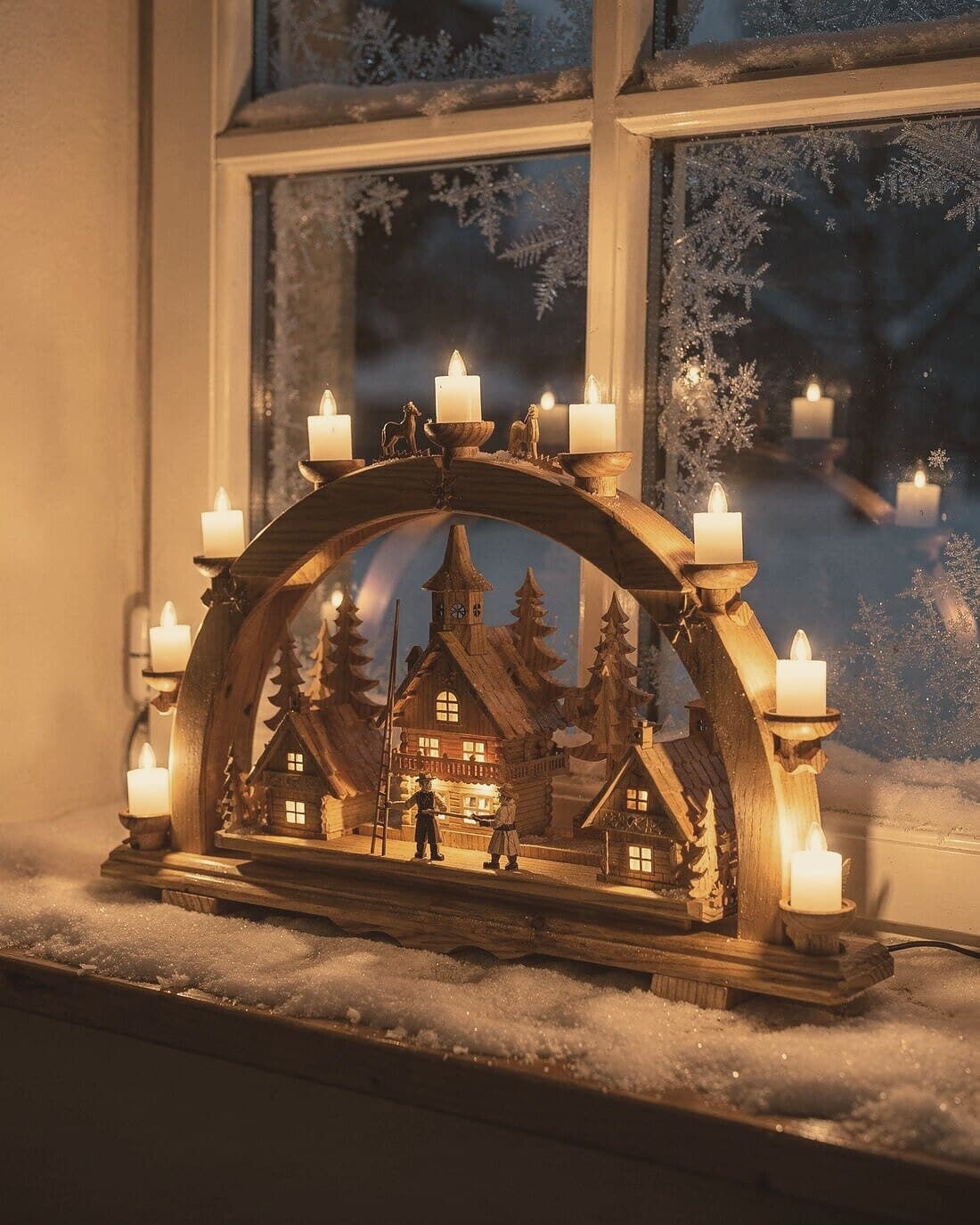
An arch of lights in the window, from Advent until Candlemas. In the Erzgebirge, as Saxony’s own campaign puts it, there is hardly a window without one. The oldest known candle arch was forged in iron by a mine blacksmith in Johanngeorgenstadt and bears the date 1740.
Styles
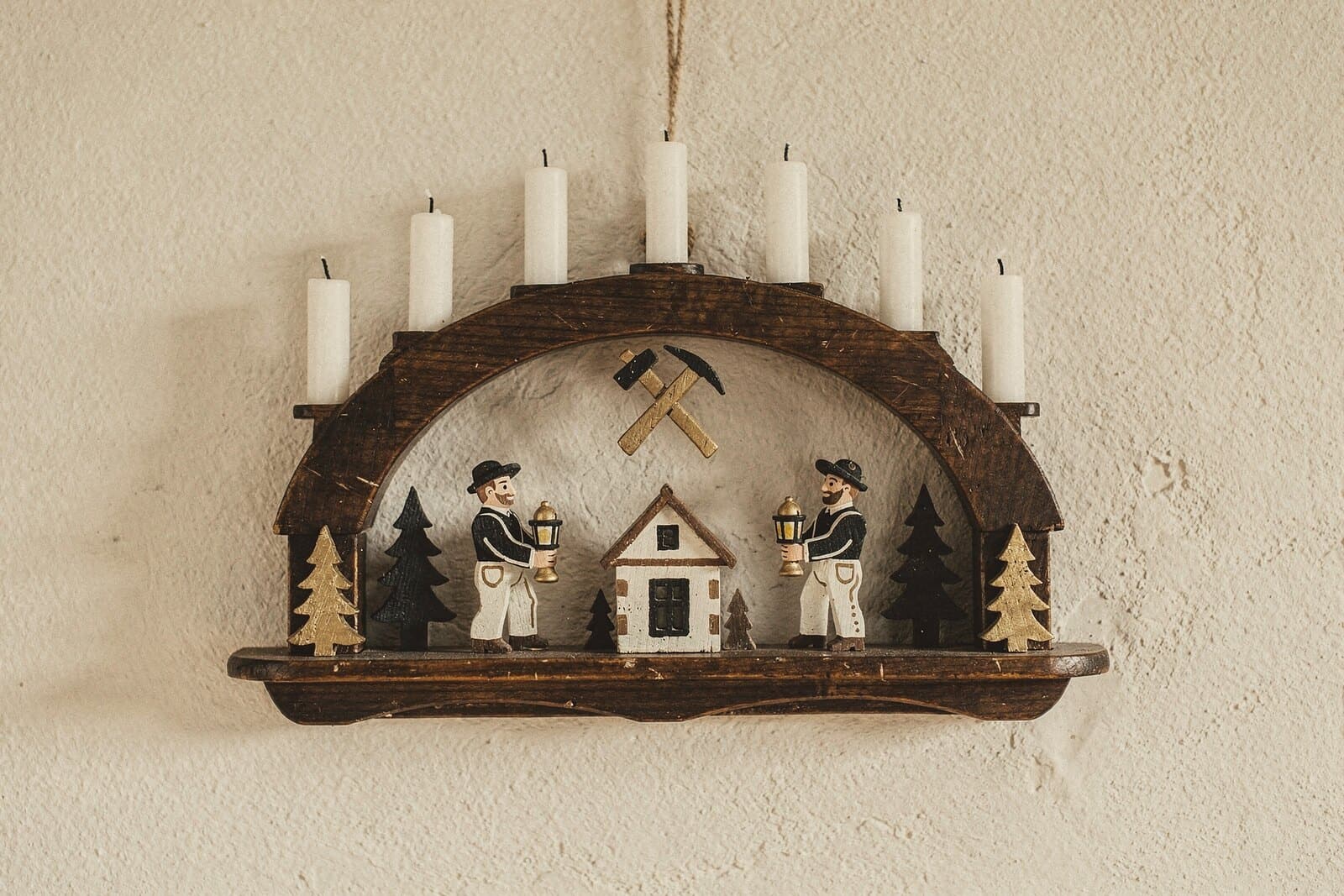
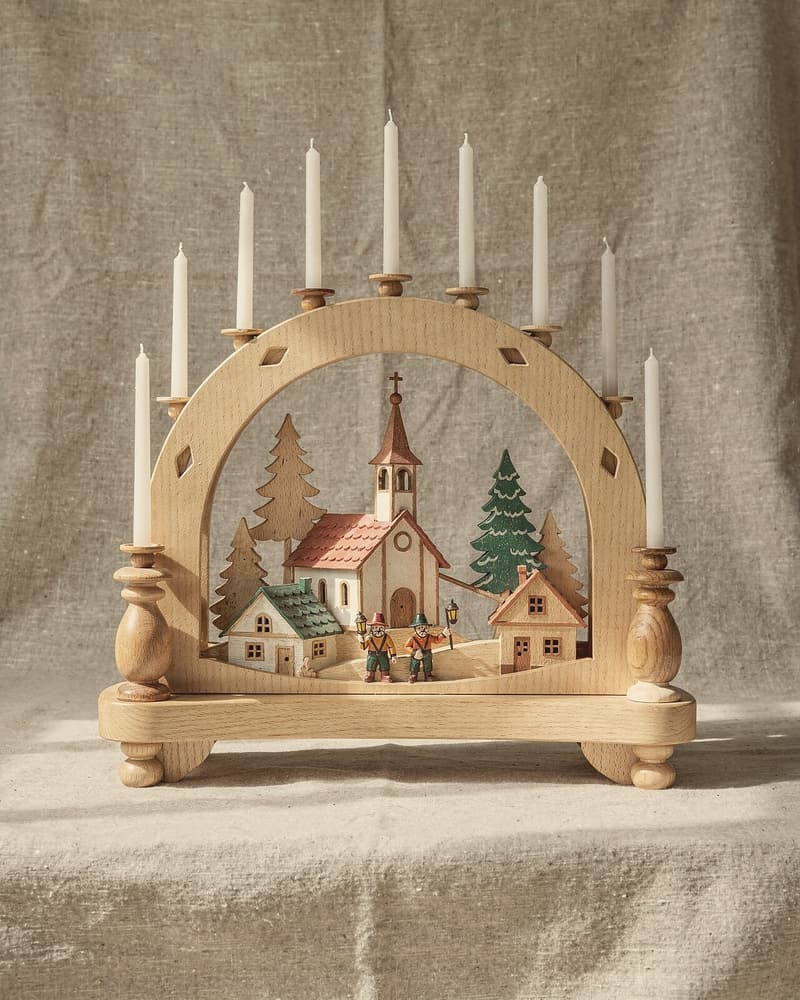
The earliest arches showed Adam and Eve, whose feast day fell on December 24 in the old church calendar; sun, moon and stars came later. Today’s favorites are miners, the Nativity, forest scenes with animals, the Seiffen church, and the classic design of 1937: two miners under the Saxon arms, between a woodcarver and a lace-maker.
The story
The name comes from architecture: a Schwibbogen is an arch spanning between two walls. The oldest one known, forged in one piece from iron in the mining town of Johanngeorgenstadt, carries the inscription “J. C. Teller,” the name of a mine blacksmith. For a long time it was dated 1778; in 2003 the date 1740 came to light under a later coat of paint. Another early arch, from 1796, was a mine blacksmith’s gift to his mine and is kept in the castle museum at Schwarzenberg.
What does the shape mean? Some see in it the half-circle of lamps miners hung on the wall at their last shift before Christmas; others the mouth of a mine tunnel; others the vault of heaven, which would suit the sun, moon and stars of the early arches. None of these is documented; all of them are told. What is on record is a scene from the mid-1800s: at the Engelsburg mine near Jöhstadt, the miners bent a great branch into an arch, set candles on it for their Christmas service and lit every window of their mine house.
Until the 1930s the candle arch was a local custom. Then the Schwarzenberg industrialist Friedrich Emil Krauß ran a competition for “an arch for everyone.” The Leipzig artist Paula Jordan won it, and her design of 1937, the two miners between the carver and the lace-maker, became the emblem of a large Christmas exhibition in Schwarzenberg meant to draw visitors to the region. From there the arch spread across the mountains and beyond. After the Second World War wooden arches became the rule; in the GDR, where they were hard to buy, many families cut their own with a fretsaw; and since the mid-20th century most have been lit electrically.
Johanngeorgenstadt calls itself the home of the candle arch. In 2012 it unveiled what it calls the world’s largest free-standing one: 25 meters (82 feet) wide and 14.5 meters (48 feet) high.
How it’s made
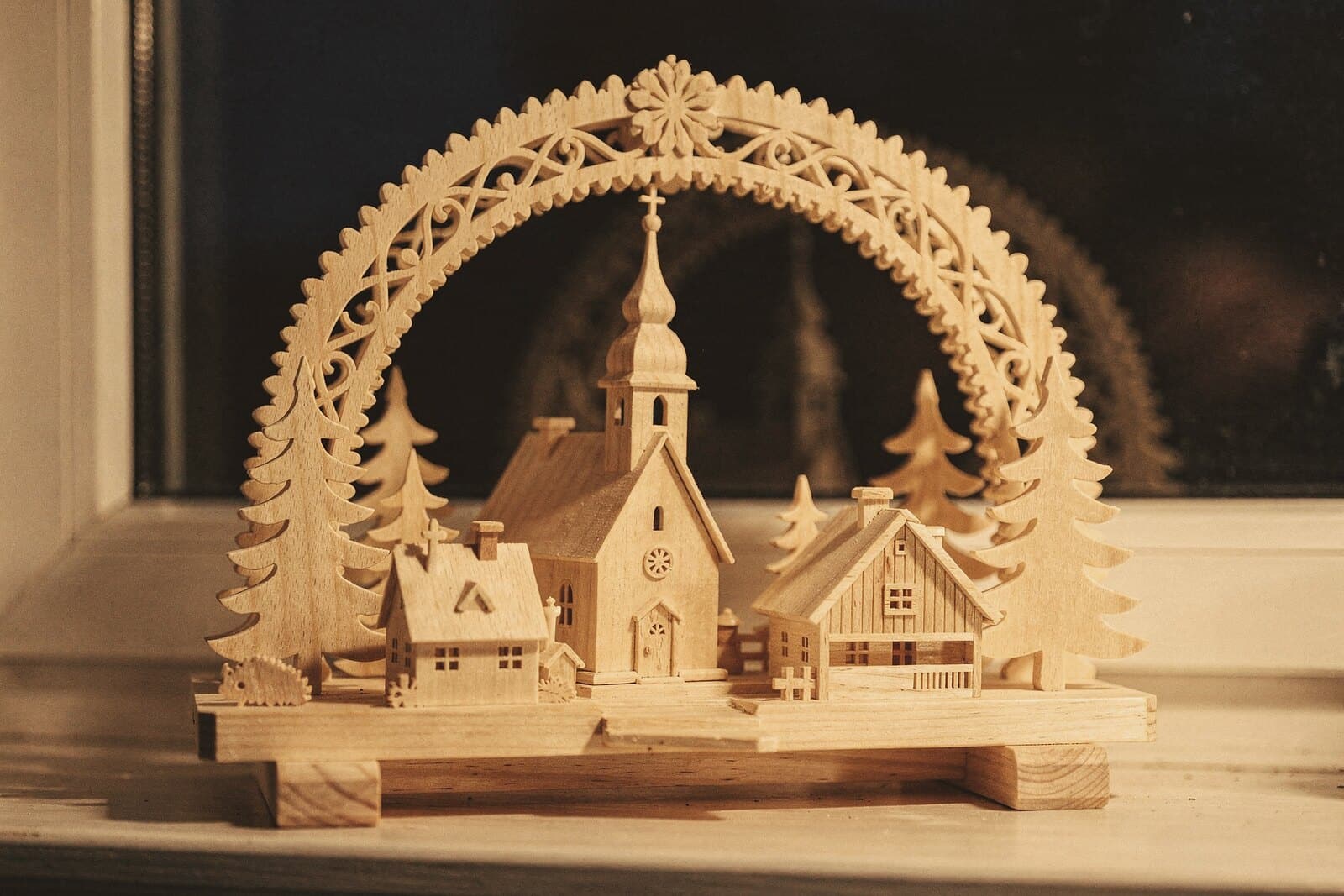
The first arches were forged from iron in one piece. Today’s are mostly wood: the silhouette is cut with a fretsaw, the technique called Laubsägearbeit, then sanded, often painted, and fitted with candle holders or, far more often now, small electric lights. A finely cut arch shows its maker’s hand in the thin bridges of wood that hold the picture together.
Use and care
Most candle arches today are electric, with small candle-shaped bulbs. In a classic arch each bulb carries part of the current: the makers’ association explains that the mains voltage divided by the number of lights gives each bulb’s voltage, so a ten-light arch on European 230-volt current takes 23-volt bulbs. Replace a dead bulb promptly with one of exactly the voltage the maker specifies, unplug the arch first, and never mix LED and ordinary bulbs in one arch.
Arches made for Europe run on 230 volts. In the United States (120 volts) use only an arch the maker has built or converted for American current, and look for a testing-lab mark such as UL or ETL. Keep the cable away from heat and out of the way of feet.
If your arch takes real candles, use only candles that fit its holders snugly, set it where nothing can catch fire above or beside it, and never leave it burning unattended. Dust it with a soft, dry brush; keep it away from direct sun and damp; and store it in its original box, in a dry room at room temperature, until next Advent. Repairs are best left to the maker or a specialist.
Related pieces
 No. V
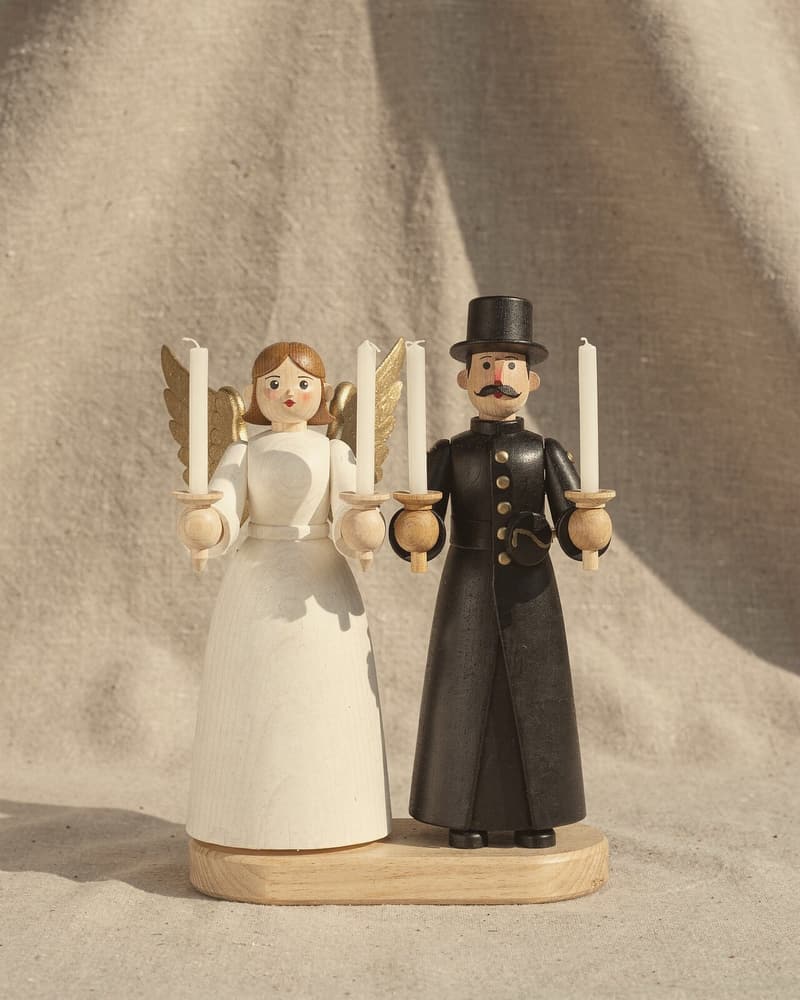
No. VEngel und Bergmann
Angel and minerThe candle-bearing pair, a miner in parade dress and an angel in white, since the 1830s.
 No. II
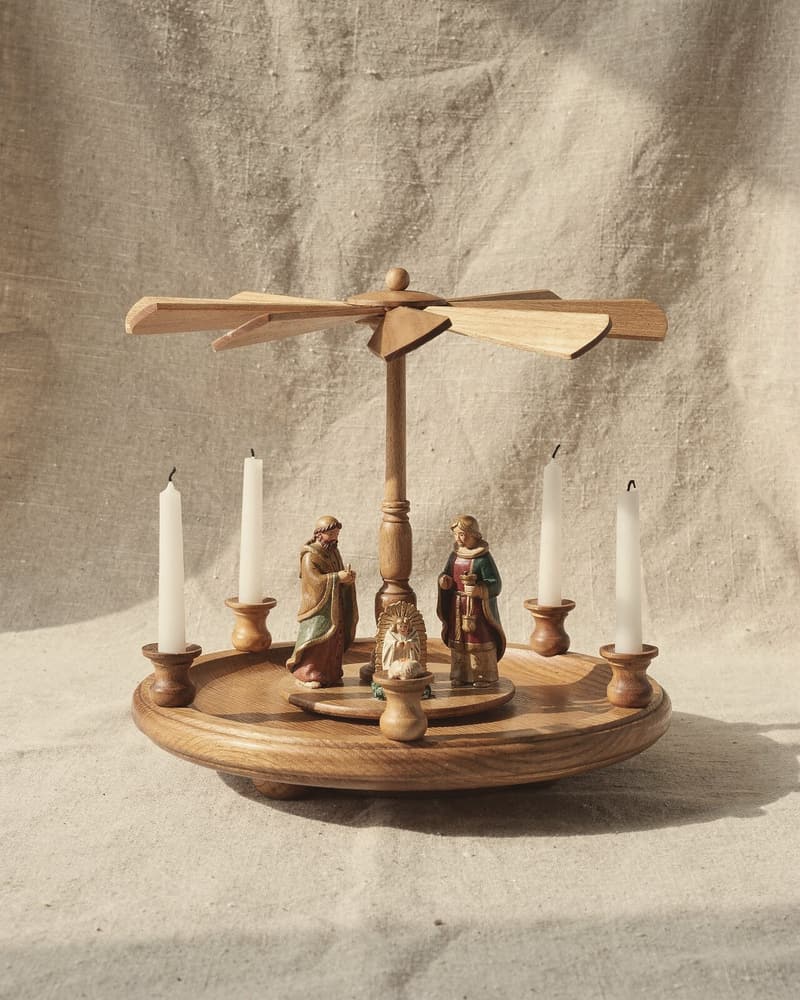
Die Weihnachtspyramide
The Christmas pyramidA carousel of figures on tiers, turned by nothing but the warmth of its candles.