Reifentiere: Ring-Turned Animals
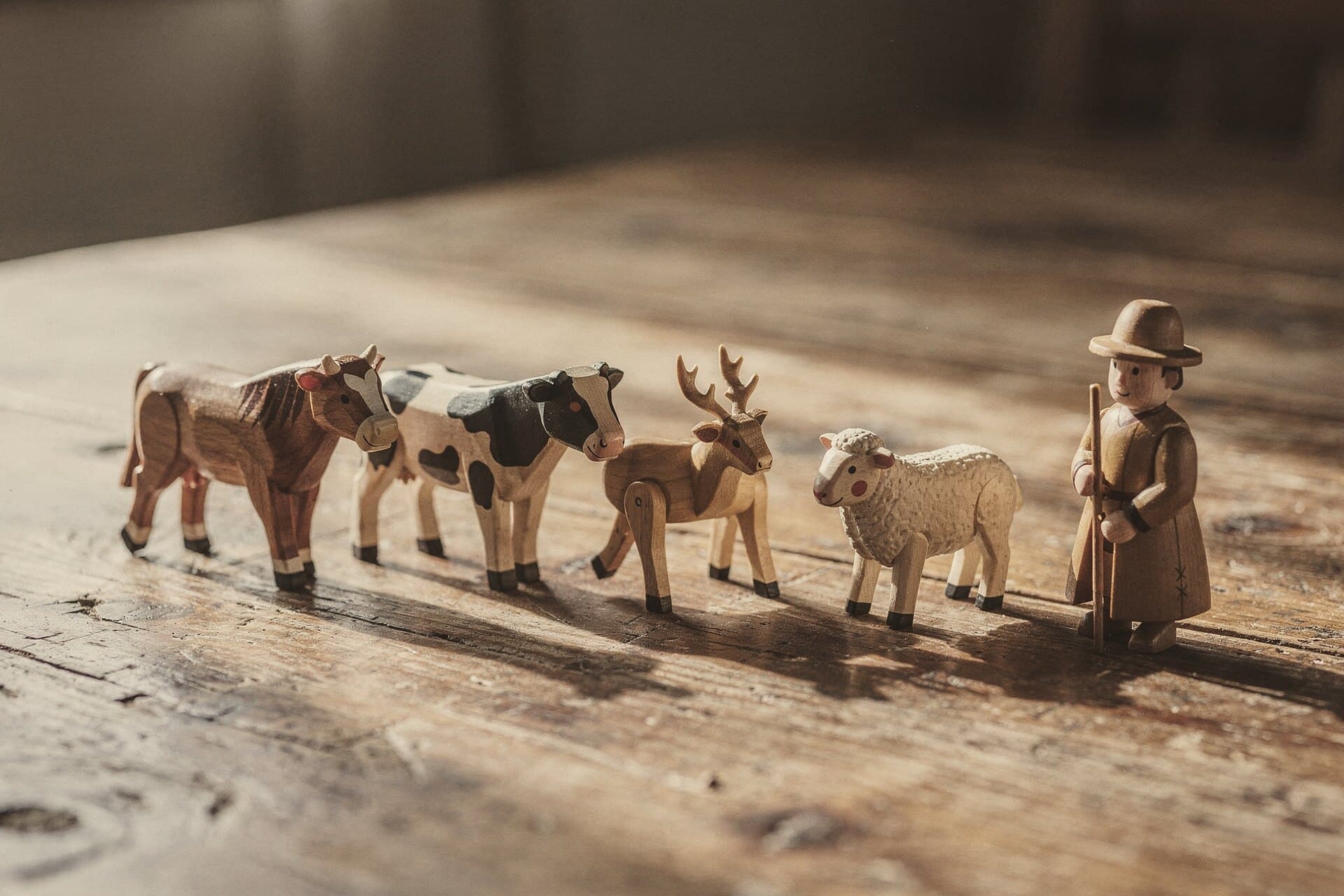
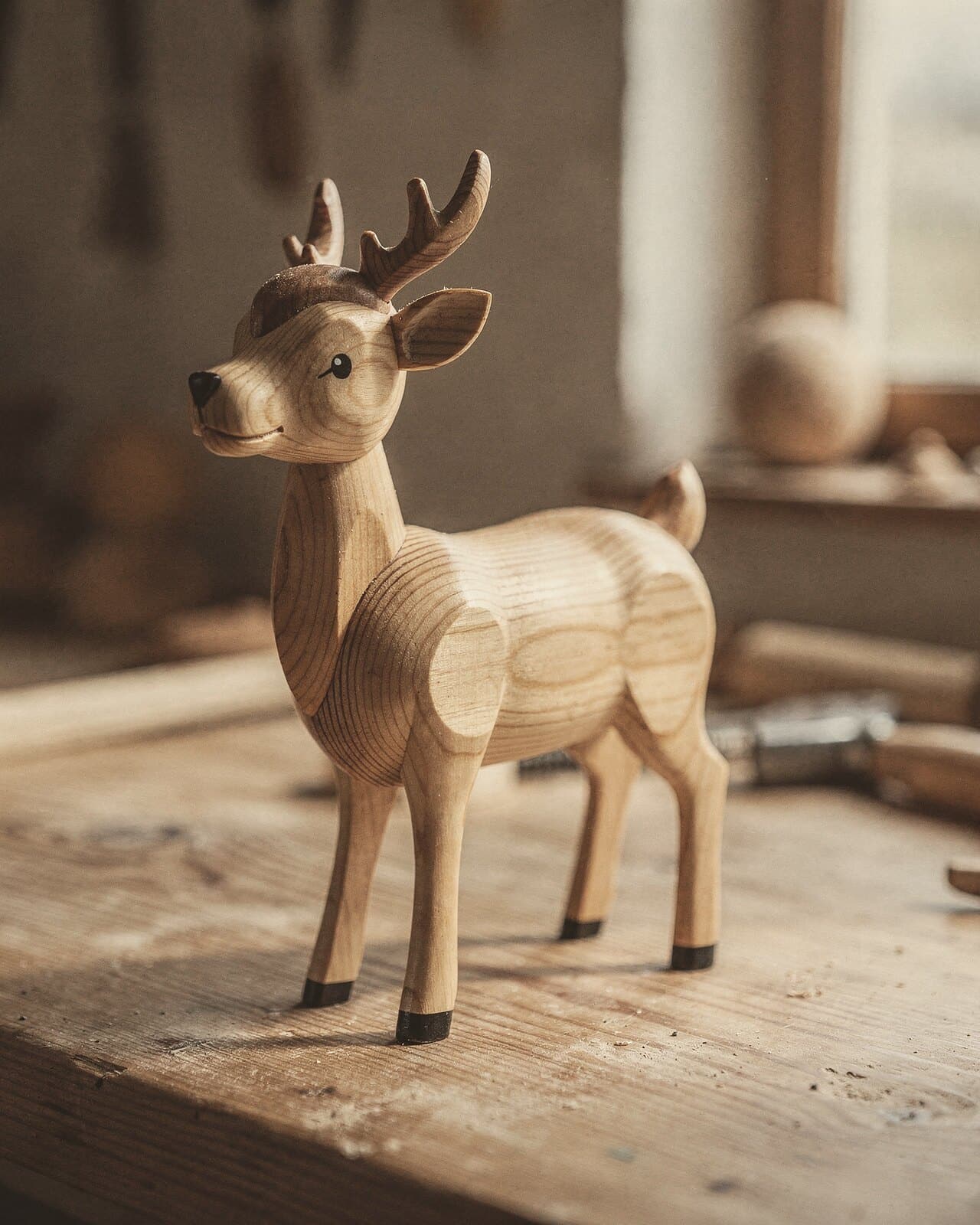
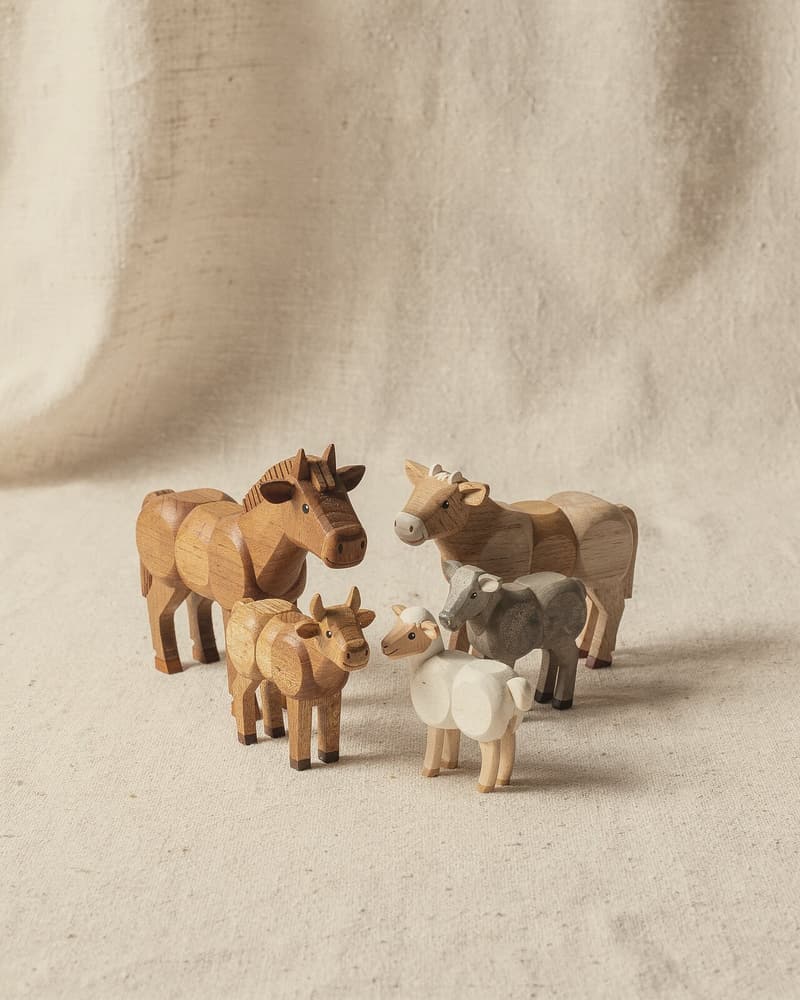
A horse, a cow, a deer: each began as one slice of a turned wooden ring, identical to forty or sixty others. Ring turning is found only in Seiffen and its neighborhood, and today only a handful of people can still do it.
Styles
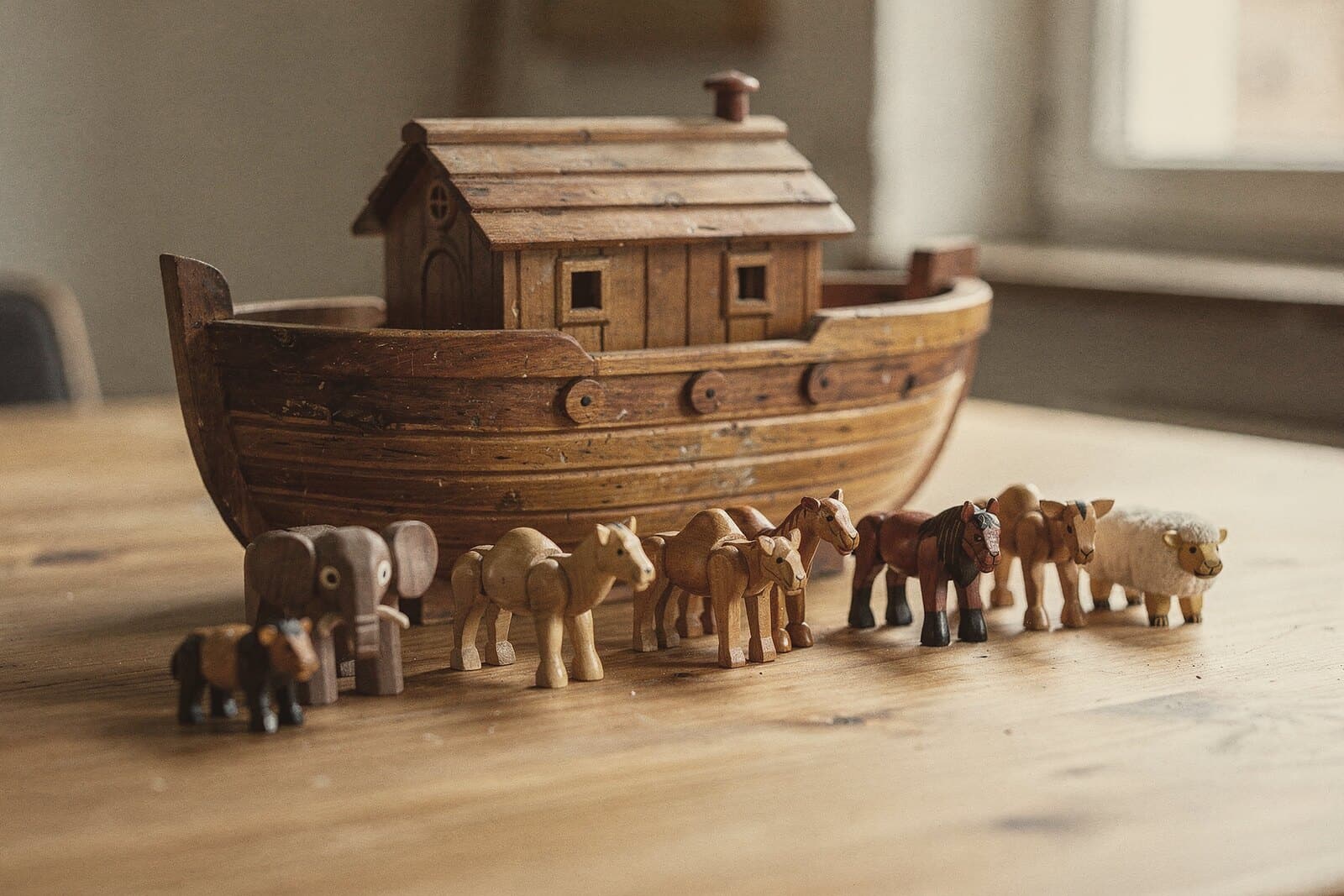
Farm animals and forest animals, pairs for the boxed Noah’s arks that became an export hit, whole herds for a nativity or a village. The old trade knew several grades: cheap “penny cattle,” “better cattle,” and finely carved, chalk-finished “chalk cattle.” The Seiffen toy museum keeps 114 different Noah’s arks.
The story
Ring turning grew up around Seiffen at about the turn of the 19th century, as tin mining faded. Its first written record is a document of November 14, 1810, in the Dresden city archive, but a Nuremberg toy catalog of 1803 already shows ring-turned buildings, so its beginnings lie before 1800. No inventor is known.
It was an ingenious answer to hard times. One turned ring gave dozens of identical blanks, so toy animals could be made cheaply enough to sell across the world, and the Seiffen toy museum credits the technique with making Erzgebirge wooden toys competitive internationally. In 1906 the ring turners formed a compulsory guild; around 1920 some thirty of them worked in Seiffen, and one skilled turner could keep four families of home workers supplied with blanks in a day.
Then the craft dwindled. By the 1980s it had become mainly something to watch in a museum. In Seiffen’s open-air museum, in the water-powered turning mill of 1758–1760, where ring turning came in 1889, it is still shown every day. The museum’s collection holds 367 whole rings and pieces of rings.
How they’re made
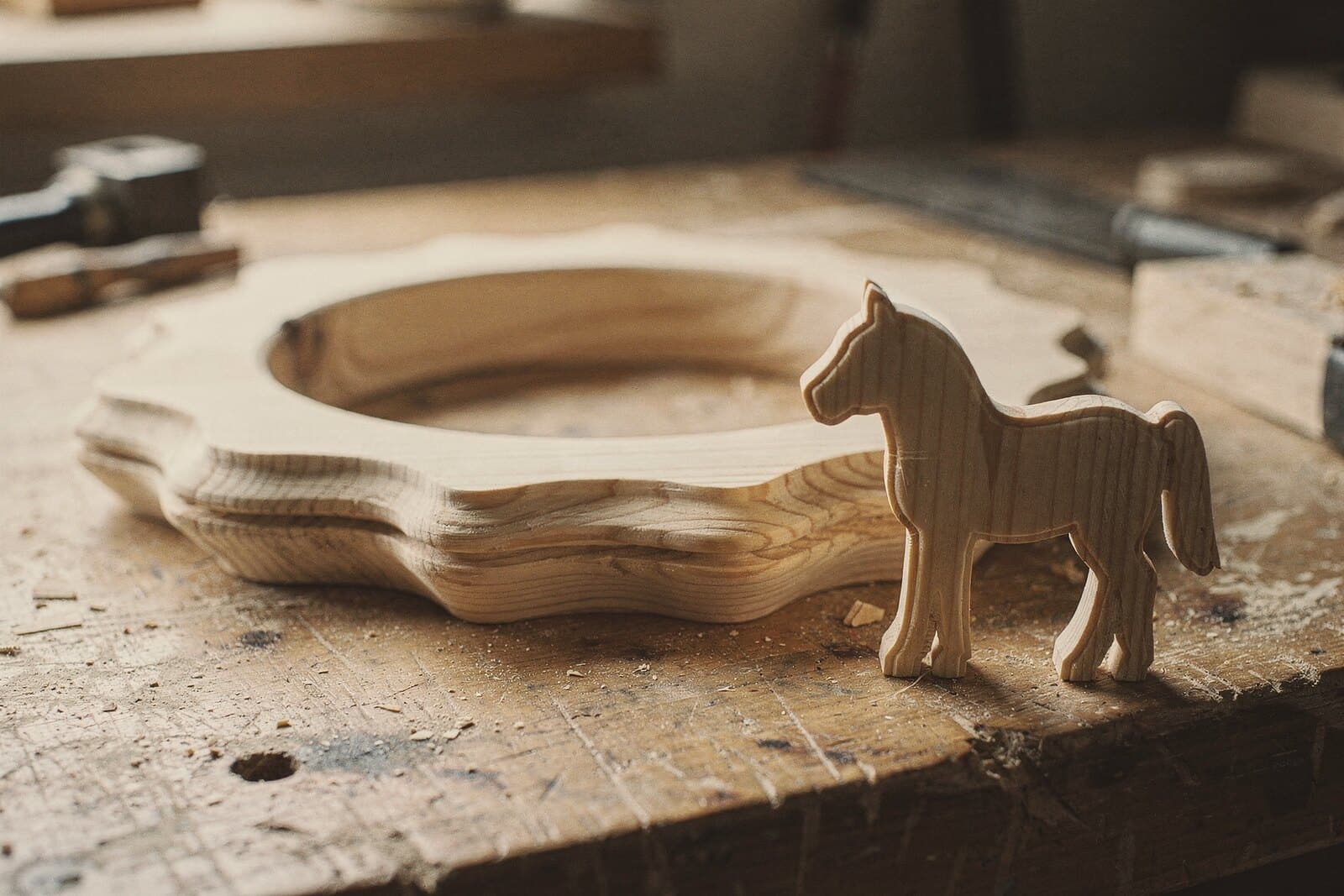
A ring of wet, knot-free spruce is turned on the lathe so that its cross-section holds the side profile of an animal, which the turner cannot see until the ring is split. Split like a cake into 40 to 60 slices, it yields a herd of identical blanks, which are carved, given glued-on ears and tails, and painted.
Use and care
These are small, delicate pieces with glued-on ears, horns and tails: decorative, not toys, and best kept out of the reach of small children. Lift an animal by its body, dust it with a soft, dry brush, and keep it away from damp and direct sun. Store a herd in its box, each animal wrapped, so legs and ears don’t knock against each other.
Related pieces
 No. III
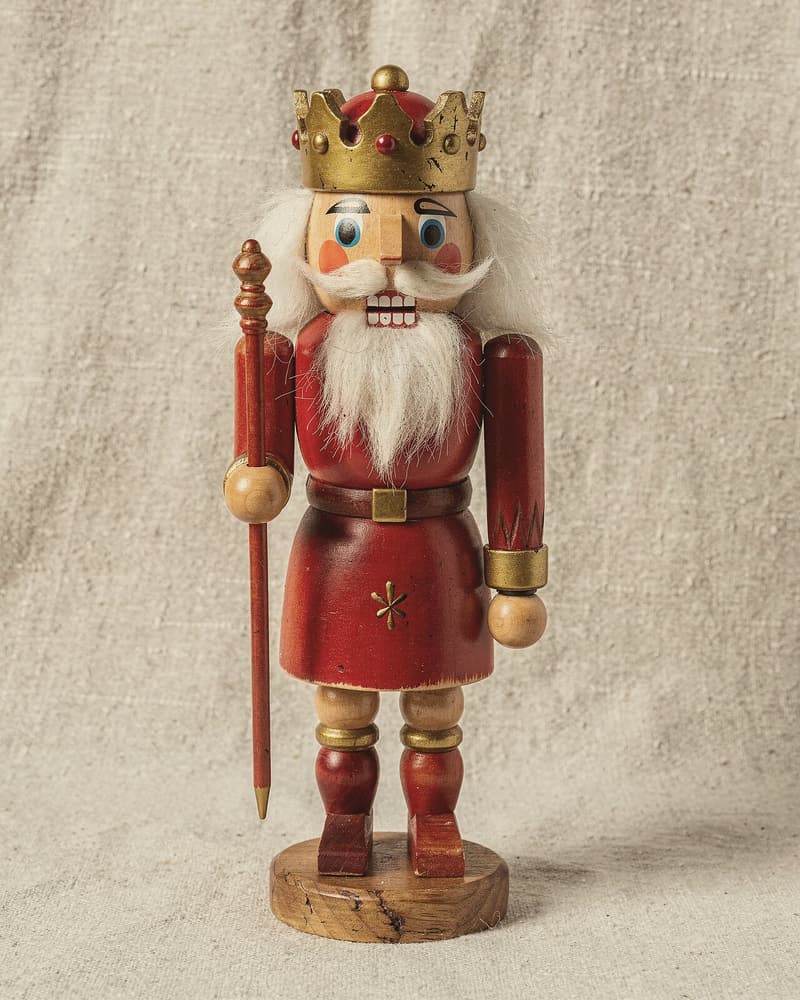
Der Nussknacker
The nutcrackerStern kings, soldiers and foresters with a lever in the back and a jaw for walnuts.
 No. II
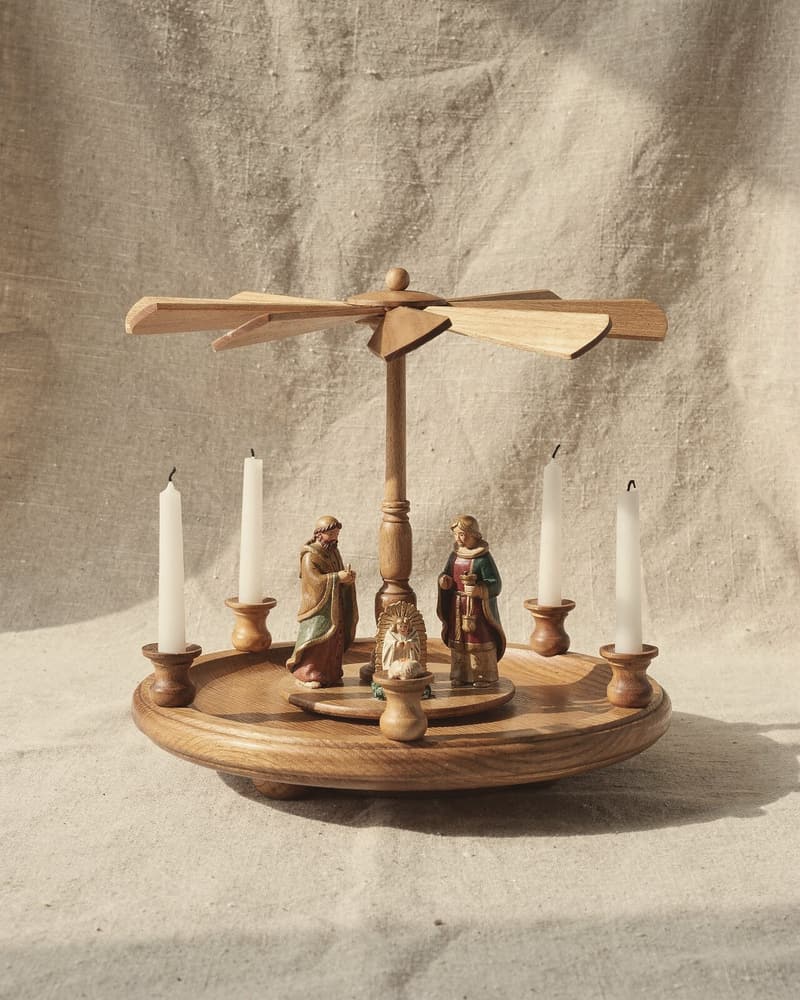
Die Weihnachtspyramide
The Christmas pyramidA carousel of figures on tiers, turned by nothing but the warmth of its candles.
Sources
- Erzgebirgisches Spielzeugmuseum Seiffen, Museumsbulletin 2020-2 (ring turning)
- Erzgebirgisches Spielzeugmuseum Seiffen, Museumsbulletin 2010-1 (the turning mill)
- Erzgebirgisches Spielzeugmuseum Seiffen, open-air museum press kit
- Deutsche Handwerks Zeitung, ring turning (December 23, 2022)
- Kurort Seiffen, “Einmalig auf der Welt: Reifentiere und Spanbäume”