Der Nussknacker: Nutcrackers
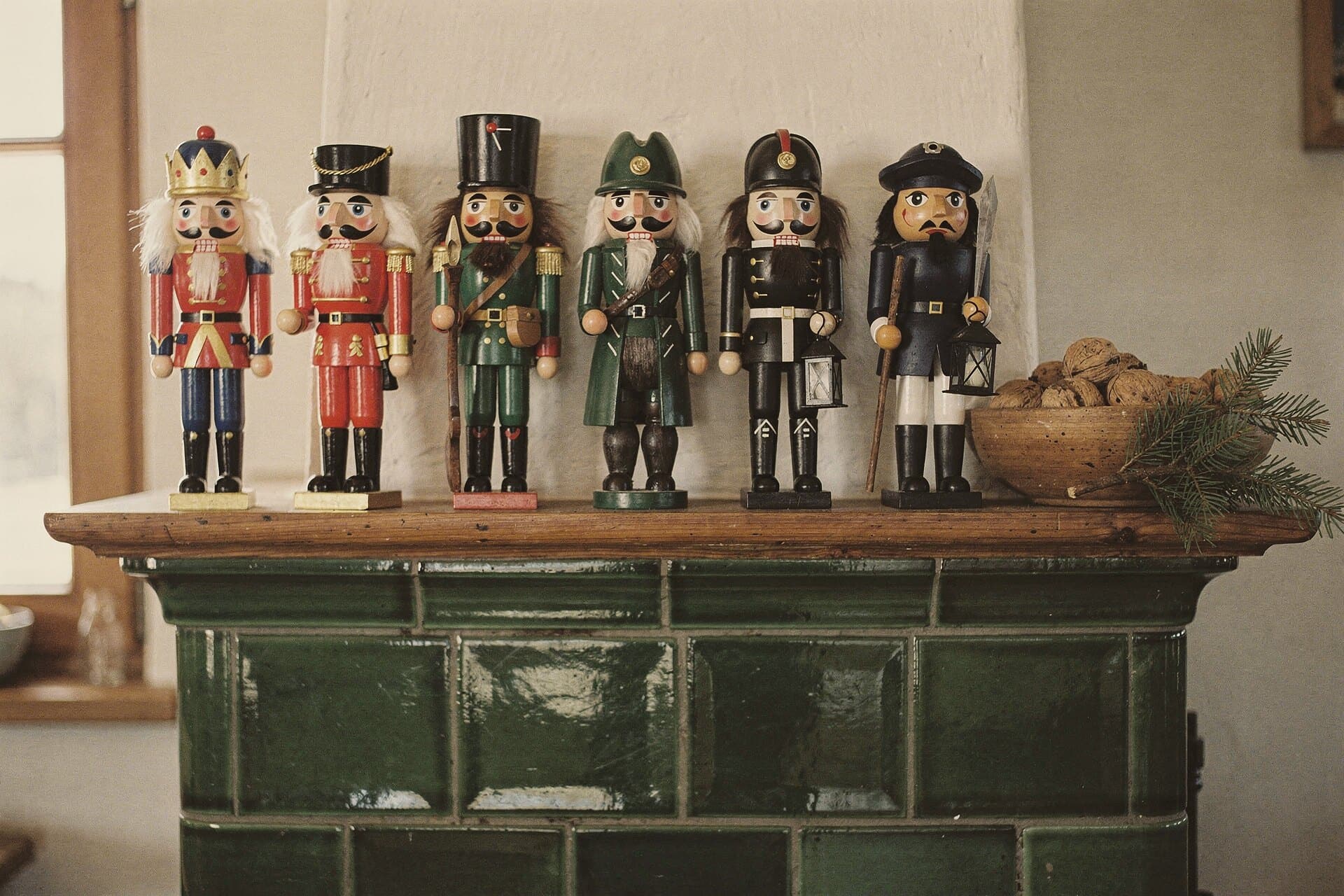
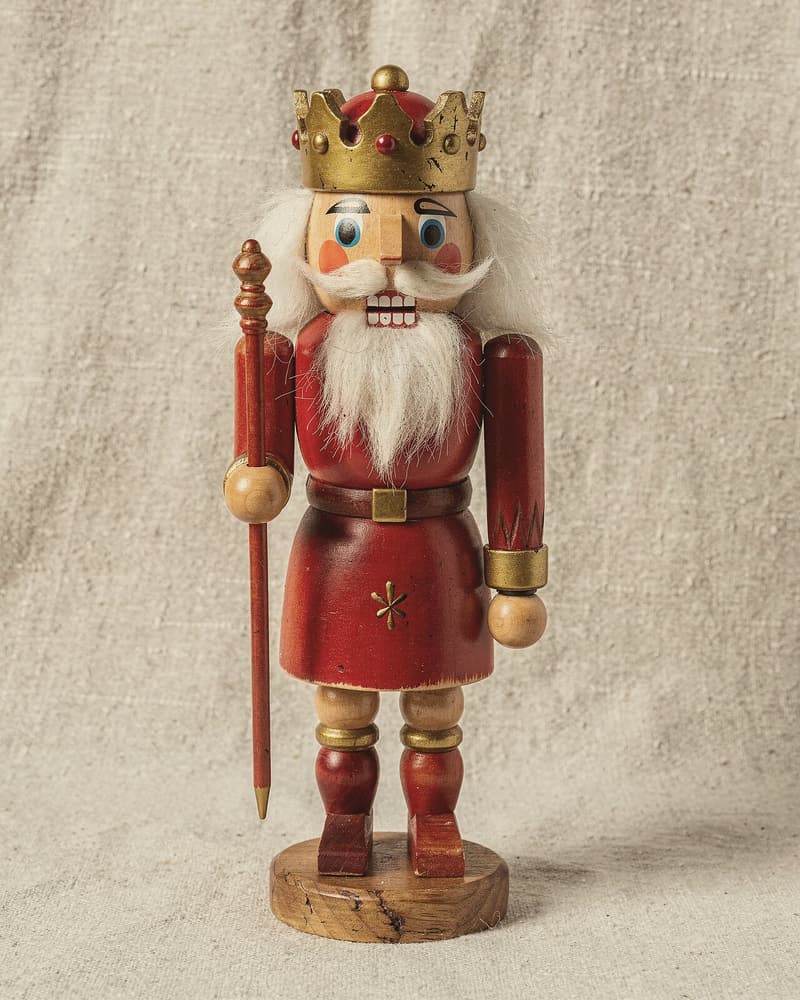
A stern figure in a painted uniform, a king, a soldier, a forester, with a lever in his back and a jaw that closes on a walnut. Seiffen turned its first around 1870. America made him a Christmas icon.
Styles
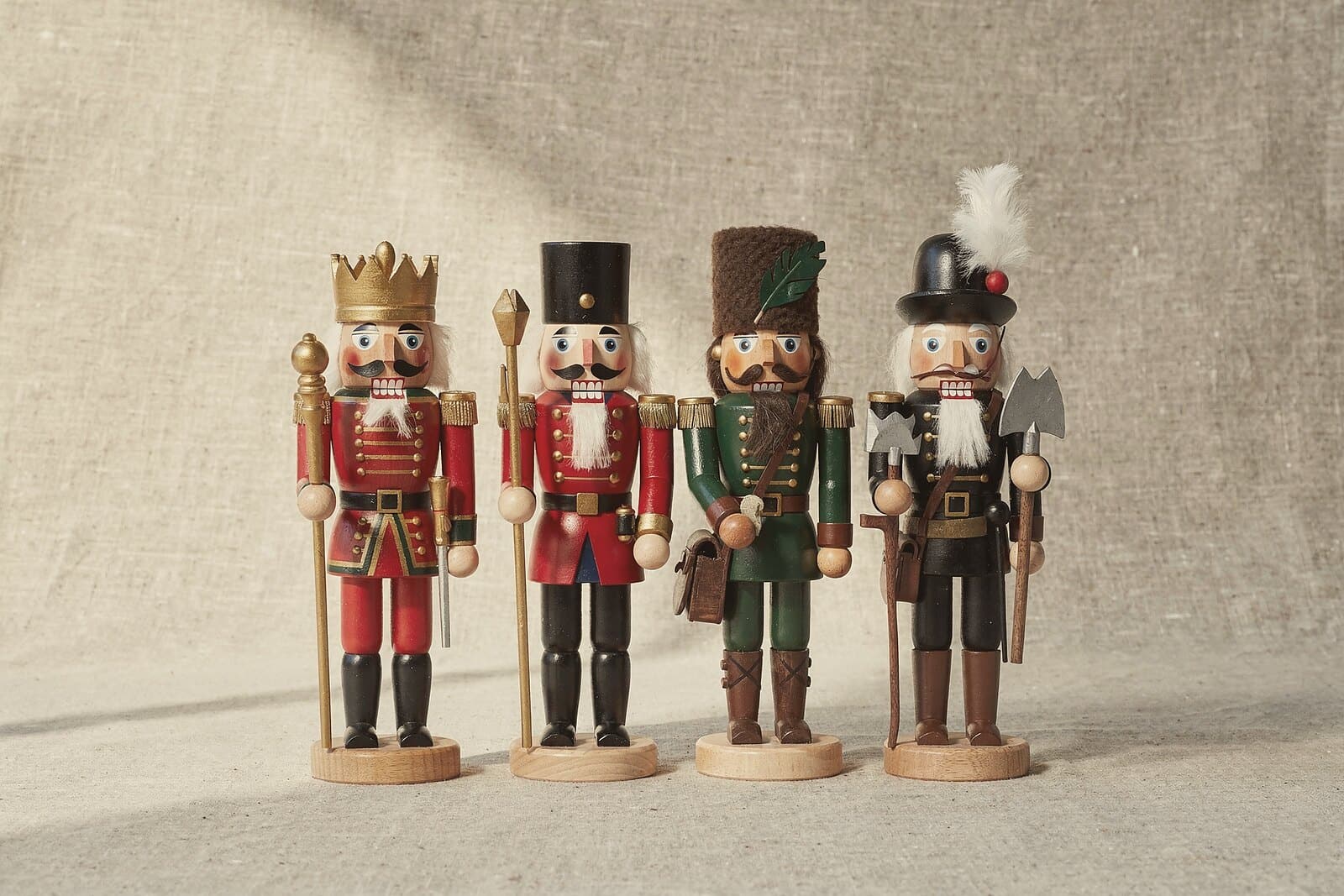
In their first decades the Seiffen nutcrackers came as soldiers, miners, firemen and policemen. Kings, gendarmes and soldiers became the classic figures, their stern faces modeled on the authorities of the day, and some 19th-century nutcrackers caricatured Napoleon and, later, Bismarck. Today every workshop has its own cast.
The story
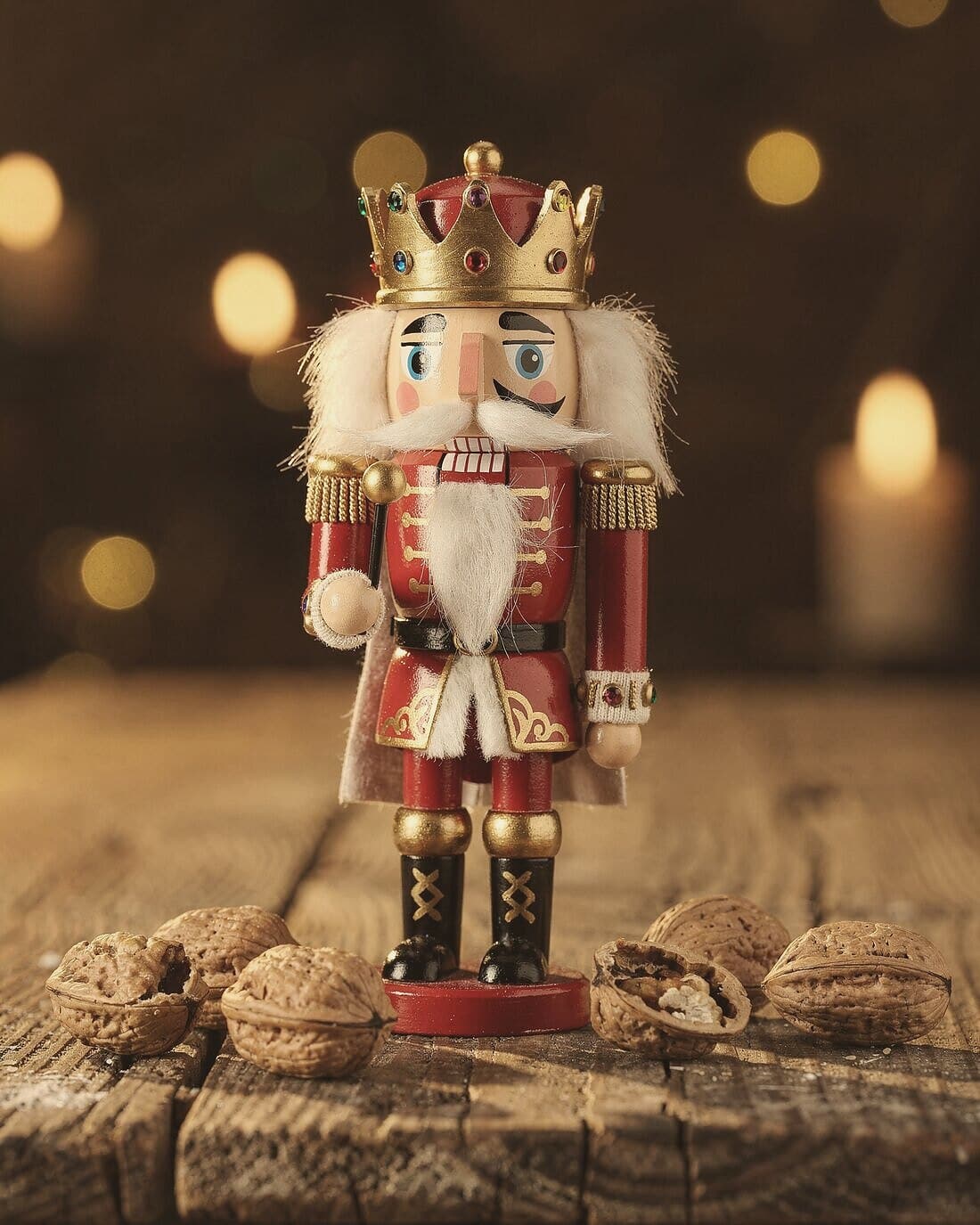
Nutcrackers shaped like figures are far older than the Erzgebirge kind: in the 18th century carved “nut-biters” were especially popular in German lands. Then came the stories. In 1816 E. T. A. Hoffmann published his tale Nussknacker und Mausekönig (The Nutcracker and the Mouse King) in Berlin; in 1851 Heinrich Hoffmann, the author of Struwwelpeter, drew a picture book, König Nussknacker und der arme Reinhold, in which a wooden nutcracker king comes to life in a boy’s dream.
Around 1870, in Seiffen, the woodturner Wilhelm Friedrich Füchtner began turning nutcrackers on his lathe as a side business, and he is counted the most important creator of the Seiffen nutcracker. His stern kings are often linked to Hoffmann’s picture-book king. Turning made them sturdy and easy to repeat.
The figure’s American career came by way of the ballet. Tchaikovsky’s The Nutcracker opened in St. Petersburg in December 1892. San Francisco Ballet gave the first complete American production on Christmas Eve 1944; George Balanchine’s New York production followed in February 1954, and television carried it into living rooms in 1957 and 1958. Many Americans say they first met the wooden nutcracker through soldiers coming home from Germany after the Second World War; it is a family story more often than a documented one. Today a museum in Leavenworth, Washington, is devoted to nutcrackers, and the Erzgebirge village of Neuhausen keeps one with some 5,000 of them.
How it’s made
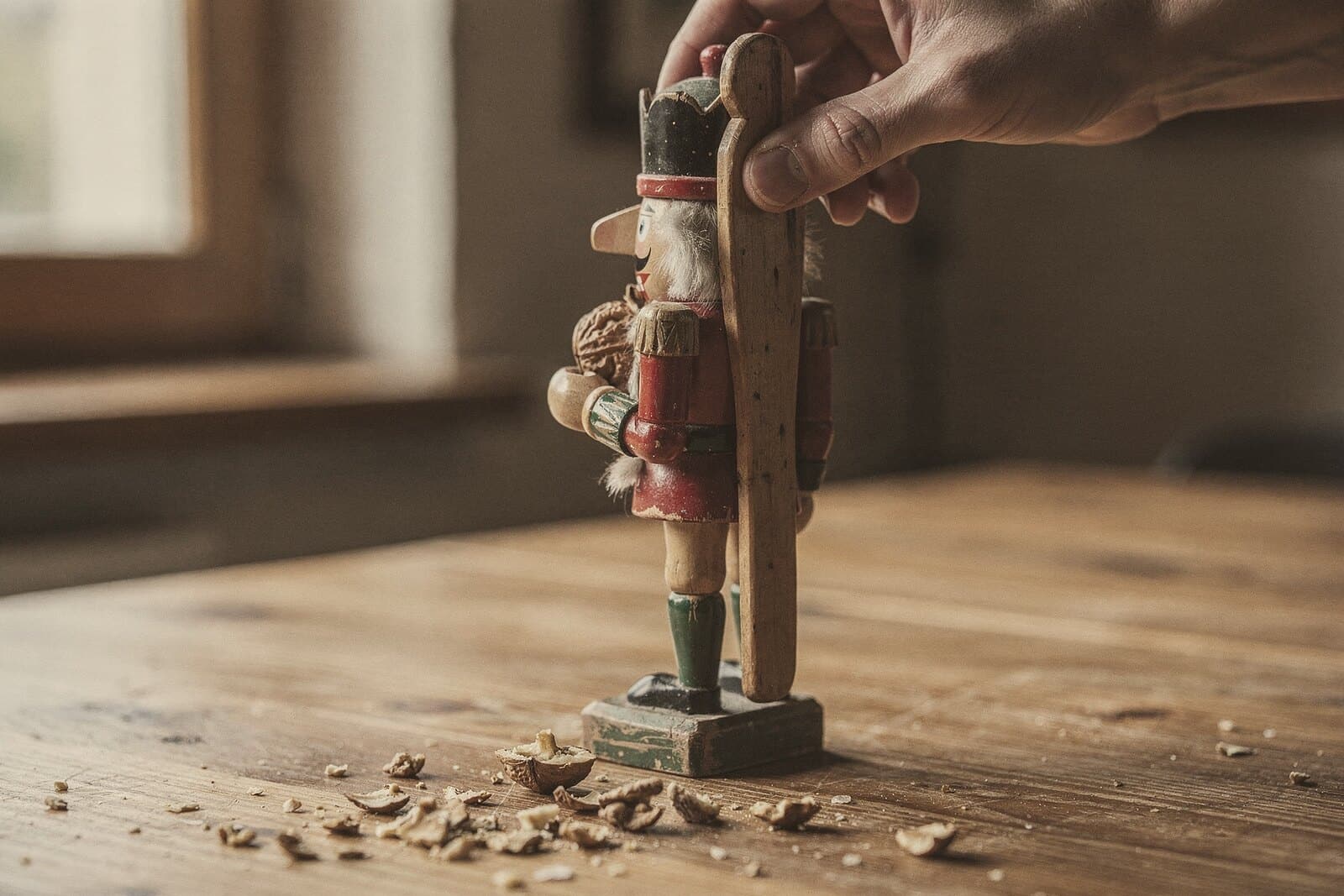
An Erzgebirge nutcracker is turned work: the body, legs, head and hat come off the lathe, and the arms, the hinged jaw and the lever are cut and fitted so that pressing the lever in the back closes the mouth. Then come the painted uniform and the face. Even in the factories of the GDR years, a nutcracker took more than a hundred work steps.
Use and care
Most Erzgebirge nutcrackers are built with a working lever, but they are made as decorations: cracking nuts leaves marks on the jaw and the paint, and some sellers ask that they be used for display only. Keep an ordinary nutcracker for the nuts, and let the wooden one keep watch over the bowl.
Lift a nutcracker by its body, not its arms, hat or lever. Dust with a soft, dry brush; never use water or polish; keep it out of strong sun, which fades paint, and store it in its box in a dry room at an even temperature.
Related pieces
 No. I
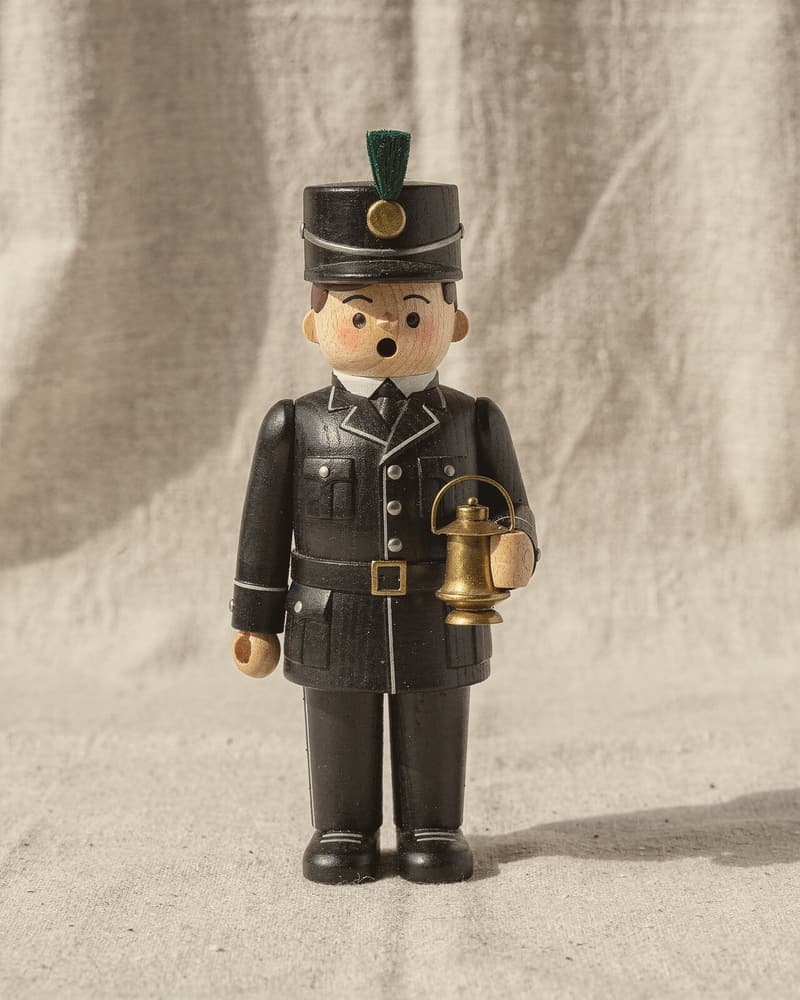
No. IDer Räuchermann
The smokerA little turned figure that puffs fragrant smoke from an incense cone hidden inside.
 No. VII
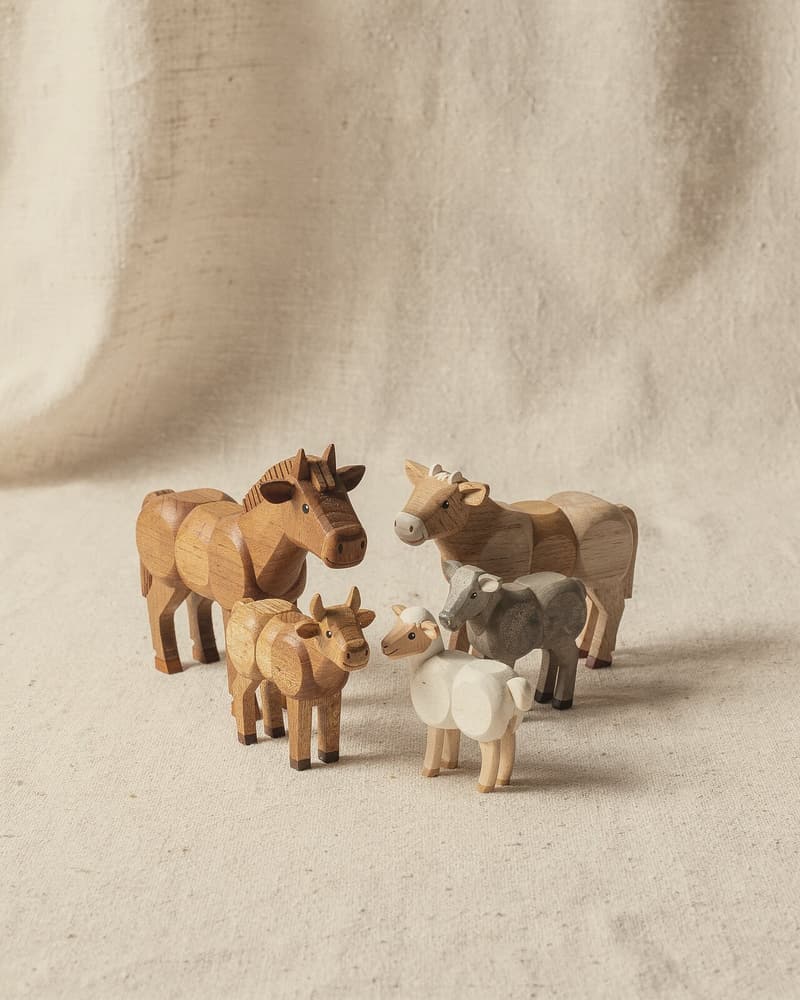
Reifentiere
Ring-turned animalsA herd split from one turned ring of spruce, a craft found only around Seiffen.
 No. V
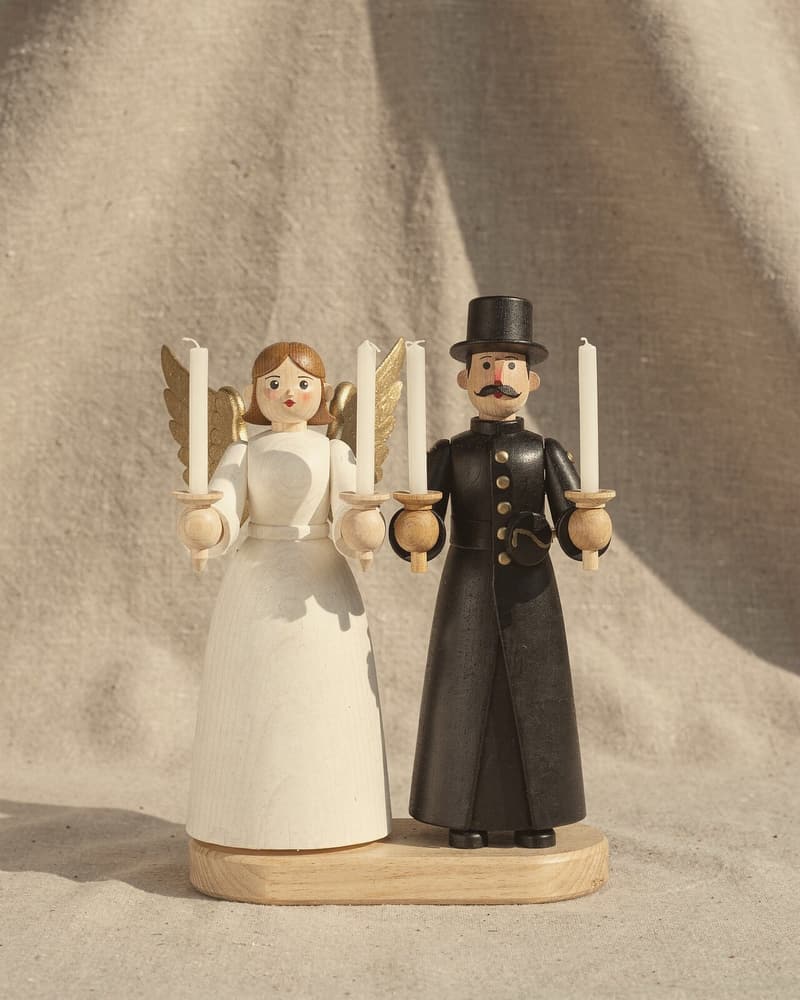
No. VEngel und Bergmann
Angel and minerThe candle-bearing pair, a miner in parade dress and an angel in white, since the 1830s.
Sources
- Erzgebirgisches Spielzeugmuseum Seiffen, “Weihnacht im Museum”
- Mindener Museum, Heinrich Hoffmann’s King Nutcracker (catalog record)
- Neue Deutsche Biographie, Heinrich Hoffmann
- San Francisco Ballet, history
- George Balanchine Trust, The Nutcracker (1954)
- Leavenworth Nutcracker Museum, the collection
- DDR Museum Berlin, “10 objects for a Christmas in the GDR” (2022)