How the nutcracker came to America
A carved nut-biter from the German mountains, a king from Seiffen, a ballet that bored its first audience, and a Christmas Eve in San Francisco. How the nutcracker became an American Christmas.
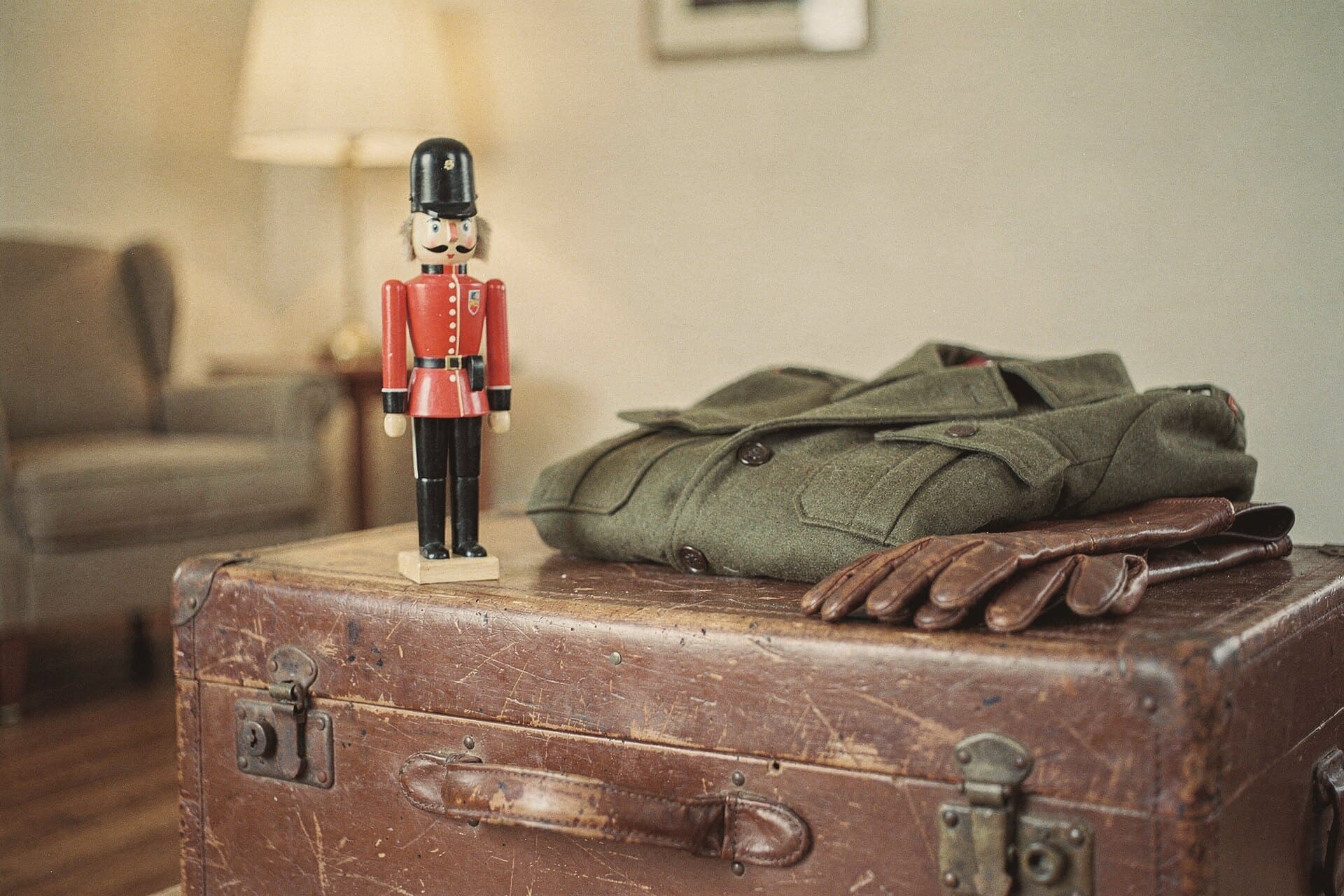
On Front Street in Leavenworth, a Bavarian-style village in the Cascade Mountains of Washington State, a museum holds more than nine thousand nutcrackers. In 2021 Guinness World Records counted them: 9,103. Among them are a Roman nutcracker of bronze, some two thousand years old, and a French one of boxwood, carved as a man’s head in a laurel wreath and dated 1554, which the museum believes is the earliest dated nutcracker known. The collection began, its founder told NPR, almost by accident in 1976, when she was staging The Nutcracker with a ballet company in Renton, near Seattle, and went looking for a nutcracker for Clara to hold.
That is the American way into this story: through the ballet. But the figure came first, and it came from the mountains.
The nut-biters
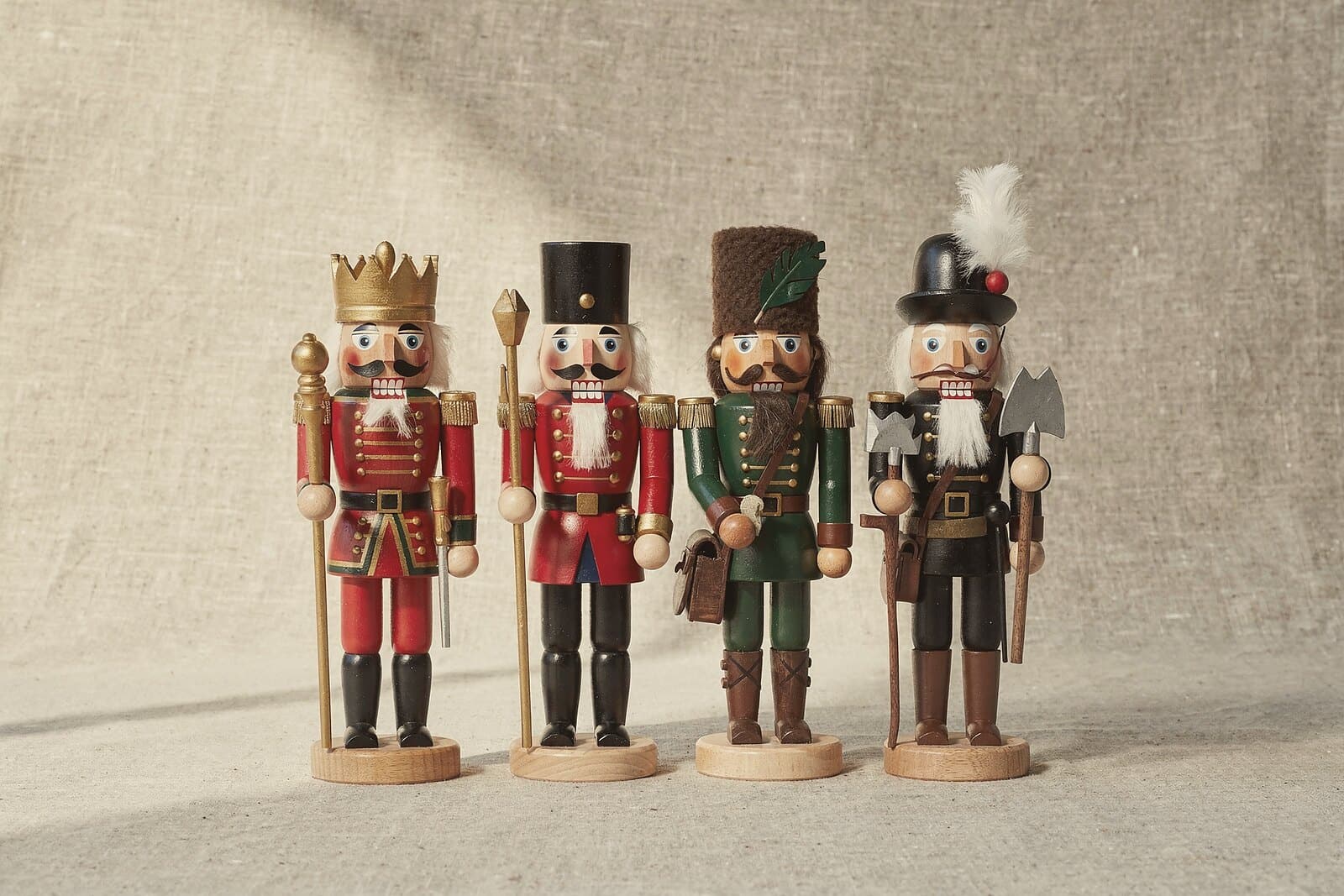
Wooden nutcrackers carved as little figures were sold in the Bavarian Alps around Berchtesgaden by about 1650, and from Sonneberg in Thuringia from 1735. In German they were Nussbeißer, nut-biters. Already in the 18th century, the toy museum in Seiffen notes, nut-biters were “especially often” made as figures “with elements of gentle irony and folk social satire.” The faces were stern, the mouths huge: foresters, gendarmes, hussars, kings, the authorities of the day made to crack your nuts. After the Battle of Leipzig in 1813 there were Napoleons; later, Bismarcks.
Two Hoffmanns
In 1816, in Berlin, E. T. A. Hoffmann published a fairy tale, Nussknacker und Mausekönig. His nutcracker is no king but a little man in “a hussar’s jacket of beautiful bright violet, fastened together with white loops and buttons,” with a woodman’s cap and a stiff cloak “that looked as if it were made of wood.” He can, the children’s father explains, “crack the hardest nuts with his teeth.” An English translation of the tale appeared in New York as early as 1853.
In 1851 a Frankfurt doctor, Heinrich Hoffmann, the author of Struwwelpeter, drew a picture book called König Nussknacker und der arme Reinhold, King Nutcracker and Poor Reinhold. Its hero is a proud wooden king who comes to life in a boy’s dream. A parody of the Prussian royal anthem in it reportedly earned the book a temporary ban.
A king from Seiffen
Twenty years later, in Seiffen, a woodturner made a king of his own. Wilhelm Friedrich Füchtner, born in Seiffen in 1844 and trained as a carpenter, began turning figural nutcrackers around 1870 as a side business. His king nutcracker is said to have been the first with the form and coloring we now think of as the Erzgebirge nutcracker, and the Seiffen museum calls him its most important creator. In the first decades the range was, in the museum’s words, “simple, toy-like soldiers, miners, firemen and policemen.”
A ballet nobody loved
In Paris in the mid-1840s, Alexandre Dumas retold Hoffmann’s tale for French children, and it was his lighter version that became a ballet. The director of the Russian Imperial Theaters commissioned it from Pyotr Ilyich Tchaikovsky in 1890. Tchaikovsky broke off work on it for a trip to America, where, on May 5, 1891, he helped conduct the opening concert of New York’s new Music Hall, later Carnegie Hall. He finished the score the following spring.
The Nutcracker opened at the Mariinsky Theater in St. Petersburg on December 18, 1892, on a double bill with an opera. It was not a success. “It seemed to me,” Tchaikovsky said afterward, “that the public did not like it. They were bored.”
America adopts it
America took its time. In 1940 the Ballet Russe de Monte Carlo danced a shortened version in New York, and that November Walt Disney’s Fantasia turned the Nutcracker Suite into fairies, fish, flowers and dancing mushrooms. The first full-length American Nutcracker was San Francisco Ballet’s, on Christmas Eve 1944, choreographed by Willam Christensen after long talks with George Balanchine and Alexandra Danilova, who had both danced it in Russia. Wartime rationing was so tight that two of the ballerinas found their own fabric and sewed their own tutus.
Ten years later, on February 2, 1954, Balanchine staged his own Nutcracker for New York City Ballet, the company’s first full-length ballet, with Maria Tallchief as the Sugar Plum Fairy. As a boy at the Imperial ballet school he had danced in it himself. CBS broadcast his production in December 1957 and again at Christmas 1958, with Balanchine as Drosselmeyer. “By the late 1960s,” San Francisco Ballet writes, “Nutcracker had become an annual American tradition.” New York City Ballet now dances it some 47 times a season, under a Christmas tree that grows on stage from 12 feet to 41.
The figure follows the music
Where the ballet went, the wooden figure followed. Collectors and makers tell of American servicemen stationed in postwar West Germany who mailed nutcrackers home as Christmas presents; it is a family story told in many American homes, more often than it is a documented one. Across the border, in East Germany, the Erzgebirge workshops were drawn into a state combine for folk art, and much of what they made went abroad. In 2008 the United States Postal Service put four carved nutcrackers on its Christmas stamps.
Today the United States and Canada are the most important foreign market for the woodcraft of the Erzgebirge, by the makers’ association’s own count. In Seiffen, where Füchtner turned his first king, the nutcrackers still stand in rows in the workshop windows, kings and soldiers and miners, and a good share of them are bound for American homes.
And in Leavenworth, the collection that began with a prop for Clara now fills a museum. The circle runs from a carved nut-biter in the German mountains, through a fairy tale, a picture book, a Seiffen lathe and a Russian ballet, to a small town in Washington State, and back again every December.
Quotations from German sources are our own translations.
Sources
- Erzgebirgisches Spielzeugmuseum Seiffen, “Weihnacht im Museum”
- Erzgebirgisches Spielzeugmuseum Seiffen, chronicle
- E. T. A. Hoffmann, Nutcracker and Mouse-King, trans. Mrs. St. Simon (New York, 1853), Wikisource
- Tchaikovsky Research, The Nutcracker
- San Francisco Ballet, press release on the 75th anniversary of its Nutcracker (2019)
- George Balanchine Foundation, The Nutcracker (1954)
- New York City Ballet, George Balanchine’s The Nutcracker
- NPR (via GPB), the Leavenworth Nutcracker Museum, December 9, 2025
- Leavenworth Nutcracker Museum, history
- Sächsisches Staatsarchiv, VEB Kombinat Erzgebirgische Volkskunst Olbernhau (finding aid)
More stories
How Seiffen’s toys went out into the world
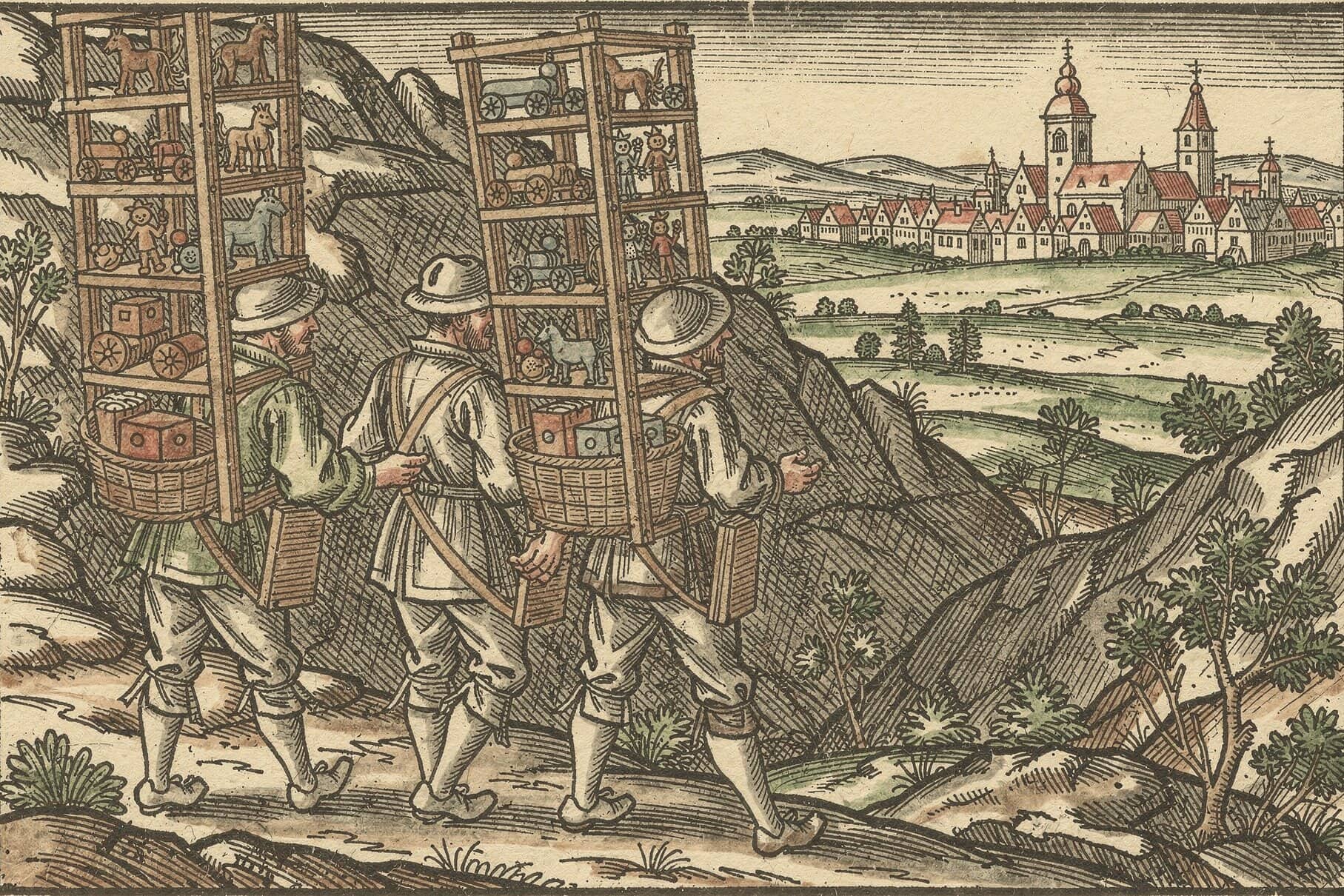
A linen trader’s wheelbarrow, merchants in the middle, crates on the Spanish silver fleet and four turners at a Dresden Christmas market. How a mountain village’s toys reached the world, and what they earned the families who made them.
Of smoke and incense cones
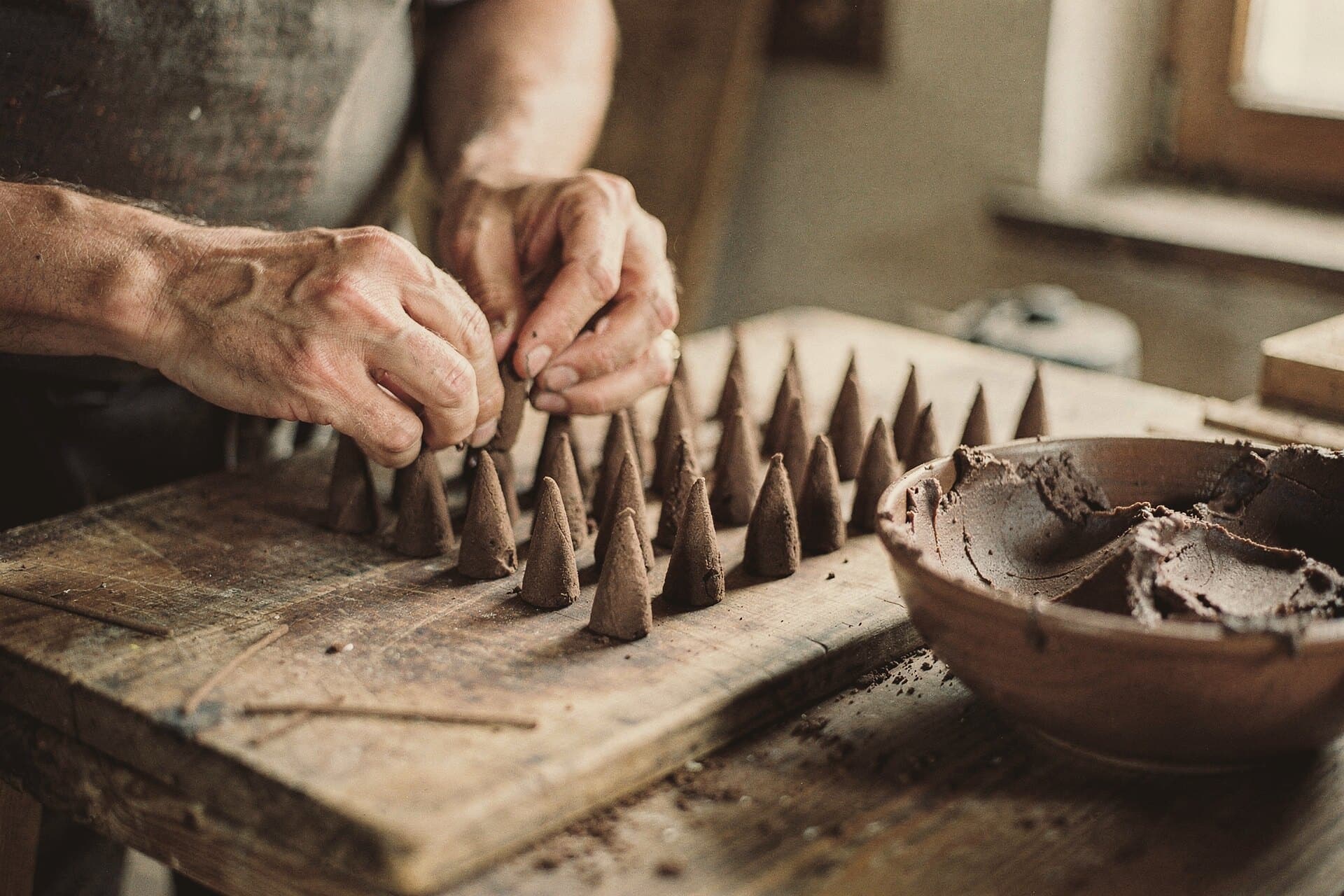
Frankincense against the spirits of the twelve nights, a dough of charcoal and beech flour, a kitchen in Crottendorf and a turner’s idea about pipes. The story of the smoker and the little cone that makes him smoke.

The Bergparade: miners in their Sunday best
Every Advent, more than a thousand men and women in black parade dress march through Annaberg-Buchholz. How a royal wedding of 1719 dressed the Saxon miner, and how the parades survived to the present.