Why the miners longed for light
In midwinter, many Erzgebirge miners went down before dawn and came up after dark. What the record says about their light, and the story the mountains tell about it.
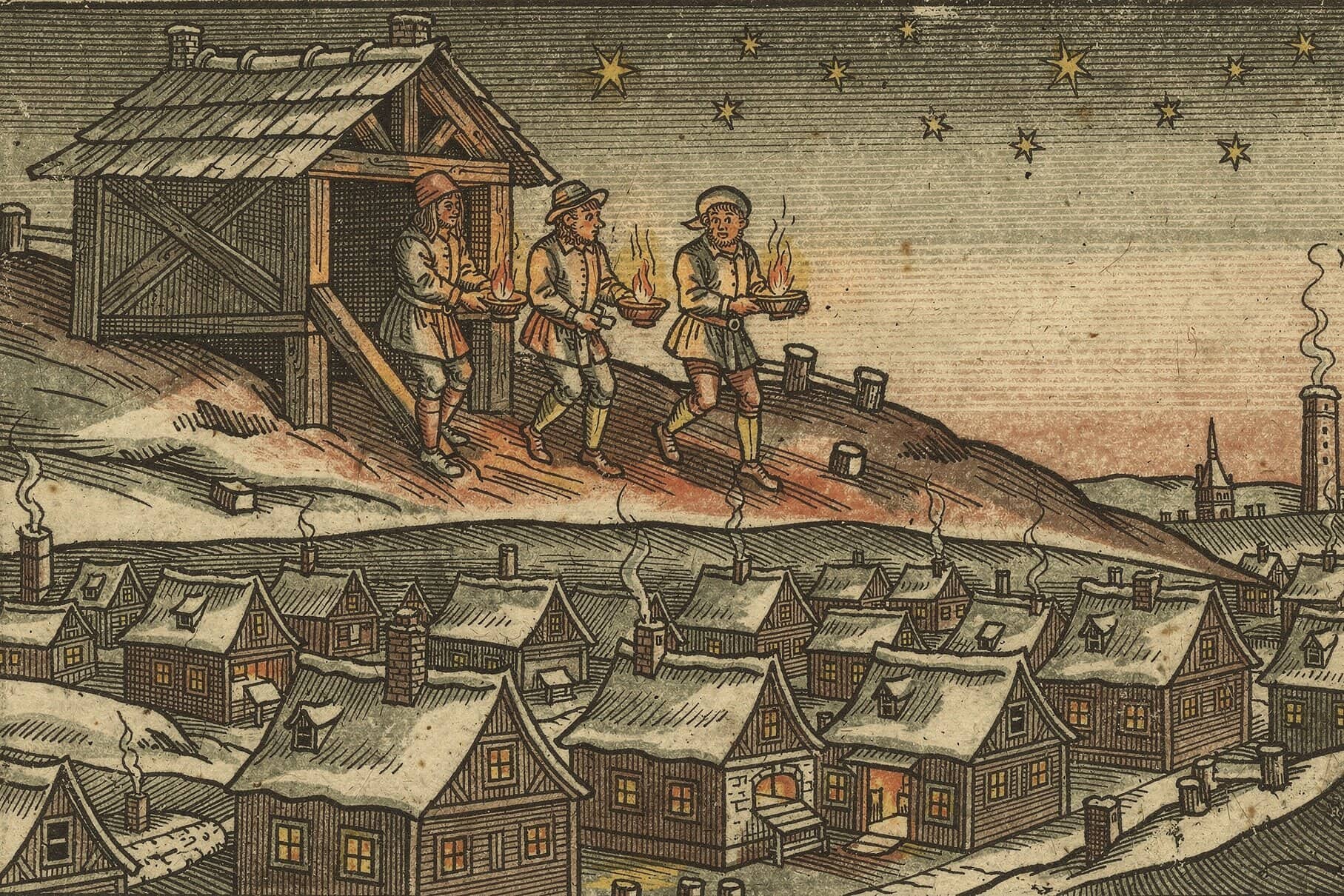
On the shortest day of the year the sun rises over Annaberg at about four minutes past eight and sets at about eight minutes past four. That is all the daylight the Erzgebirge gets in late December: eight hours, half of what it gets in June.
Now set beside it the miner’s day as Georgius Agricola described it in 1556. “The twenty-four hours of a day and night are divided into three shifts,” he wrote, “and each shift consists of seven hours.” The first ran from four in the morning to eleven, the second from noon until seven in the evening. In midwinter, then, a man on the morning shift went underground about four hours before sunrise, and a man on the afternoon shift came up three hours after dark. Some districts let men work two shifts in a row, Agricola notes, because one shift’s pay was not enough to live on, especially when food grew dear. Those men went down in the dark and came up in the dark.
The lamp as clock
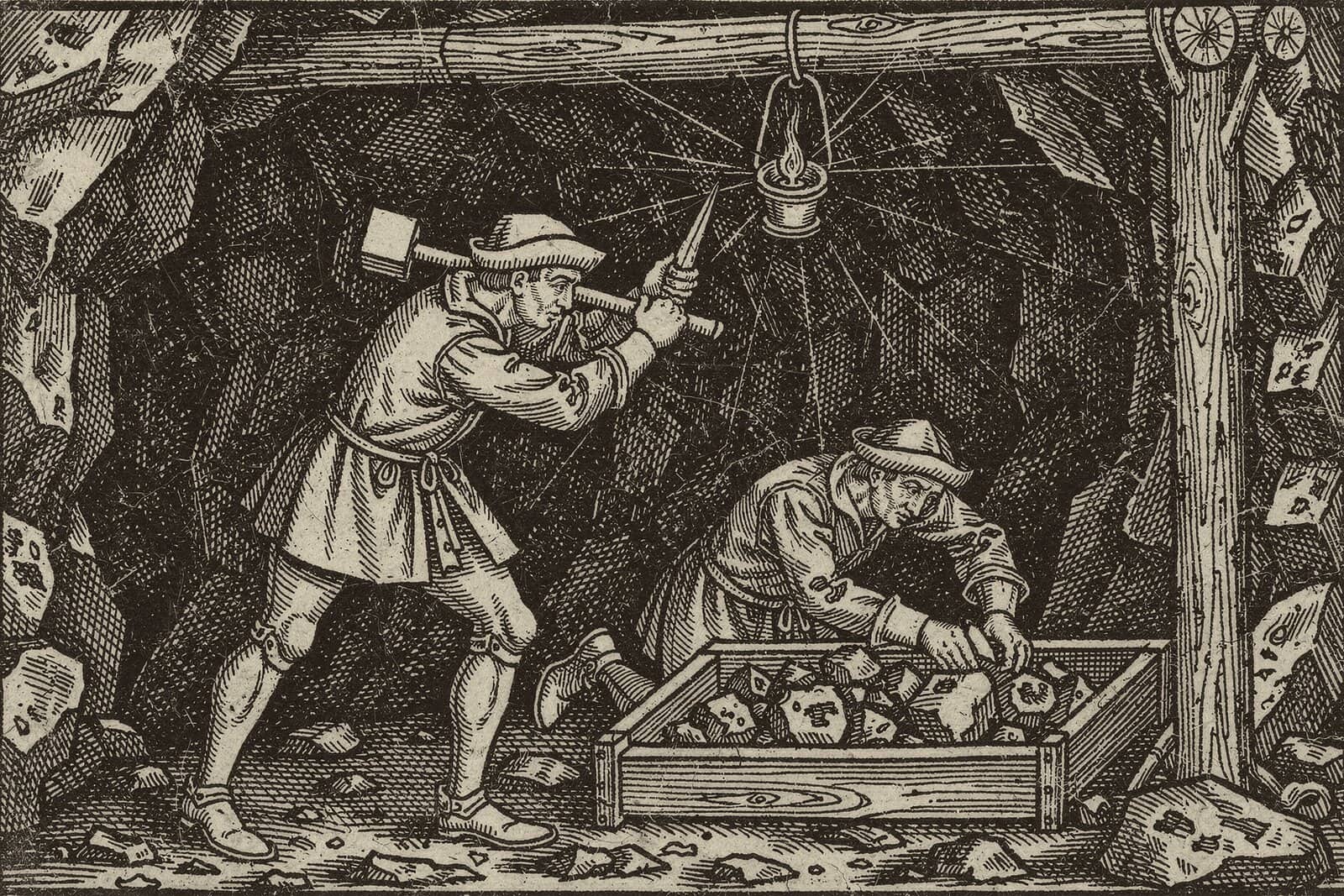
Underground there was only the light a man carried. In Agricola’s day it was measured out. The foreman “apportions a certain weight of oil for their lamps,” and “when their shift is finished, he takes back the oil which has been left.” The lamp kept time as well as giving light: “the lamps show that the shift has come to an end when the oil becomes almost consumed and fails them.”
On the night shift, Agricola writes, the men kept watch “by the night lamps” and sang to stay awake. In bad air their lamps gave only “a feeble light,” and in some caverns the vapors put the lights out altogether. A lamp lowered into a shaft was a test: if the flame died, so might a man.
For three centuries and more, the Erzgebirge miner’s light was an open lamp burning tallow or rapeseed oil, the Froschlampe, the “frog lamp,” in use until the end of the 19th century.
Paying for the light
By around 1700 the light had become the miner’s own expense. The German Mining Museum in Bochum keeps a small iron tallow lamp from Saxony with the date 1700 punched into its shield, the lamp, its record says, of “a simple Saxon miner” who had to buy his own tallow. A decade later, miners refused to let the mine supply their lighting at all; the shift masters, they complained, bought “old and stinking tallow” and charged the men for it by weight.
At home the light was poor and dear. In a miner’s cottage, the toy museum in Seiffen explains, a burning pine splinter or a small rapeseed-oil lamp gave so little light in the evening that even the spinning the wives did for extra money could only be done by day. Neighbors gathered in one warm room on winter evenings, to work and talk and sing and to save fuel. They called it hutzen.
Candles in church
Light also meant something more. Miners carried candles in Freiberg’s church processions as early as the 15th century. From the 1670s, carved and pewter miners stood on the altars of the mining towns’ churches, in Schneeberg, in Geising, in Annaberg, holding the two altar candles. “The miner has a special relationship to light,” the folklorist Karl Ewald Fritzsch wrote in 1959. “In his work underground it is as important to him as his tools.”
At Christmas the mines themselves were lit. At the Himmelsfürst mine near Freiberg, the last shift before the feast began at four in the morning on December 24. Every window of the mine buildings held twelve candles in three rows, paid for by the miners, so that the houses on the hill shone across the countryside, and underground the men set candles on every ledge of rock. In Schneeberg, in 1880, the miners won back the right to march to the dawn service on Christmas morning with their lamps lit, and to set them in hollows cut in the stone of the church gallery.
And in the early 1800s a pastor recorded that “all through Advent the industrious miner works and carves all sorts of mechanical toys, mostly models of mining,” and either sells them for holiday money “or he lights them up to delight his family on Christmas Eve.”
The lamps show that the shift has come to an end when the oil becomes almost consumed and fails them.
Georgius Agricola, De re metallica, 1556
The story they tell
In the Erzgebirge they tell it this way. A mine blacksmith named Teller, invited to the miners’ last shift before Christmas, saw their lamps hung in a half-circle on the wall of the mine house and forged the first candle arch in thanks. Its arch is the mouth of the mine, its lights the miners’ lamps, and the whole of it their longing for the light they missed underground.
It is a beautiful story, and the historians are careful with it. The oldest known candle arch was indeed forged in Johanngeorgenstadt, and it bears the date 1740. But it shows Adam and Eve in paradise, not miners. The two miners on today’s best-loved arch were drawn in 1937 by a Leipzig artist, Paula Jordan, for a Christmas exhibition backed by a regime that liked to present the Erzgebirge as Saxony’s model “Christmas land.” “A centuries-long line of tradition is gladly claimed,” writes the Saxon institute for history and folklore; research suggests the story is younger. Igor Jenzen, for many years the director of Dresden’s Museum of Saxon Folk Art, goes further. The longing for light, he says, is “a pious legend” spread around the end of the 18th century; the region’s delight in lights comes from the festive illuminations of its holidays, which the miners copied, more than from any longing for the sun.
What the record holds
So which is it? Perhaps both. The scholars are right that most of what we put in our windows is younger than the legend says. But the dark is in the record, and so is the light: the bell at four in the morning, the oil weighed out at the shaft, the tallow bought out of a miner’s wage, the singing on the night shift, the candles on the rock ledges on Christmas Eve, the lamps carried lit to church.
When the people of the Erzgebirge say their candle arches carry the miners’ longing for light, they are telling the story of their own past the way they have come to understand it. Folk art, as the Saxon institute puts it, is “not only traditional but always changing.” The story is part of the craft now. And on a December evening, when the arches come on in the windows at four o’clock, it is easy to see why it has lasted.
Quotations from German sources are our own translations.
Sources
- Georgius Agricola, De re metallica (1556), trans. H. C. and L. H. Hoover (1912), Book IV
- Deutsches Bergbau-Museum Bochum, Saxon tallow lamp dated 1700 (object record)
- Karl Ewald Fritzsch, “Bergmann und Engel als weihnachtliche Lichterträger,” Der Anschnitt (1959)
- Siegfried Sieber, “Bergmännische Weihnachtsbräuche im Erzgebirge,” Der Anschnitt (1959)
- Nadine Kulbe, Fundstück aus dem ISGV, December 2020
- epd interview with Igor Jenzen, December 11, 2025
- Erzgebirgisches Spielzeugmuseum Seiffen, open-air museum press kit
- Sunrise-Sunset.org, solar data for Annaberg-Buchholz, December 21
More stories
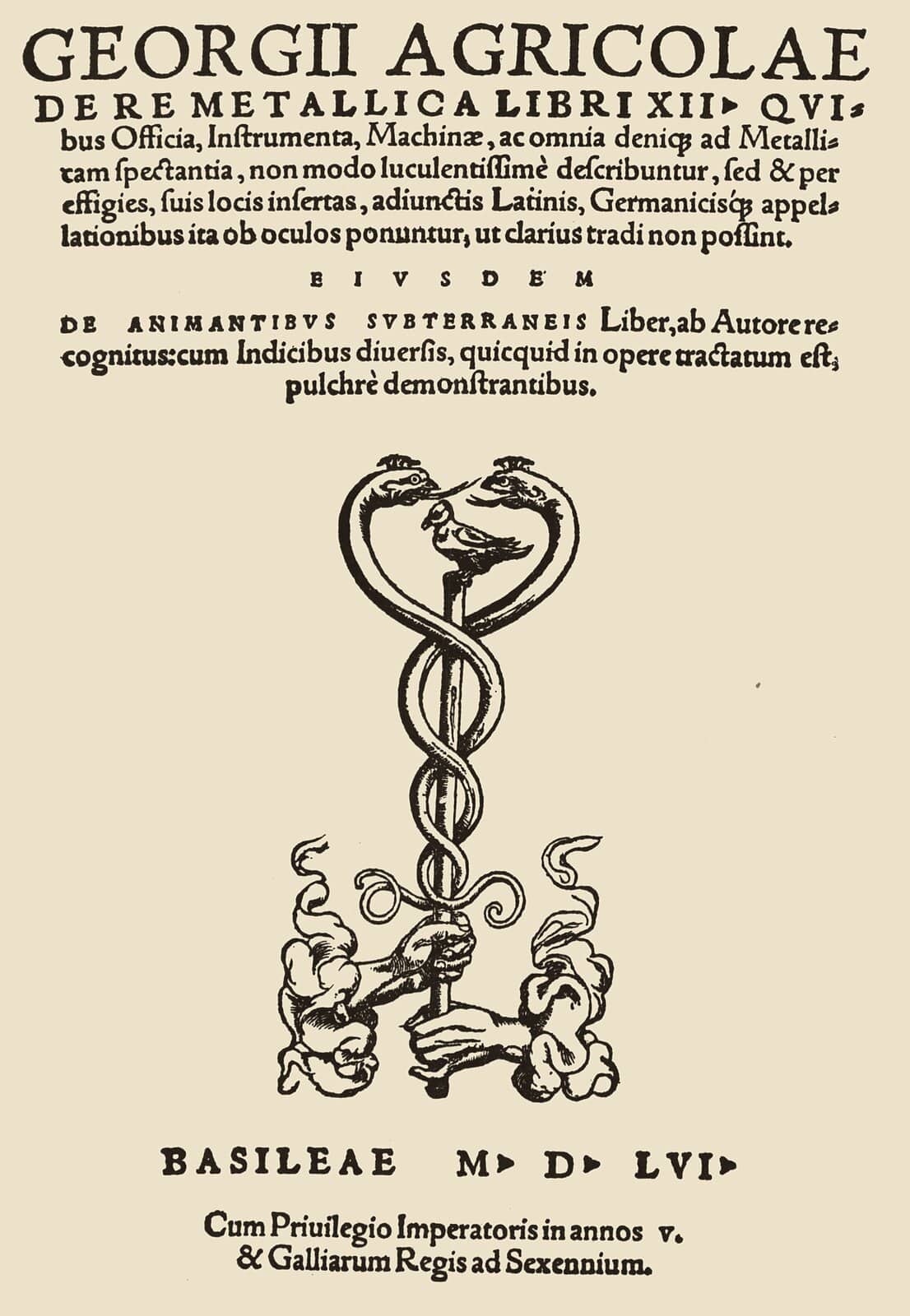
Title page of Georgius Agricola, De re metallica (Basel: Froben, 1556), public domain; scan: Mining Heritage, via Wikimedia Commons Agricola’s Book of Mines
A town doctor in a silver boomtown spent twenty-five years on the great book of mining. It was printed after his death, refused a grave in his own city, and translated into English by a future American president.
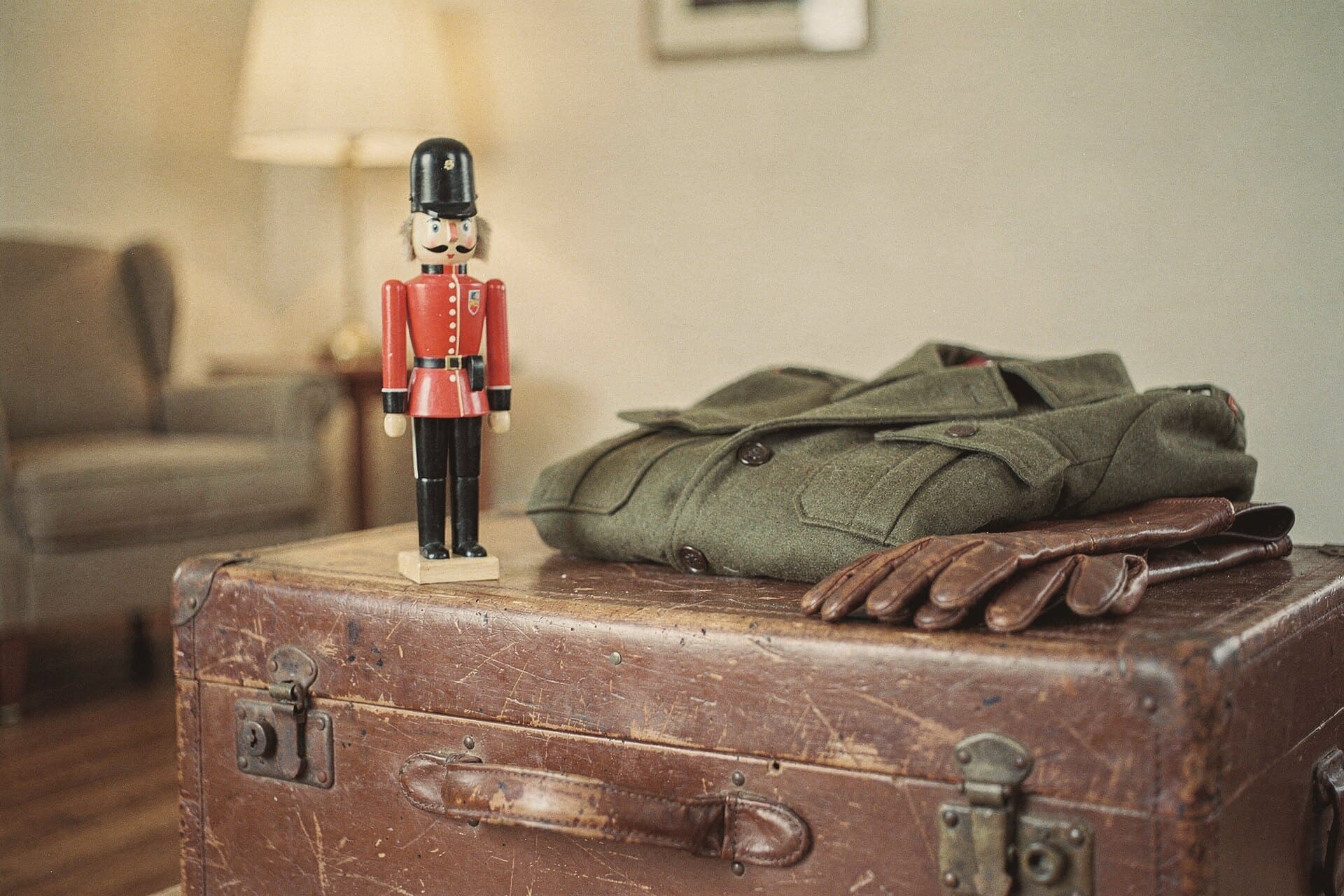
How the nutcracker came to America
A carved nut-biter from the German mountains, a king from Seiffen, a ballet that bored its first audience, and a Christmas Eve in San Francisco. How the nutcracker became an American Christmas.
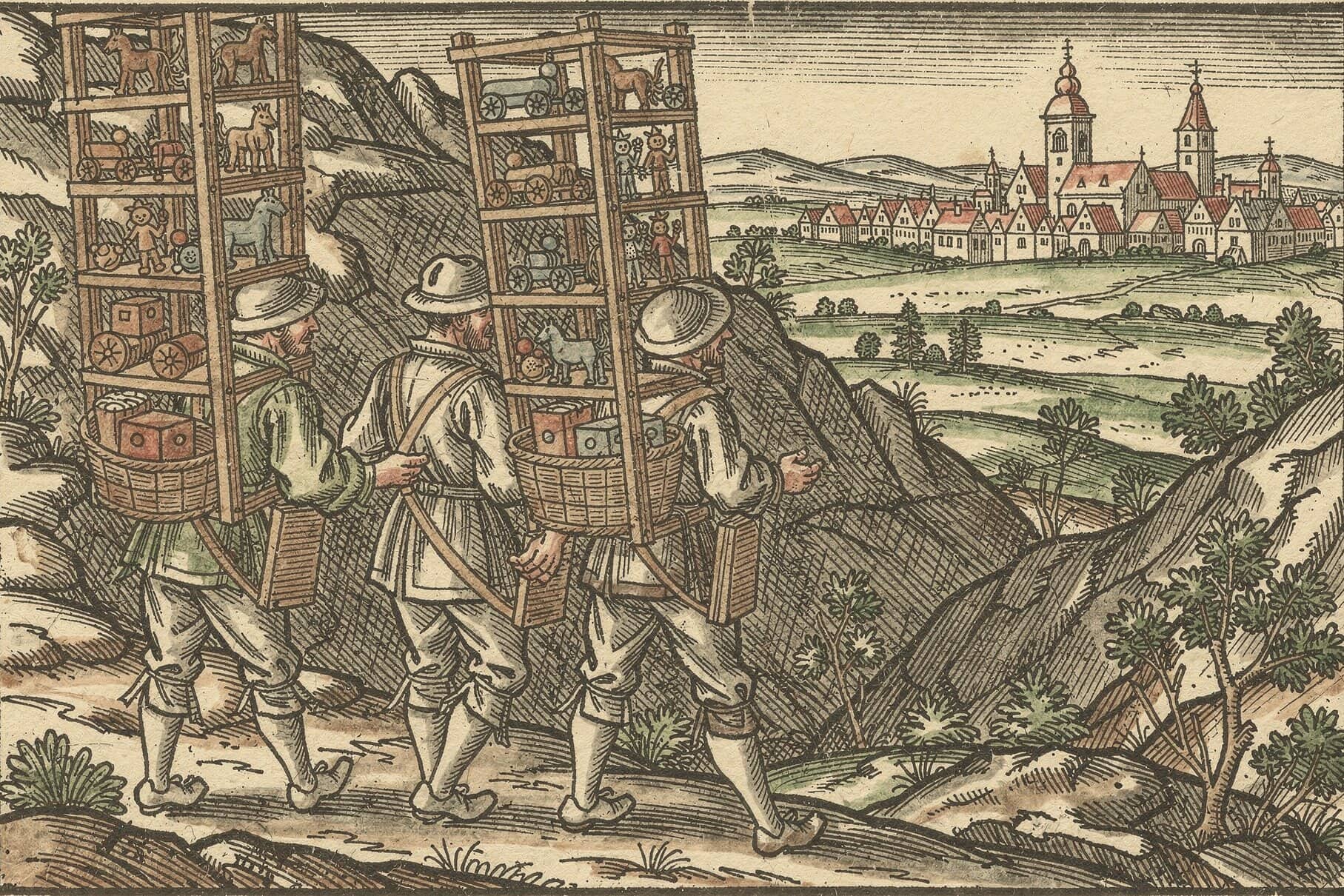
How Seiffen’s toys went out into the world
A linen trader’s wheelbarrow, merchants in the middle, crates on the Spanish silver fleet and four turners at a Dresden Christmas market. How a mountain village’s toys reached the world, and what they earned the families who made them.