Der Räuchermann: Smokers
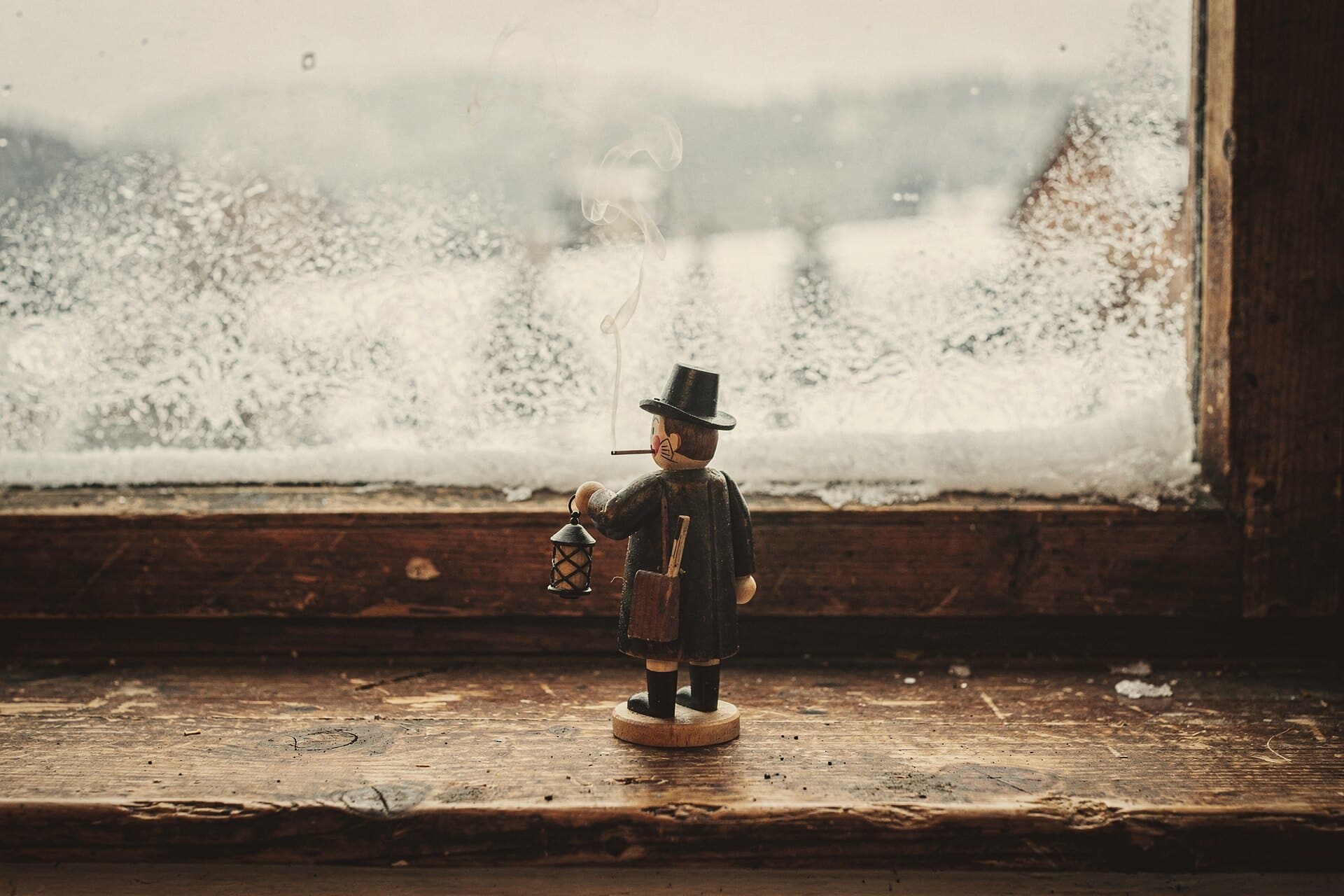
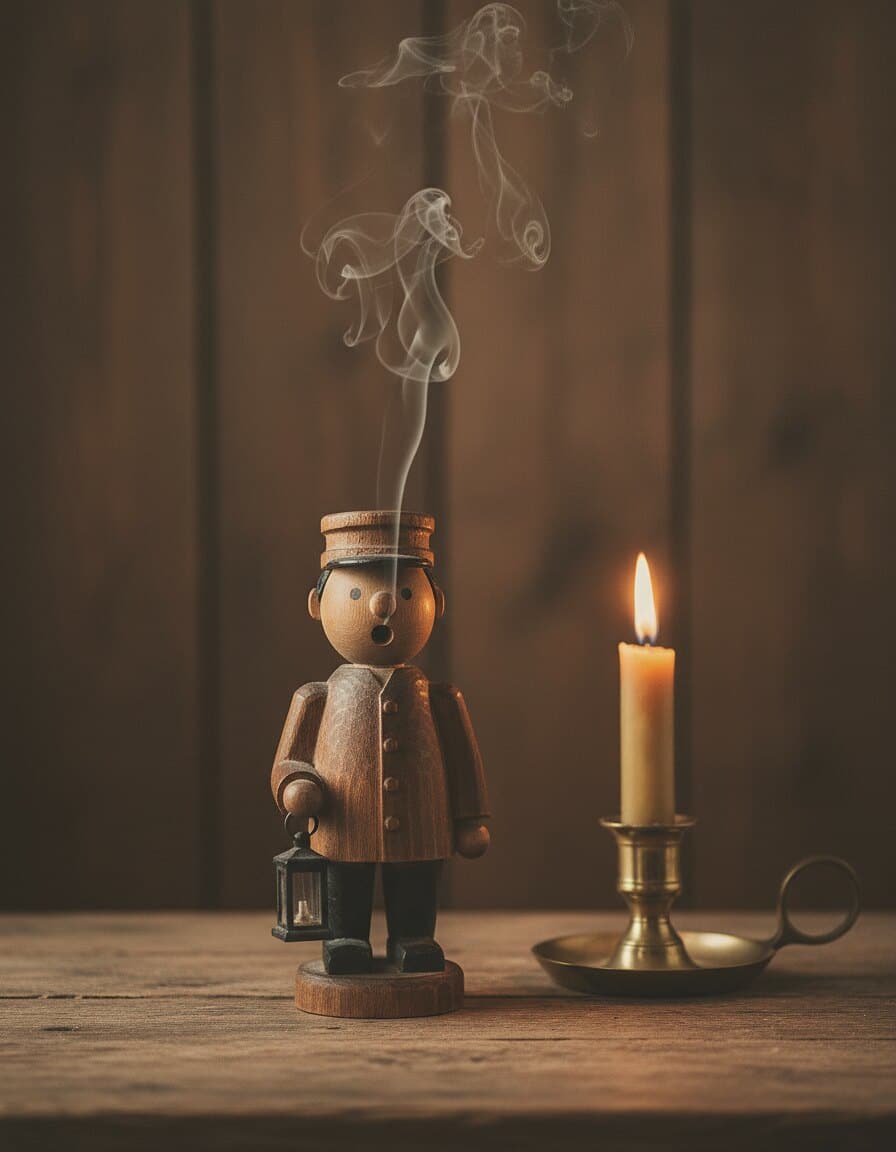
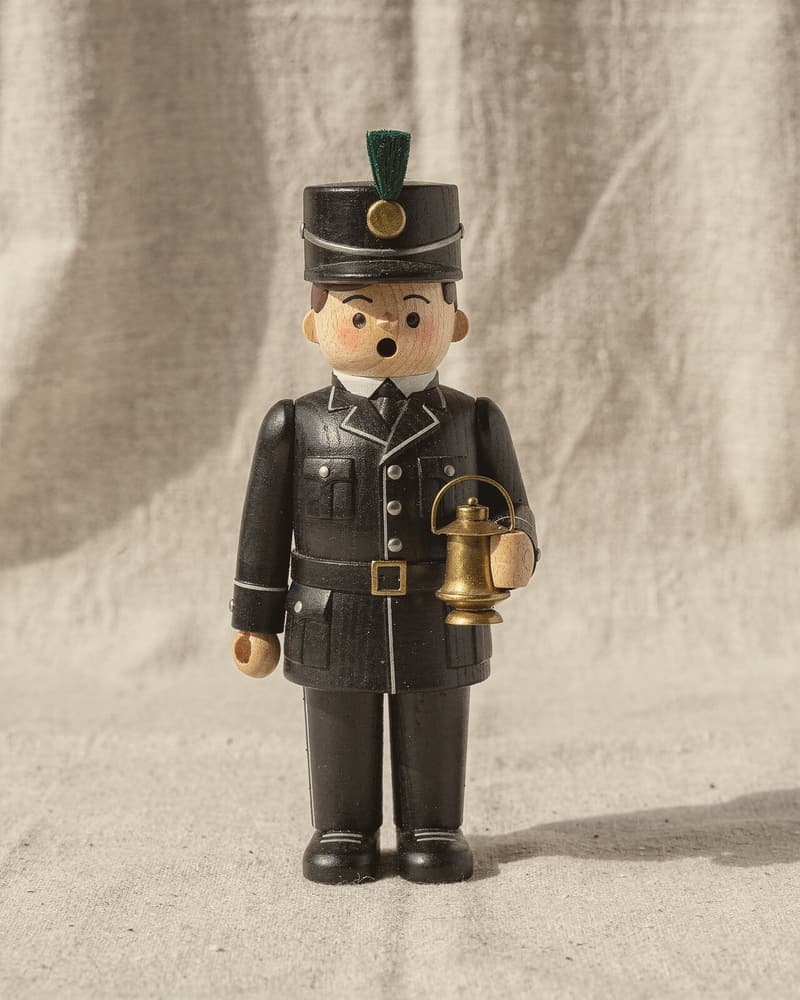
A little wooden man with a pipe: a miner, a forester, a peddler, a toymaker. Inside him an incense cone glows, and the fragrant smoke curls out of his mouth. In the dialect of the mountains he is the Raachermannel, the little smoking man.
Styles
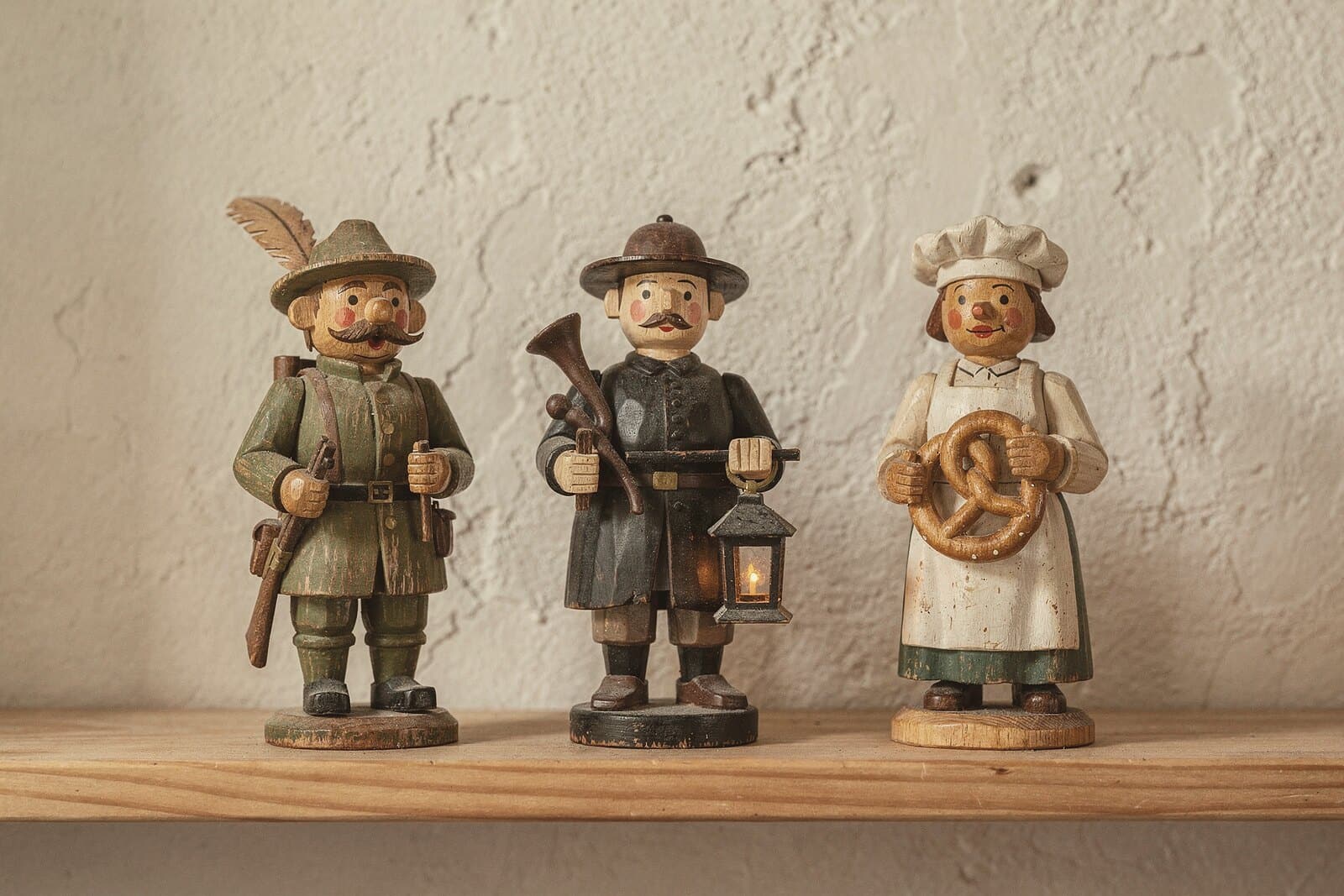
The Seiffen toy museum describes the smoker as meant to be a cheerful villager, “puffing, with his pipe in his mouth.” The traditional figures are the people of the mountains and their trades: miners, toymakers, hunters, forest workers, peddlers and broom-binders. The wandering wire-tinker (Rastelbinder) was an early favorite, and so were soldiers; the first woman, a dumpling seller (Kloßfrau), joined them only around 1930 or 1940. A smoker in the castle museum at Zschopau portrays Karl Stülpner, the region’s legendary poacher.
The story
The wooden smoker is one of the younger pieces. The Seiffen toy museum attributes the first ones to Ferdinand Frohs, a woodturner in Heidelberg, a village right next to Seiffen, around 1850; other accounts name his nephew Gotthelf Friedrich Haustein alongside him. Smoking figures of papier-mâché were made a little earlier in Sonneberg, in Thuringia, around 1820–1830.
The incense is older than the figure. By tradition, incense cones (Räucherkerzen, “smoking candles”) were already being made around 1750 in Crottendorf, a village in the western Erzgebirge that still makes them today. They spread with the Christmas customs of the mid-1800s, and with the first smokers. A cone is a little mixture of charcoal, wood flour, a binder such as potato starch, and scent: frankincense resin, sandalwood, fir.
Smokers became so popular beyond the mountains that in the GDR years many went for export to West Germany, Italy and Austria, and at home they could be hard to find.
How it works
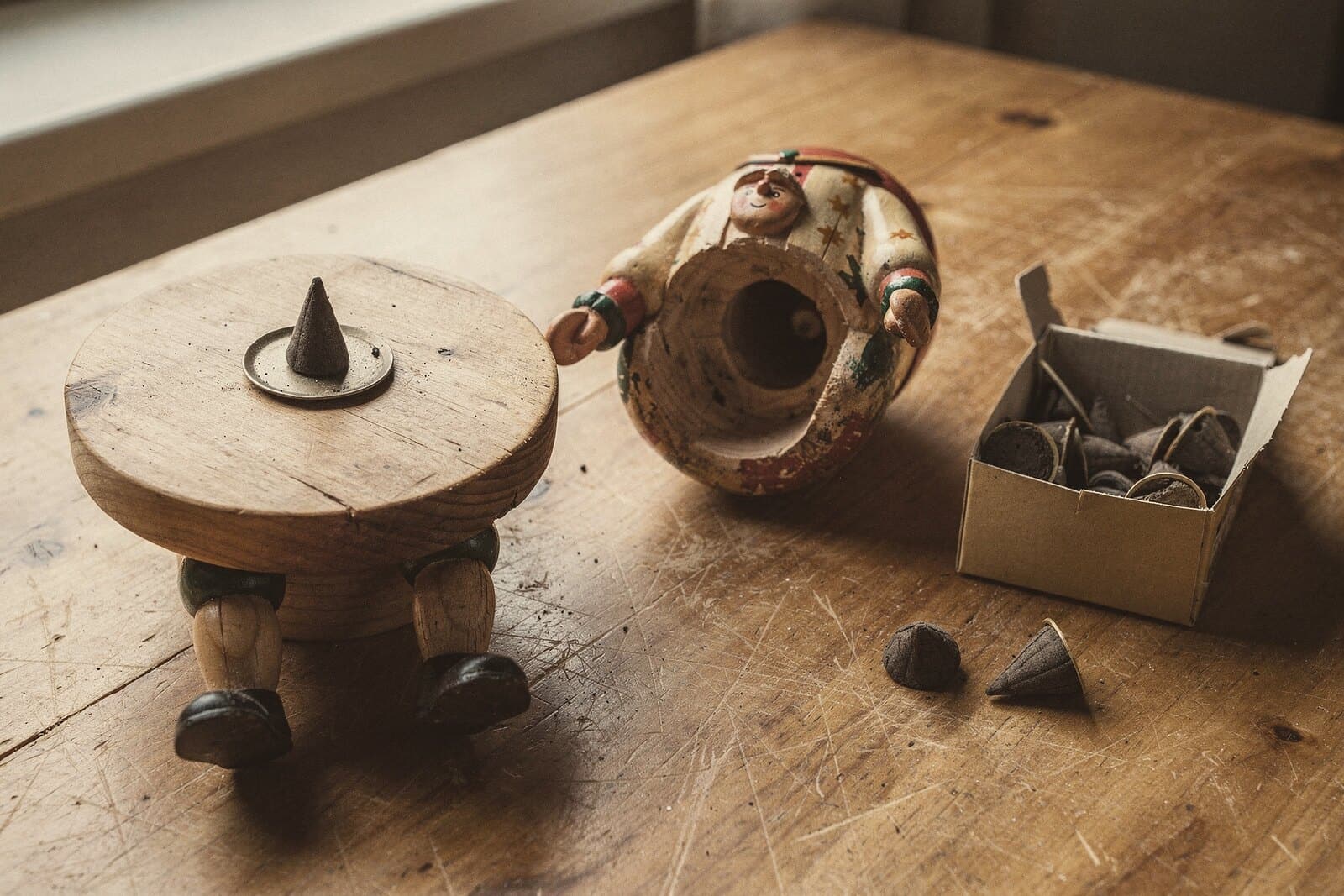
A smoker is a small turned figure that comes apart at the middle. The lower half, base and legs, carries a wooden disc with a little metal plate on which the cone burns. The upper body is turned hollow and fits over it. The smoke rises inside and leaves through the mouth, while an opening at the back or in the disc lets in fresh air, which keeps the cone glowing and pushes the smoke out.
Use and care
Choose the right cone. Cones come in a mini size and a standard size, plus large ones for big figures. Small smokers, typically under about 5 to 7 inches (12 to 18 cm) measured without the base, take mini cones; larger ones take the standard size. A cone of the wrong size may go out, and so may a damp one or one standing in a draft. If the figure’s tag or the cone box names a size, follow it.
Light it. Lift off the upper body. Light the very tip of the cone with a match, let it flame for a moment, then blow it out so that the tip glows orange. Set the cone on the metal plate at once, without letting it touch the wood, and put the body back on.
Then leave him be. Don’t move a smoker while the cone is glowing: ash or embers can fall out. Stand it on a heat-resistant surface, away from anything that can burn, and stay nearby. Germany’s Federal Environment Agency advises airing the room well when you burn incense cones.
Afterwards. Let the ash cool completely before you empty it, and clean the plate and air holes now and then; clogged holes are the commonest reason a cone goes out. Keep cones dry. Dust the figure with a soft brush, and store it in its box in a dry room.
Related pieces
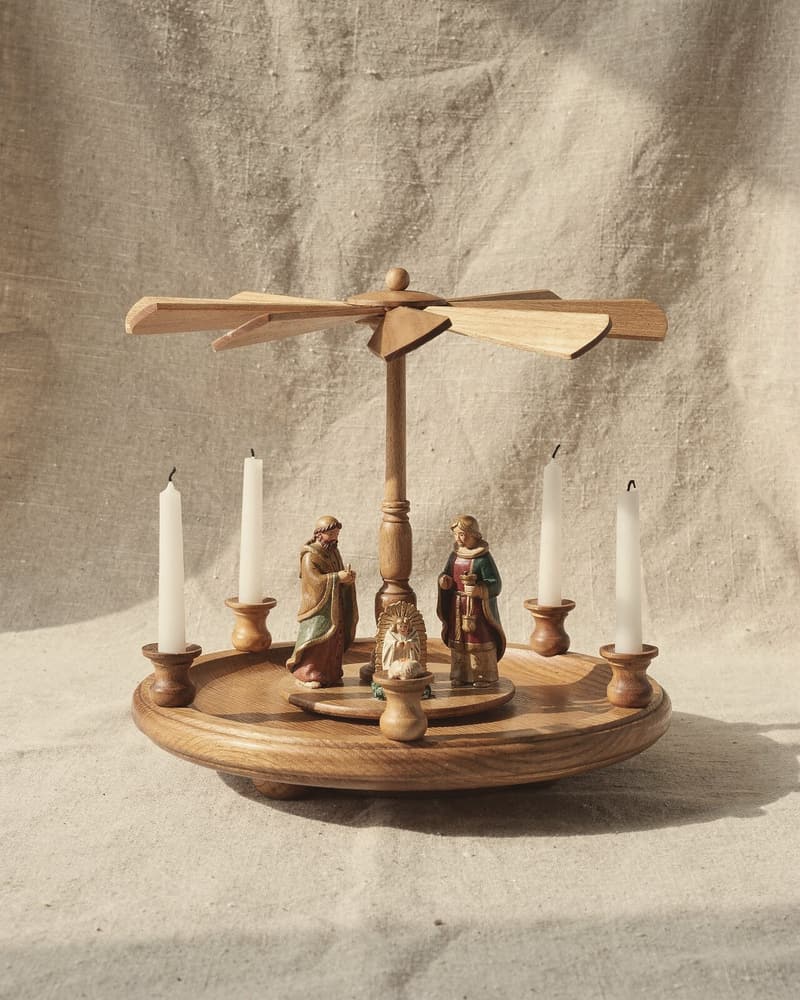 No. II
Die Weihnachtspyramide
The Christmas pyramidA carousel of figures on tiers, turned by nothing but the warmth of its candles.
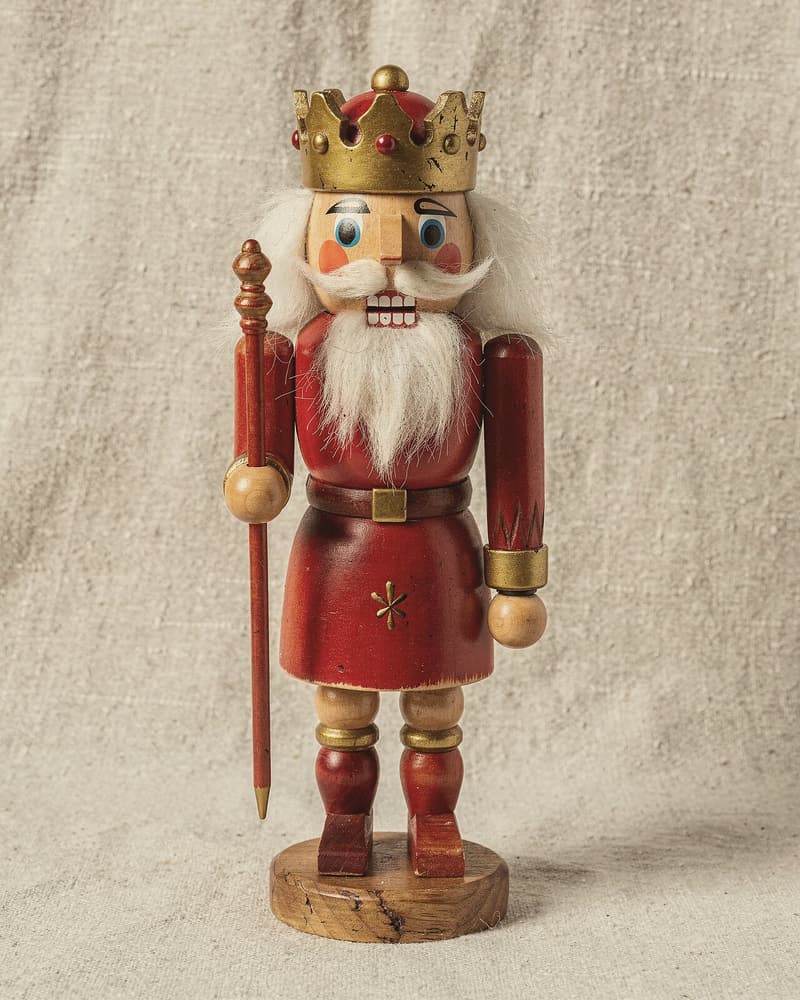 No. III
Der Nussknacker
The nutcrackerStern kings, soldiers and foresters with a lever in the back and a jaw for walnuts.
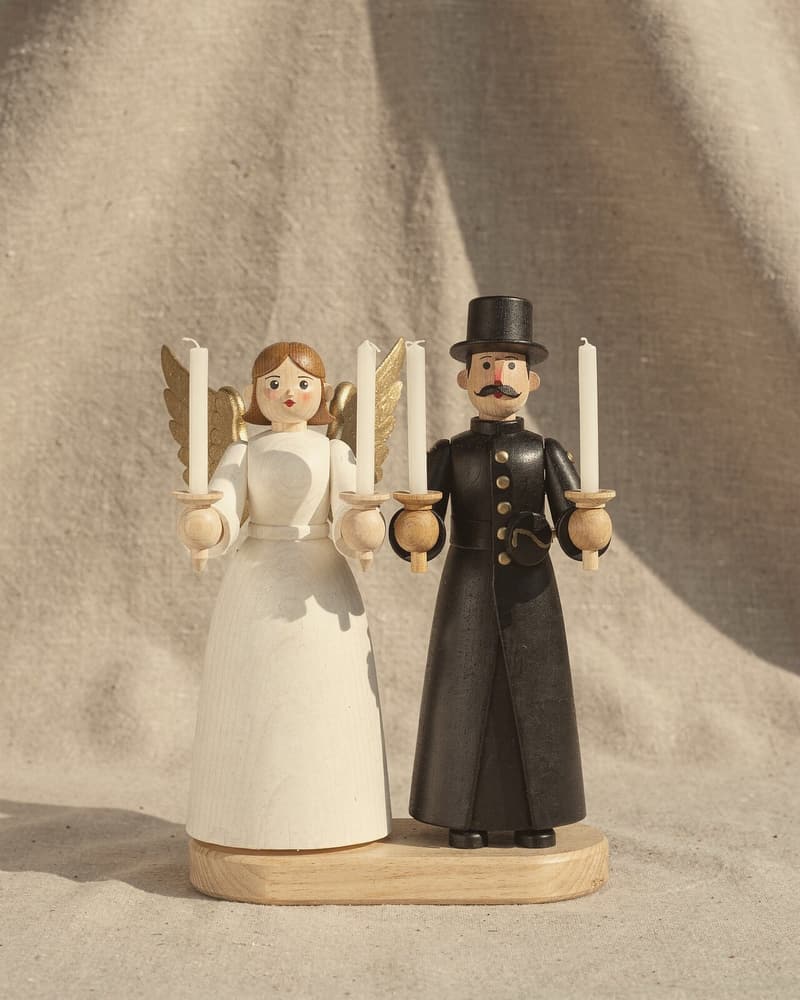 No. V
No. VEngel und Bergmann
Angel and minerThe candle-bearing pair, a miner in parade dress and an angel in white, since the 1830s.